Fiber Optic Splitter Applications
https://www.feiyi-oeo.com/product-category/passive-device/optical-splitter
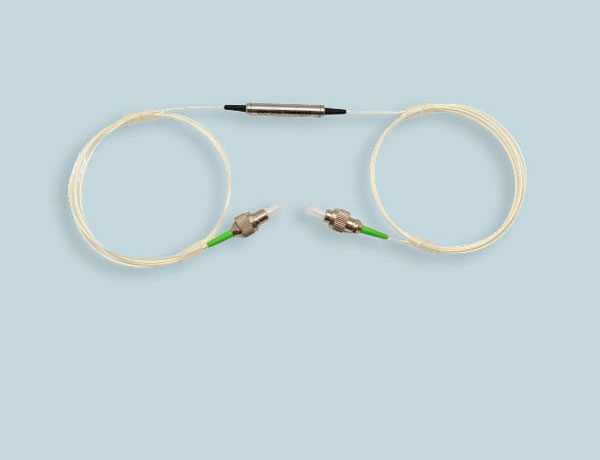
Fused Biconical Taper (FBT) Fiber Optic Splitter
The Fused Biconical Taper (FBT) splitter is a fiber optic branching device used in optical communication networks. It falls under the category of industrial equipment and is primarily applied in fields such as fiber optic communication systems, CATV, FTTH, and fiber optic sensors. It is fabricated by fusing and tapering multiple optical fibers together. The tapering process allows for real-time monitoring of the splitting ratio, resulting in a structure with a single input and multiple outputs. The splitting ratio can be flexibly adjusted from 1:99 to 50:50 [2].
This type of splitter uses 1×2 or 1×4 units as building blocks to achieve multi-channel splitting. The production process employs fused biconical taper coupling technology. Core materials include a quartz substrate, optical fibers, and stainless steel tubes. The product features low additional loss (≤0.2dB) and low polarization-dependent loss (≤0.1dB). It supports single-window, dual-window, or triple-window splitting structures. However, it has limitations such as sensitivity to optical wavelength, insufficient temperature stability, and a relatively large form factor for multi-channel devices [1]. Package forms include bare fiber, steel tube, and rack-mount types. It is suitable for industrial scenarios requiring flexible splitting ratios and a lower number of channels.
Core Application Areas of FBT Splitters
FBT splitters are the cornerstone of Passive Optical Networks (PONs), and their applications permeate the entire fiber optic access network.
- Fiber-to-the-Home (FTTH) Networks
This is the largest and most critical application scenario for FBT splitters.
Application Scenario: FTTx, especially PON networks.
Function: Enables point-to-multipoint topology.
Specific Operation: In a PON, a single fiber line from the Central Office (OLT) needs to serve multiple end-users (ONUs). The FBT splitter is strategically placed within the Optical Distribution Network (ODN) to broadcast the signal from one trunk fiber to numerous (up to 32, 64, or 128) subscriber fibers.
Downstream Direction: The signal from the OLT is “copied” by the splitter and sent to all connected ONUs.
Upstream Direction: Signals from all ONUs are combined by the same splitter and directed back to the OLT (conflicts are avoided using techniques like TDMA).
- Local Area Networks and Data Centers
Splitters are also used for signal distribution within smaller-scale fiber optic networks.
Application Scenario: Enterprise networks, campus networks, intra-data center fiber distribution.
Function: Distributes the signal from a single light source (e.g., test equipment or an uplink) to multiple destinations (e.g., different server racks or floor switches).
- Passive Optical Local Area Networks (POLs)
This is a growing application area for enterprise use.
Application Scenario: Replacing traditional copper-based enterprise LANs.
Function: Similar to FTTH, POLs use splitters to construct an all-optical network within office buildings. A single central equipment room provides connectivity for telephones, data, and Wi-Fi access points throughout the building, simplifying cabling and maintenance.
- Fiber Optic Sensing Systems
In sensing networks, splitters are used to build monitoring networks.
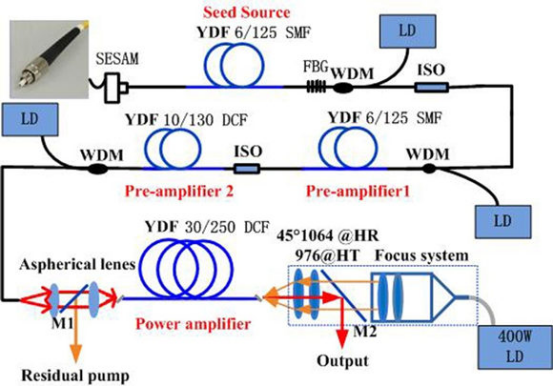
Application Scenario: Distributed fiber sensing (e.g., DTS, DAS), Fiber Bragg Grating (FBG) sensor networks.
Function:
- Signal Distribution: Distributes the optical signal from the interrogation unit to multiple sensing fibers.
- Network Topology Construction: Enables bus, star, and other sensor network topologies.
- Reference Path: In some interferometric sensors, splitters are used to create reference and signal arms.
- Testing and Measurement
Splitters are common tools in laboratories and production lines.
Application Scenario: Optical test platforms.
Function:
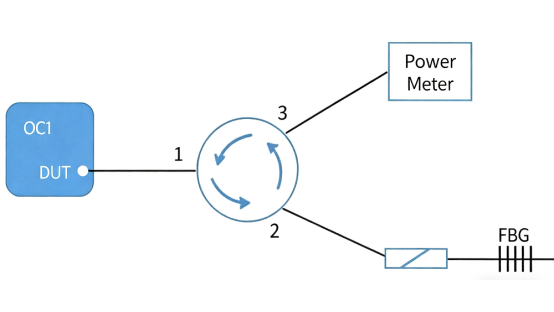
- Power Monitoring: A 1×2 splitter (e.g., with a 99:1 split ratio) is used to direct 99% of the main optical power to its primary function, while 1% is coupled to a power meter for real-time monitoring of the light source’s stability.
- Signal Sharing: Distributes the signal from the same light source to multiple test instruments simultaneously, such as an Optical Spectrum Analyzer and an optical power meter.
- Cable Television (CATV) Optical Transmission
Splitters are also used for distributing RF optical signals in Hybrid Fiber-Coaxial (HFC) networks.
Application Scenario: Hybrid Fiber-Coaxial networks.
Function: Distributes the CATV optical signal from the headend to various optical nodes, serving a residential area or district.
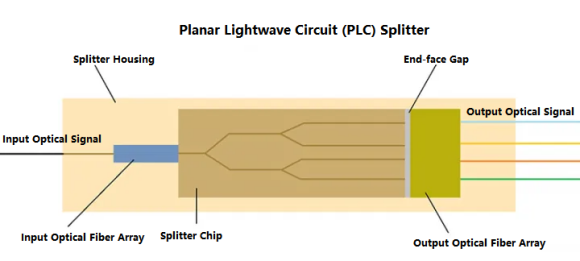
Core Application Areas of PLC Splitters
PLC splitters are the ideal choice for building high-density, high-reliability optical distribution networks. Their applications cover almost all scenarios requiring uniform optical power splitting.
Passive Optical Network (Primary Application)
This is the largest and most critical application scenario for PLC splitters, forming the foundation of FTTH deployments.
Application Scenario: All mainstream PON standards, such as GPON, EPON, and 10G-PON.
Network Location and Function:
- Central Office/Headend: 1×32 or 1×64 high-split-ratio PLC splitters are placed on the Optical Line Terminal (OLT) side for centralized splitting.
- Community/Building Distribution Point: 1×8 or 1×16 PLC splitters are placed in outdoor fiber distribution cabinets or building telecommunication closets for distributed splitting.
Operation:
- Downstream Broadcast: The signal from the OLT is evenly distributed by the PLC splitter to all end-users, realizing a “point-to-multipoint” topology.
- Upstream Aggregation: Signals from all users are combined by the same PLC splitter and transmitted back to the OLT.
Why PLC is the Preferred Choice for PON:
- High Uniformity: Ensures nearly identical optical power for each user, simplifying network power budget design.
- High Channel Count: A single chip can achieve 1×64 splitting, with a much smaller form factor compared to cascaded FBT splitters.
- Compact Size: The chip itself is very small, and its packaged module is suitable for high-density installations.
- Environmental Stability: All-solid-state structure, insensitive to temperature and vibration, with a long operational lifetime.