Mastering Polarization Control: A Guide to PM Beam Combiners, Splitters and Polarizers
Understanding Polarization-Maintaining Fiber Optics
In the world of precision optics, maintaining the polarization state of light is not merely an advantage—it’s an absolute necessity for many advanced applications. Polarization-maintaining (PM) components form the backbone of systems where signal integrity, phase coherence, and measurement accuracy are paramount. From fiber optic gyroscopes navigating aircraft to coherent communication systems transmitting data across continents, these specialized components ensure that light behaves predictably throughout complex optical pathways.
At the core of PM technology lies a simple yet profound challenge: conventional optical fibers randomly alter the polarization state of light traveling through them due to stresses, bends, and imperfections. PM fibers solve this by intentionally creating an asymmetry within the fiber structure—typically through stress rods or elliptical cores—that creates a fast axis and a slow axis. Light polarized along one of these principal axes maintains its polarization state over considerable distances, enabling reliable performance in sensitive applications.
PM Beam Combiners and Splitters: The Heart of Polarization Management
https://www.feiyi-oeo.com/product-category/polarization-maintaining/pm-beam-combiner-splitter
What Are PM Beam Combiners and Splitters?
Polarization-maintaining beam combiners and splitters are sophisticated passive devices that manipulate light based on its polarization state. These components come in two primary configurations that serve complementary functions:
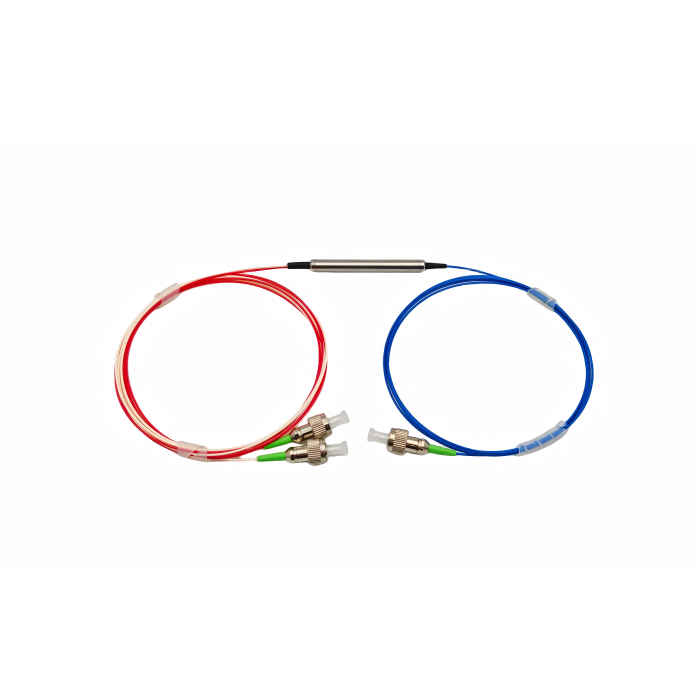
- 1×2 Devices: Feature one input port and two output ports. They function as polarization beam splitters (separating orthogonal polarization states into different paths) or combiners (merging two polarization states into a single output).
- 2×2 Devices: Feature two input and two output ports, offering greater flexibility for complex system architectures such as interferometers or balanced detection schemes.
How They Work
The operational principle hinges on precisely controlled birefringent crystals or waveguide structures. These elements separate or combine light based on its polarization direction relative to the device’s internal axes. Our PM components are engineered to ensure that only the light in the desired “slow axis” is transmitted or combined with high fidelity, while the orthogonal “fast axis” is effectively suppressed or cutoff. This results in exceptional polarization extinction ratios—often exceeding 20dB—meaning less than 1% of unwanted polarization contaminates the desired signal.
Technical Specifications and Performance Excellence
Our comprehensive product line addresses diverse system requirements across the spectrum. Below is a summary of key specifications for our PM Beam Combiner/Splitter series:
| Wavelength | Configuration | Operating Range | Isolation | Insertion Loss | Power Handling |
|---|---|---|---|---|---|
| 780 nm | 1×2 & 2×2 | ±20 nm | Excellent | Low | 0.3 W to 10 W |
| 850 nm | 1×2 & 2×2 | ±20 nm | Excellent | Low | 0.3 W to 10 W |
| 980 nm | 1×2 & 2×2 | ±20 nm | Excellent | Low | 0.3 W to 10 W |
| 1064 nm | 1×2 & 2×2 | ±20 nm | Excellent | Low | 0.3 W to 10 W |
| 1310 nm | 1×2 & 2×2 | ±40 nm | High | Low | Up to 10 W |
| 1480 nm | 1×2 | ±40 nm | Superior | Low | Up to 10 W |
| 1550 nm | 1×2 & 2×2 | ±40 nm | Excellent | Low | Up to 10 W |
| 1950 nm | 1×2 & 2×2 | ±20 nm / ±40 nm | Excellent | Low | 0.3 W to 10 W |
Core Performance Metrics:
- High Extinction Ratio & Isolation: Ensures clean separation or combination of polarization states, minimizing cross-talk and signal degradation.
- Low Insertion Loss: Maximizes system efficiency by minimizing the optical power lost as light passes through the device.
- Broad Wavelength Range: Many models operate across a 40nm or 20nm window, providing tolerance for source wavelength drift and enabling use with tunable lasers.
- High Power Handling: With capabilities up to 10 Watts, our components are suitable for both sensitive sensing applications and high-power laser systems.
- Excellent Temperature Stability: Performance remains consistent across extended temperature ranges, which is crucial for field-deployed systems and laboratory environments alike.
Complementary Technology: PM In-Line Polarizers
https://www.feiyi-oeo.com/product-category/polarization-maintaining/pm-in-line-polarizer
To build a complete polarization control system, combiners and splitters are often paired with PM In-Line Polarizers. While combiners/splitters route light based on its existing polarization, an in-line polarizer creates or purifies a linear polarization state.
Our range of PM In-Line Polarizers covers wavelengths from 780nm to 2000nm (including 850nm, 980nm, 1064nm, 1310nm, 1550nm, and 2000nm). They function as a high-quality “polarization filter” within the fiber line, transmitting the slow-axis component while attenuating the fast-axis component to achieve extinction ratios typically greater than 20dB. With low insertion loss and high return loss, they are ideal for cleaning up polarization states before a sensitive component or ensuring a pure input to a combiner.
Key Applications Across Industries
The unique capabilities of PM combiners, splitters, and polarizers make them indispensable in several cutting-edge fields:
- Fiber Optic Gyroscopes (FOGs): The core of inertial navigation systems. PM components are critical in the FOG’s interferometric sensing loop, where maintaining perfect polarization states is essential for detecting minute phase shifts caused by rotation. Any polarization drift translates directly into navigation error.
- Coherent Optical Communications: Modern high-bandwidth networks use the phase and polarization of light to encode data. PM splitters/combiners are used in polarization diversity receivers and for signal processing, enabling the terabit-per-second data rates required for global internet infrastructure.
- Quantum Technology: Experiments in quantum key distribution (QKD) and quantum computing often rely on specific photon polarization states as quantum bits (qubits). PM components provide the necessary fidelity to manipulate and measure these states without decoherence.
- Precision Sensing & Metrology: Distributed fiber sensors (for temperature, strain, or acoustic sensing) and interferometric measurement systems demand stable polarization to achieve high signal-to-noise ratios and accurate readings.
- Research & Laboratory Setups: From pump-signal combining in fiber amplifiers to building complex interferometers, these components offer researchers reliable, off-the-shelf solutions for polarization control.
Customization and System Integration
We understand that no two optical systems are identical. That’s why our PM Beam Combiners/Splitters and In-Line Polarizers offer extensive customization:
- Fiber Type: Available with various PM fibers matched to your operating wavelength (e.g., PM980, HI1060, PM1300-XP, PM1550-XP, SM-28E).
- Connector Options: Standard connector types include FC/PC, FC/APC, SC/PC, and SC/APC to ensure compatibility with your existing infrastructure.
- Packaging: Compact, ruggedized packaging is available for laboratory, telecommunication rack, or harsh environmental use.
- Power Handling: Configurable from 0.3W for sensitive applications up to 10W for high-power systems.
Conclusion: Your Partner in Polarization Control
Whether you are designing a next-generation navigation system, pushing the limits of communication bandwidth, or conducting groundbreaking photonics research, control over light’s polarization state is a fundamental requirement.
Our extensive portfolio of Polarization-Maintaining Beam Combiners/Splitters and In-Line Polarizers provides reliable, high-performance building blocks for your most demanding applications. With precise manufacturing, rigorous testing, and flexible customization, we deliver the optical components that let you focus on innovation, not on polarization instability.
Explore our full range of polarization control solutions to find the perfect component for your system. Contact our technical team to discuss your specific requirements and how we can help you achieve optimal performance.