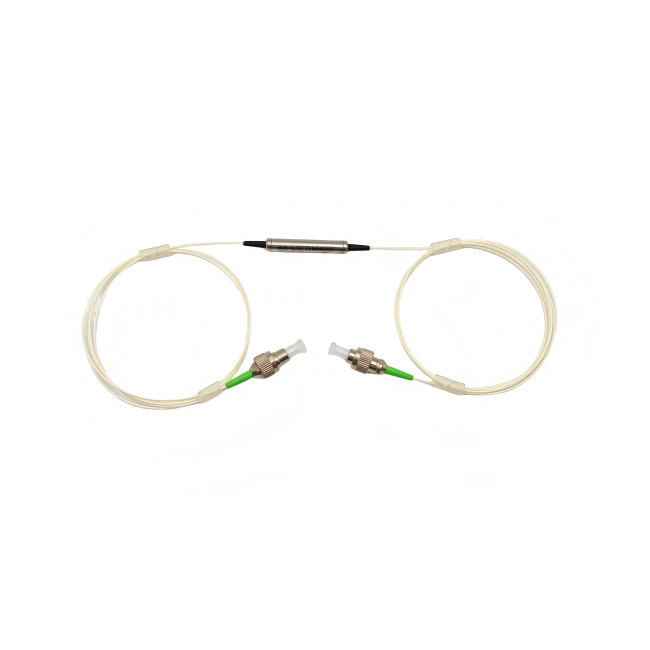
PM Fiber Patch Cords vs. Standard Patch Cords: Choosing the Right Optical Link for Your System
The Vital Role of Fiber Patch Cords in Modern Optics
In any optical system, the humble fiber patch cord is more than just a simple connector cable—it is the critical link that determines signal integrity, reliability, and overall performance. As optical technologies advance, the choice between a Polarization-Maintaining (PM) fiber patch cord and a standard single-mode or multimode patch cord becomes fundamental to system design. This choice dictates not only what data or power can be transmitted but also the stability and precision of the entire application.
Whether in a high-speed data center rack or a sensitive laboratory interferometer, the patch cord is a passive component with an active role in performance. Understanding the distinct architectures, operating principles, and application domains of PM and standard patch cords is essential for engineers, researchers, and system integrators aiming to optimize their optical infrastructure.
Fundamental Design and Operating Principles
Polarization-Maintaining (PM) Fiber Patch Cords: Engineered for Stability
PM fiber patch cords are specialty components designed for one critical purpose: to preserve the linear polarization state of light as it travels from one component to another. This is achieved through an intentionally asymmetric core design.
- Core Technology: Unlike standard circularly symmetric fibers, PM fibers have built-in, permanent stress-applying parts (like Panda, Bow-Tie, or Elliptical Cladding designs) surrounding the core. This creates two distinct, perpendicular optical axes within the fiber: the slow axis and the fast axis. Light polarized along one of these principal axes will maintain its polarization state over long distances with minimal cross-coupling to the other axis.
- Key Performance Metric – Extinction Ratio (ER): The most critical specification for a PM patch cord is its Polarization Extinction Ratio, measured in dB. It quantifies how effectively the fiber maintains the desired polarization state by comparing the power in the desired polarization mode to the power in the orthogonal, unwanted mode. A higher ER (e.g., 25 dB vs. 20 dB) indicates superior polarization-holding capability.
- Precision Alignment and Connectorization: Manufacturing PM patch cords requires extreme precision. The internal stress axes of the fiber must be angularly aligned (“keyed”) to the connector’s external reference (often indicated by a key or flat on the connector ferrule). This alignment ensures that the polarization axis is correctly oriented when mating with other PM components like isolators, modulators, or combiners.
Standard Single-Mode/Multimode and MPO/MTP Patch Cords: Optimized for Power Transmission
Standard patch cords prioritize low-loss transmission of optical power without controlling the polarization state.
- Core Technology: Single-mode fibers (like SMF-28e) have a small core that supports only one fundamental spatial mode, ideal for long-distance, high-bandwidth communication. Multimode fibers have a larger core that supports multiple light paths (modes), suited for shorter-distance, high-data-rate links in campuses and data centers.
- Key Performance Metrics: The focus here is on Insertion Loss (minimizing signal attenuation) and Return Loss (minimizing reflective power). For MPO/MTP multi-fiber connectors, physical contact and low loss across all fiber channels are paramount.
- High-Density MPO/MTP Solutions: The MPO (Multi-fiber Push-On) / MTP (a high-performance branded version) connector represents the pinnacle of standard connectivity for density and speed. These rectangular connectors can house 8, 12, 16, 24, or even more fibers in a single ferrule, enabling rapid deployment of 40G, 100G, 400G, and beyond Ethernet links in data centers. Precise fiber alignment within the ferrule and a robust push-pull latching mechanism ensure reliable multi-channel performance.
Side-by-Side Comparison: PM vs. Standard Patch Cords
| Feature | Polarization-Maintaining (PM) Fiber Patch Cord | Standard Single-Mode/Multimode Patch Cord (including MPO/MTP) |
|---|---|---|
| Primary Function | Preserve the linear polarization state of light. | Transmit optical power/data with minimal loss. |
| Core Design | Asymmetric (with stress-applying parts). | Radially symmetric (concentric core/cladding). |
| Key Specification | Extinction Ratio (ER) (typically 20 dB to 30+ dB). | Insertion Loss (IL) (typically < 0.3 dB) & Return Loss (RL). |
| Alignment Criticality | Extreme. Requires rotational alignment of fiber axis to connector key. | Axial alignment only. Fiber rotation is irrelevant. |
| Typical Applications | Fiber optic gyroscopes, coherent communications, quantum optics, sensing, pump combiners. | Telecom/Datacom links, CATV, data center interconnects, passive optical networks (PON). |
| Connector Types | FC/PC, FC/APC, SC/PC, SC/APC (always with keyed alignment). | All standard types (LC, SC, FC, ST, E2000) plus high-density MPO/MTP. |
| Cost Factor | Higher due to specialized fiber and precise alignment processes. | Lower, especially for volume production of standard types. |
Diving Deeper: Product Capabilities and Specifications
Our PM Fiber Patch Cord Solutions
https://www.feiyi-oeo.com/product-category/polarization-maintaining/pm-fiber-patch-cord/
Our PM patch cords are engineered for systems where polarization stability cannot be compromised. Key features include:
- High Extinction Ratios: We offer standard (20 dB), premium (25 dB), and ultra-high (30 dB) ER grades to match application sensitivity.
- Wide Wavelength Range: Available for all major PM windows: 780 nm, 850 nm, 980 nm, 1064 nm, 1310 nm, 1550 nm, and 2000 nm.
- Custom Configurations: Tailored fiber types (Panda, Elliptical), connector choices (FC/APC, SC/PC, etc.), jacket materials, and lengths.
- Robust Performance: Designed for excellent temperature stability (-40°C to +85°C operational range) and high laser power handling.
Our MPO/MTP Fiber Patch Cord Solutions
https://www.feiyi-oeo.com/product-category/passive-device/mpo-mtp-patch-cord/
For modern high-speed data infrastructure, our MPO/MTP cords deliver reliability and performance:
- High-Density Options: 8, 12, 16, 24 fiber counts in a single, compact connector body.
- Type-Based Polarity Management: Available in Type A (Straight-Through), Type B (Reversed), and Type C (Pair-Flipped) to simplify correct polarity implementation in duplex links.
- Low-Loss Performance: Precision-polished ferrules ensure < 0.5 dB typical insertion loss for all channels.
- System-Ready Cables: Available as trunk cables (MPO-to-MPO) or harness/fanout cables (MPO-to-multiple single-fiber connectors like LC), supporting both single-mode and multimode (OM3/OM4/OM5) applications for 40G/100G/400G networks.
Application Scenarios: Making the Right Choice
When to Choose a PM Fiber Patch Cord:
Select PM patch cords when your system’s function depends on the polarization state of light. Key use cases include:
- Fiber Optic Sensing: Fiber Optic Gyroscopes (FOGs) for navigation are the most demanding application. Any polarization drift in the sensing coil (composed of PM fiber) creates noise and error. High-ER PM patch cords are essential for connecting to the FOG light source and detector.
- Coherent Telecommunications: Modern systems use advanced modulation formats (DP-QPSK, 16-QAM) that encode information in the light’s phase and polarization. PM fibers are used within key transmitter/receiver components, and PM patch cords are required to connect to them without scrambling the polarization.
- Quantum Technology: Many quantum key distribution (QKD) and computing protocols use photon polarization as a quantum bit (qubit). PM patch cords are necessary to deliver and collect these photons without inducing random polarization changes that would destroy the quantum information.
- High-Power Laser Systems: In setups where a polarized laser source is amplified or delivered, PM patch cords ensure the high-power beam maintains its linear polarization, which is often crucial for efficient non-linear frequency conversion or material processing.
When to Choose a Standard or MPO/MTP Patch Cord:
Choose standard patch cords when the primary goal is efficient power or data transmission, regardless of polarization.
- Data Center Infrastructure: The backbone of cloud computing. MPO/MTP trunk cables are the standard for connecting switches to optical transceivers in 40/100/400 Gigabit Ethernet spines and leaves. LC-LC duplex patch cords dominate top-of-rack server connections.
- Telecommunication Networks: From central offices to fiber-to-the-home (FTTH) terminals, standard single-mode patch cords (SC/APC, LC/APC) provide the low-loss, low-reflection links.
- General Lab and Test Setups: For connecting laser sources to power meters, spectrometers, or non-polarization-sensitive components, standard patch cords offer a cost-effective and reliable solution.
Conclusion and Selection Guidance
The decision between a PM fiber patch cord and a standard patch cord is not about one being “better” than the other; it is about selecting the right tool for a specific physical-layer job.
- Follow the System Requirement: If your component datasheet or system schematic specifies “PM” or shows a polarization axis marker, you must use a keyed PM patch cord with a sufficient extinction ratio. Using a standard patch cord will render the system non-functional or severely degraded.
- Prioritize Density and Speed: For building scalable data center interconnects, MPO/MTP technology is non-negotiable. The choice then focuses on fiber count, polarity type, and multimode grade.
- Consider Future-Proofing: In research or prototyping environments where requirements might evolve, investing in a few high-quality PM patch cords for sensitive links and using standard cords for general power delivery offers a flexible and sound strategy.
Ultimately, both types of patch cords are enablers of modern photonics. By understanding their distinct roles—one as a guardian of a fundamental light property (polarization) and the other as a high-throughput data conduit—you can design and maintain optical systems that are robust, efficient, and perfectly suited to their task.
Explore our comprehensive range of both PM and MPO/MTP fiber patch cords to find the precise optical link your project demands. Our technical team is ready to assist with custom configurations to meet your exact specifications.