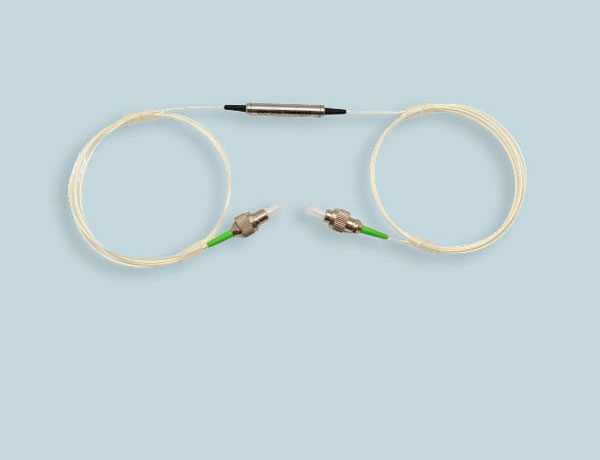
The Optical Amplifier That Changed the World: Understanding EDFA Technology
https://www.feiyi-oeo.com/product-category/active-device/edfa
In the history of fiber optic communications, few innovations have been as transformative as the Erbium-Doped Fiber Amplifier (EDFA). Before its commercial arrival in the early 1990s, every optical signal traveling more than a few dozen kilometers had to be converted back to electricity, amplified, reshaped, and retransmitted as light again. This “regeneration” process was not only complex and expensive but also became a bottleneck as data rates increased .
The EDFA changed everything by enabling direct, all-optical amplification—light amplifying light. This breakthrough removed the electronic bottleneck, made Wavelength Division Multiplexing (WDM) practical, and laid the foundation for the global high-speed internet we rely on today . This article explores how EDFAs work, their key components, performance characteristics, and their evolving role in next-generation networks.
How EDFA Works: The Magic of Doped Fiber
At its heart, an EDFA consists of a section of optical fiber doped with erbium ions (Er³⁺)—a rare earth element. When signal light in the 1550nm window (the minimum loss window of standard single-mode fiber) passes through this doped fiber, it can be amplified through stimulated emission .
The Three-Step Process:
- Pumping: A high-power pump laser (typically at 980nm or 1480nm) injects energy into the erbium-doped fiber. Erbium ions absorb this pump energy and are excited from their ground state to higher energy levels .
- Population Inversion: The excited ions quickly relax to a metastable state, where they remain for a relatively long time (milliseconds). This creates a “population inversion”—more ions are in the excited state than in the ground state .
- Stimulated Emission: When a signal photon at 1550nm passes through the inverted fiber, it stimulates excited ions to drop back to the ground state, releasing identical photons. The result: the original signal is amplified .
Any excited ions that decay spontaneously without stimulation create Amplified Spontaneous Emission (ASE) —the primary source of noise in EDFA systems .
Core Components of an EDFA
A practical EDFA module integrates several critical components :
Pump Configurations:
EDFAs can be configured with forward pumping (pump and signal travel same direction), backward pumping (opposite directions), or bidirectional pumping (both ends) to optimize for noise figure, output power, or efficiency .
Key Performance Parameters
Understanding EDFA specifications is essential for system design:
- Gain: The ratio of output to input signal power, typically 15–40 dB . Gain varies with wavelength and input power.
- Noise Figure (NF): A measure of signal-to-noise ratio degradation, primarily caused by ASE. Low NF (typically 4–6 dB) is critical for pre-amplifiers .
- Output Power: The maximum signal power the amplifier can deliver. Power amplifiers (boosters) require high output power (+13 to +20 dBm or more) .
- Gain Flatness: Variation in gain across the operating wavelength range. For DWDM systems with many channels, gain flatness of <0.5 dB is often required .
- Polarization-Dependent Gain (PDG): Variation in gain with input polarization state—typically very low in EDFAs, a key advantage over semiconductor amplifiers .
EDFA Applications in Optical Networks
EDFAs serve three primary roles in transmission systems :
1. Power Amplifier (Booster)
Located immediately after the transmitter or multiplexer, the booster amplifies the combined signal to a high level for launch into the fiber. High output power is the primary requirement; noise figure is less critical.
2. In-Line Amplifier
Placed periodically along the fiber span (typically every 80–100 km), in-line amplifiers compensate for transmission loss. They must balance high gain with low noise figure and often include gain-flattening filters. In long-haul undersea cables, chains of dozens of in-line EDFAs operate reliably for 25+ years .
3. Pre-Amplifier
Just before the receiver, the pre-amplifier boosts a weak signal to improve receiver sensitivity. Here, ultra-low noise figure is paramount, while output power requirements are modest.
Advanced EDFA Technologies
Broadband EDFAs: C+L Band Amplification
As capacity demands explode, operators are pushing beyond the conventional C-band (1530–1565 nm) into the L-band (1565–1625 nm). Two main architectures exist :
- Parallel Configuration: C-band and L-band signals are separated at input, amplified by dedicated EDFAs, and recombined. This allows independent optimization but is more complex.
- Series Configuration: Signals pass through C-band then L-band stages. Simpler, but requires careful management to prevent C-band signal absorption in the L-band stage.
Recent research focuses on eliminating the “gap” between C and L bands (1560–1570 nm) to achieve seamless C+L full-band amplification . This involves novel fiber compositions (alumino-silicate, phospho-silicate) and hybrid Raman-EDFA designs .
Extended L-Band EDFAs
Extending the L-band beyond traditional 1610nm requires optimizing erbium-doped fiber with co-dopants like ytterbium (Yb), cerium (Ce), or yttrium (Y) to suppress excited-state absorption (ESA) effects .
PON EYDFA: High-Power for Access Networks
For Passive Optical Networks (PONs) with high split ratios or long reach, Erbium-Ytterbium co-doped fiber amplifiers (EYDFAs) provide high output power. Ytterbium absorbs pump energy efficiently and transfers it to erbium, enabling much higher power than conventional EDFAs. Multi-port PON EYDFAs can amplify and distribute downstream signals to multiple PON branches simultaneously .
Emerging Form Factors: Pluggable EDFAs
To support AI cluster interconnects and data center consolidation, the industry is moving toward pluggable EDFA modules in QSFP form factors. These enable more flexible, cost-effective deployment in metro and regional networks, with standards currently under development .
Advantages and Limitations
- High gain (30–40 dB) with moderate pump power
- Low noise figure (3–5 dB typical)
- Polarization-insensitive operation
- Low insertion loss when spliced to transmission fiber
- Data rate and format transparency
- Simultaneous amplification of many WDM channels without crosstalk
- Fixed gain bandwidth (determined by erbium spectrum)
- Gain spectrum is not intrinsically flat—requires GFF
- Susceptible to “gain transients” in add/drop scenarios
- Potential for “optical surge” damage if input signal is suddenly interrupted
- Pump laser reliability (though modern pumps are highly reliable)
Conclusion: The Amplifier That Built the Internet
The EDFA’s unique combination of high gain, low noise, polarization independence, and fiber compatibility made it the enabling technology for DWDM and the explosive growth of internet bandwidth . Thirty years after its commercialization, it remains the workhorse of long-haul, metro, and even access networks.
As we push toward C+L-band transmission, space-division multiplexing, and AI-optimized networks, the EDFA continues to evolve—with advanced fiber designs, hybrid configurations, and pluggable form factors ensuring it will power optical communications for decades to come .
For system designers, understanding EDFA capabilities and limitations is essential to building reliable, high-capacity optical links that meet the insatiable demand for bandwidth.