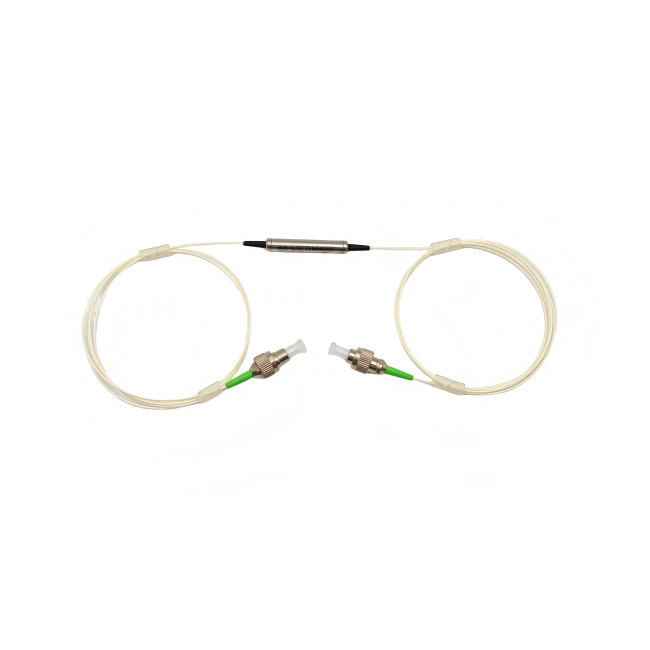
FBT vs. PLC Splitters: A Technical Selection Guide for Optical Networks
Selecting the right optical splitter is crucial for network performance and cost-efficiency. Two primary technologies dominate the market: Fused Biconical Taper (FBT) and Planar Lightwave Circuit (PLC) splitters. Understanding their differences is key to optimizing your Fiber-to-the-Home (FTTH), Passive Optical Network (PON), or data center infrastructure.
Below is a professional comparison to guide your choice.
🔍 FBT Splitter: The Versatile Workhorse
FBT splitters are traditional components made by fusing and tapering optical fibers together. They are known for their simplicity and cost-effectiveness in specific applications.
| Feature | FBT Splitter | PLC Splitter |
|---|---|---|
| Technology | Fused fiber technique; fibers are twisted, heated, and pulled. | Semiconductor fabrication; uses a silica glass waveguide circuit on a chip. |
| Wavelength | Wavelength-dependent (e.g., single, dual, or triple window). | Wavelength-flat; operates uniformly across a broad range (1260–1650nm). |
| Split Ratio | Highly flexible; ratios like 1:3, 1:7, 1:11, etc., are easily customized. | Standard ratios only (e.g., 1:2, 1:4, 1:8, 1:16, 1:32, 1:64, 1:128). |
| Uniformity | Good, but can vary slightly, especially at higher split counts. | Excellent; provides consistent output across all channels. |
| Size | Compact for low channel counts; becomes larger for high counts. | Ultra-compact, especially for high-count splitters (e.g., 1:32, 1:64). |
| Cost | Very cost-effective for low-channel, simple splitting applications. | Highly cost-effective for high-channel counts and mass production. |
| Best For | Networks with specific, non-standard split ratios; applications within a specific wavelength window. | High-channel count FTTH/PON deployments (GPON, EPON, XGS-PON); triple-play networks; applications requiring uniformity. |
🧭 How to Choose the Right Splitter
Your selection should be guided by your network’s specific needs:
- Choose an FBT Splitter if:
- You need a non-standard split ratio (e.g., 1:3, 1:7).
- Your application is limited to a specific wavelength (e.g., single-window 1310nm or 1550nm).
- Your project has strict cost constraints for very low-port-count (1×2, 1×4) deployments.
- Choose a PLC Splitter if:
- You are building a standard PON/FTTH network (1:32 or 1:64 splits are typical).
- Your network operates across a broad wavelength range (e.g., both 1310nm and 1550nm).
- Uniform signal distribution and low insertion loss across all outputs are critical.
- Space is limited; you need a compact, high-density solution.
Trust Feiyi for Your Critical Components
At Shenzhen Feiyi Optoelectronic Communication Co., Ltd. , we manufacture both high-quality FBT and PLC splitters, leveraging over 11 years of experience. All our passive components feature an epoxy-free optical path for superior reliability, ensuring your network performs optimally for years to come.
Get in Touch with Our Experts
Choosing the right component can be complex. Contact our engineering team today to discuss your specific requirements.
- Contact Page: https://www.feiyi-oeo.com/contact/
- Manufacturing Facility: Building 1, Factory of Zheng Desheng, 5th Floor, Muxi Road, Wuzhong District, Shaoguan City, Guangdong Province
- Phone/WhatsApp: +8617727495061 | +8613286062561
- Email: misa@feiyi-oeo.com | lily@feiyi-oeo.com