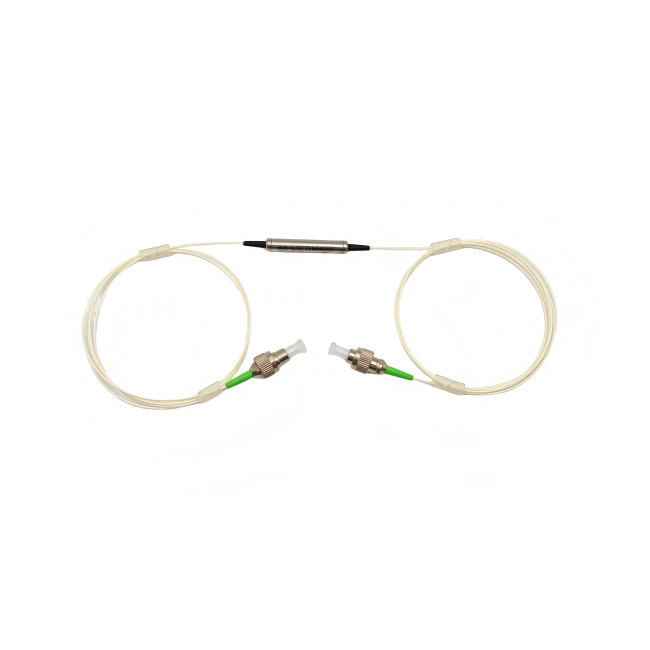
Magneto-Optic vs. Mechanical Optical Switches: A Technical Comparison
In optical networking, the choice between a Magneto-Optic Switch (MOS) and a Mechanical Optical Switch (OS) is fundamental, impacting system speed, reliability, and application suitability. This article provides a detailed technical comparison of these two dominant switching technologies, drawing on specifications from Feiyi Optoelectronic’s product lineup to illustrate their distinct characteristics.
Fundamental Operating Principles
The core difference lies in their actuation mechanism:
- Magneto-Optic Switches (MOS) utilize the Faraday effect. An electrical control signal generates a magnetic field within a magneto-optic crystal, which rotates the polarization plane of the incoming light. This rotation, combined with polarization-sensitive elements, directs the light to the desired output port. Crucially, this is a solid-state process with no moving physical parts in the optical path.
- Mechanical Optical Switches are opto-mechanical devices. They physically move optical components (such as mirrors or prisms) or fibers themselves to align the input path with a selected output path. This movement is typically driven by micro-motors or other electromechanical actuators.
Head-to-Head Technical Comparison
The following table summarizes the key performance differences based on typical product specifications:
| Feature | Magneto-Optic Switch (MOS) | Mechanical Optical Switch (OS) |
|---|---|---|
| Switching Speed | Extremely Fast (< 200 µs). Ideal for high-speed protection and real-time signal routing. | Moderate (typically ≤ 8 ms to 30 ms). Suitable for network reconfiguration and less time-critical switching. |
| Lifetime & Reliability | Exceptionally High (Theoretical). No mechanical wear, offering superior stability. | High (e.g., >10 million cycles). Proven reliability, though subject to eventual mechanical wear. |
| Optical Performance | Good (Insertion Loss: ≤1.0 dB, Isolation: ≥40 dB). Performance is stable and polarization-dependent. | Excellent (Insertion Loss: as low as 0.6 dB, Isolation: ≥70 dB). Often features an epoxy-free optical path for stability. |
| Wavelength Dependence | Dependent. Optimized for specific bands (e.g., 1520~1580 nm). | Wavelength Insensitive. Broad operation from 850nm to 1650nm, supporting multiple windows. |
| Power Consumption | Generally Low. Power is mainly used during the brief switching pulse. | Can be Higher. Power is required to drive mechanical movement and hold position in some designs. |
| Key Advantage | Speed and solid-state reliability. | Low loss, high isolation, wavelength flexibility, and cost-effectiveness. |
Application Scenarios: Choosing the Right Tool
The choice between MOS and OS is dictated by the specific demands of the application.
Choose a Magneto-Optic Switch when:
- Ultra-Fast Switching is Critical: Primary use is in high-speed network protection systems where link failure must be mitigated in microseconds to prevent data loss.
- High-Endurance is Required: Applications demanding billions of cycles with minimal performance degradation benefit from its solid-state nature.
- Space and Environment are Constrained: Its compact, non-mechanical design resists vibration and is suitable for tight integration.
Choose a Mechanical Optical Switch when:
- Optical Performance is Paramount: Applications like test & measurement, optical add-drop multiplexing (OADM), and precision routing where minimizing insertion loss and maximizing channel isolation are top priorities.
- Wavelength Flexibility is Needed: Systems operating across wide bands (e.g., 1260-1650nm) or multiple wavelengths require its inherent wavelength independence.
- Cost-Effectiveness is a Factor: For network provisioning, lab automation, and monitoring where extreme speed is not essential, mechanical switches offer excellent performance at a competitive cost.
Conclusion
There is no universal “best” optical switch technology. The Magneto-Optic Switch stands out as the specialist for ultra-fast, high-reliability protection in demanding core networks. In contrast, the Mechanical Optical Switch is the versatile workhorse, delivering superior optical performance, broad compatibility, and reliability for a vast majority of applications in optical routing, testing, and system configuration. A clear understanding of your system’s requirements for speed, loss, and environment will guide you to the optimal choice.