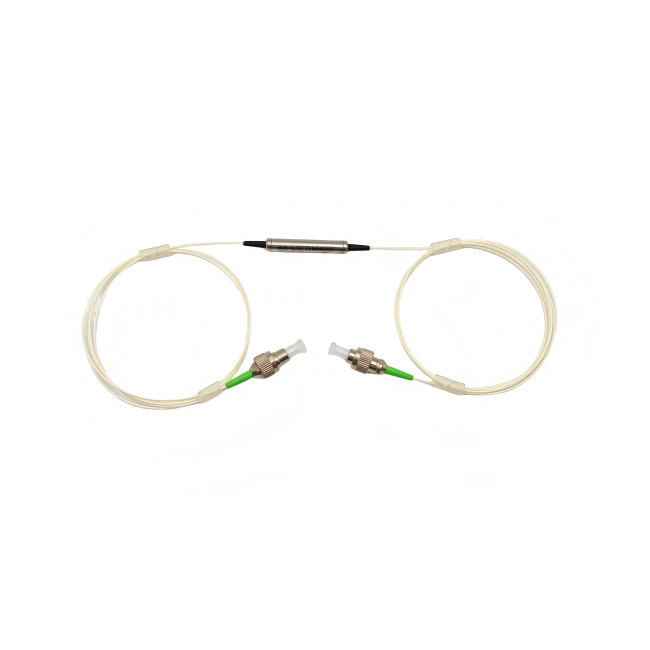
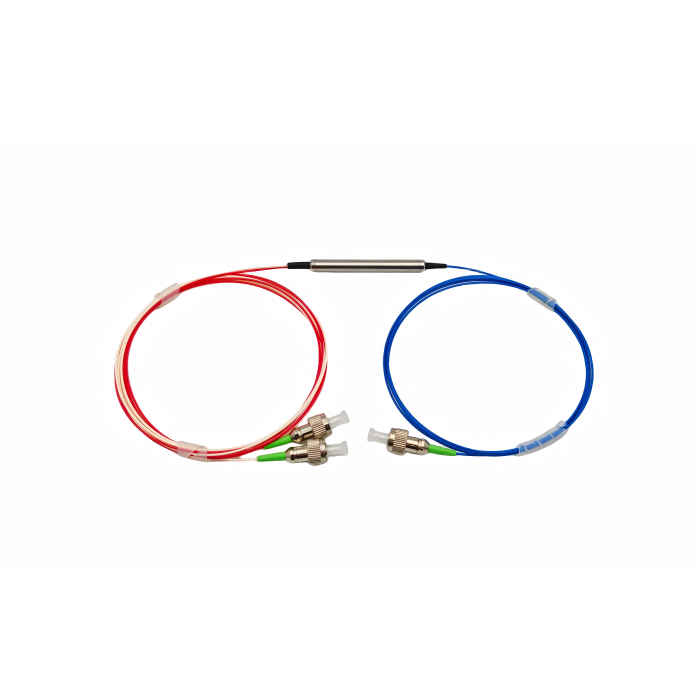
Optical Circulator: The Unseen Traffic Controller That Makes Modern Optical Networks Work
An optical circulator is a non-reciprocal passive component that routes light from port to port in a single direction — like a roundabout that only lets traffic flow one way. Light entering Port 1 exits at Port 2; light entering Port 2 exits at Port 3; and so on. The reverse path is blocked. This simple directional behavior makes the circulator indispensable in applications where signals must travel in opposite directions along the same fiber, or where back-reflections must be contained before they destabilize a laser source.
At Feiyi Optoelectronic, we have been manufacturing optical circulators for 14 years. Our portfolio spans polarization-insensitive models for telecom networks, polarization-maintaining versions for fiber gyroscopes and quantum optics, and high-power designs for fiber lasers. Every unit is individually tested, temperature-cycled, and shipped with a full test report.
How an Optical Circulator Works
The core of any circulator is the Faraday rotator — a magneto-optic crystal (typically terbium gallium garnet or yttrium iron garnet) placed in a permanent magnetic field. When light passes through this crystal, its plane of polarization rotates by a fixed angle (typically 45 degrees) in a direction that depends on the magnetic field orientation, not on the direction of light propagation. This non-reciprocal behavior is what allows the circulator to break the symmetry of conventional optics. By combining the Faraday rotator with birefringent beam displacers and waveplates, the circulator creates a one-way path: light entering Port 1 is steered to Port 2, light entering Port 2 is steered to Port 3, and light attempting to re-enter Port 2 from Port 1 is blocked.
The Feiyi Optoelectronic Circulator Portfolio
Polarization-Insensitive Circulators — the Workhorse for Telecom and Data Centers
In standard single-mode fiber networks, the polarization state of a signal drifts unpredictably due to temperature changes, mechanical stress, and fiber routing. Polarization-insensitive (PI) circulators are designed to handle this randomness — their performance is stable regardless of the input polarization state. Feiyi’s PI circulators are available in 3-port and 4-port configurations, supporting wavelengths at 1310 nm, 1480 nm, and 1550 nm, with custom wavelengths available on request. Typical insertion loss is ≤0.8 dB, with isolation ≥40 dB for single-stage and ≥55 dB for dual-stage versions. These are the standard choice for single-fiber bidirectional links, EDFA pump protection, DWDM add-drop modules, and network monitoring applications.
Polarization-Maintaining Circulators — Where Polarization Integrity Is Critical
In coherent optical communication, fiber optic gyroscopes, and quantum key distribution, maintaining the polarization state of the signal is as important as the signal itself. Feiyi’s PM circulators serve a dual purpose: they block reverse-propagating light while preserving the polarization extinction ratio of the forward-propagating signal. With extinction ratios ≥23 dB for single-stage and ≥28 dB for dual-stage configurations, these circulators are purpose-built for high-precision FOG systems, interferometric fiber sensors, and quantum optics experiments. Standard wavelengths cover 1310, 1480, and 1550 nm, with full customization available.
High-Power Circulators — Engineered for Kilowatt-Class Laser Systems
Fiber laser systems operating at tens or hundreds of watts present a fundamentally different set of requirements. The forward-propagating beam can carry sufficient optical power to cause thermal damage in standard circulator designs, while backward reflections from the workpiece must be safely dissipated. Feiyi’s high-power circulators address these challenges through an epoxy-free optical path that eliminates organic materials from the beam path — removing the primary failure mechanism in high-power operation. Custom fiber types, connector options, and fiber lengths allow integration into a wide range of laser system architectures.
Key Performance Parameters
| Parameter | Single-Stage (Typical) | Dual-Stage (Typical) | Why It Matters |
|---|---|---|---|
| Insertion Loss | ≤0.8 dB | ≤1.0 dB | Determines how much signal power is lost through the device |
| Isolation | ≥40 dB | ≥55 dB | Measures the circulator’s ability to block backward-propagating light |
| Return Loss | ≥50 dB | ≥50 dB | Quantifies reflections from the circulator’s own optical interfaces |
| PDL | ≤0.1 dB | ≤0.1 dB | Ensures stable performance regardless of input polarization state |
| PMD | ≤0.05 ps | ≤0.05 ps | Critical for high-speed systems (100 Gbps and above) |
| Operating Temperature | -5°C to +70°C | -5°C to +70°C | Industrial-grade range for field deployment |
Primary Application Scenarios
Single-Fiber Bidirectional Communication
Perhaps the most commercially valuable application of the circulator. In access networks and metro deployments where fiber resources are limited, a pair of circulators enables two signals — one traveling east, one traveling west — to share the same physical fiber without mutual interference. This effectively doubles the capacity of existing fiber infrastructure without the cost and delay of laying new cable.
EDFA Pump Protection and Gain Flattening
Erbium-doped fiber amplifiers are the engines of modern DWDM networks. Each EDFA stage contains pump lasers that inject high optical power into the erbium-doped fiber. Back-reflections from downstream connectors, splices, or components can return to the pump laser, causing instability or permanent damage. A circulator placed at the amplifier output blocks these reflections before they reach the pump. In multi-stage amplifier designs, circulators are also used to route signals between gain stages and dispersion compensation modules.
Fiber Optic Gyroscopes — the Ultimate PM Application
Fiber optic gyroscopes measure rotation by detecting the phase difference between two counter-propagating beams of light within a fiber coil. A PM circulator is a critical component in the FOG optical path: it routes the broadband light source into the PM coupler and fiber coil, then directs the returning interference signal to the photodetector. Any polarization cross-talk in the circulator directly translates into bias drift in the gyroscope output. For navigation-grade FOGs requiring bias stability below 0.01 °/h, the extinction ratio of the PM circulator becomes a defining performance parameter.
Distributed Fiber Sensing
In DAS and DTS interrogation systems, the circulator separates the high-power interrogation pulse traveling toward the sensing fiber from the weak Rayleigh, Brillouin, or Raman backscattered signal returning from the fiber. High isolation in the circulator is essential to prevent the interrogation pulse from saturating or damaging the sensitive receiver.
Manufacturing Reliability
The reliability of an optical circulator in the field depends on the quality of its design, materials, and manufacturing processes. Feiyi Optoelectronic’s circulators are designed and manufactured to meet the requirements of Telcordia GR-1221-CORE, the industry-standard reliability assurance specification for passive optical components.
A defining characteristic of our manufacturing process is the epoxy-free optical path design. In conventional circulator designs, epoxy is used to bond optical elements within the beam path. Under sustained optical loading, epoxy can outgas, thermally degrade, or delaminate — leading to contamination of optical surfaces, insertion loss drift, and component failure. By eliminating epoxy from the optical path, our design removes this failure mechanism, resulting in circulators with superior long-term stability, higher power handling capability, and extended operational lifetimes.
Every circulator that leaves our factory undergoes individual optical performance testing, with complete test reports shipped alongside each unit. These reports document the measured values of insertion loss, isolation, return loss, PDL, and PMD, providing verifiable evidence of performance and traceability throughout the component’s service life.
Selecting the Right Circulator
| Decision Factor | Key Questions | Typical Recommendation |
|---|---|---|
| Wavelength | What is the center wavelength of the optical signal? | Select a circulator specified for that wavelength (1310, 1480, 1550 nm; custom available) |
| Isolation Requirement | How sensitive is the protected component to back-reflections? | ≥40 dB for standard laser protection; ≥55 dB for EDFA pumps and high-precision systems |
| Polarization Sensitivity | Does the system require polarization maintenance? | PM circulator for FOG, coherent, and quantum; PI circulator for standard telecom |
| Optical Power | What is the average and peak optical power? | Standard for <500 mW; high-power variants for multi-watt or kilowatt-class systems |
| Port Count | How many signal routing paths are needed? | 3-port for most applications; 4-port for bidirectional transmission with monitoring |
Contact Us
For complete technical specifications, custom configuration requests, or to arrange evaluation samples for your engineering team, contact Feiyi Optoelectronic at the details below.
*Feiyi Optoelectronic — Passive Optical Components, Factory-Direct, 14 Years of Manufacturing Excellence.*