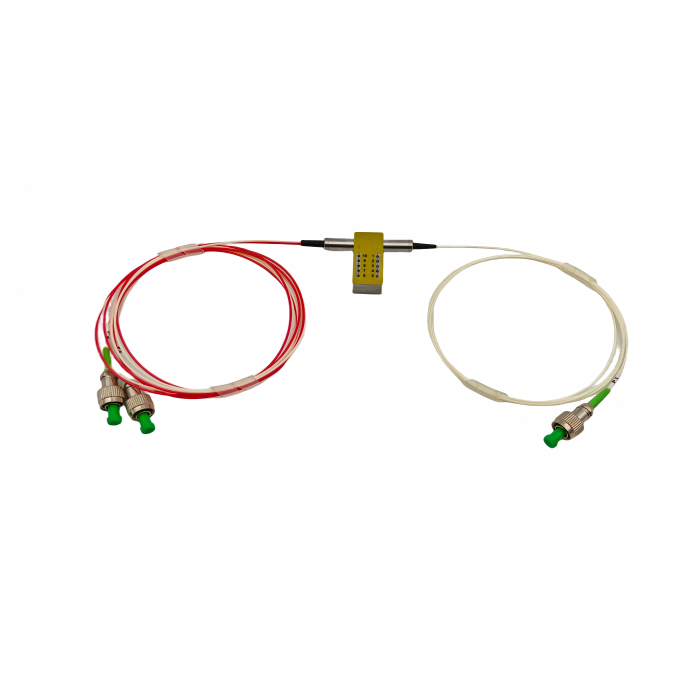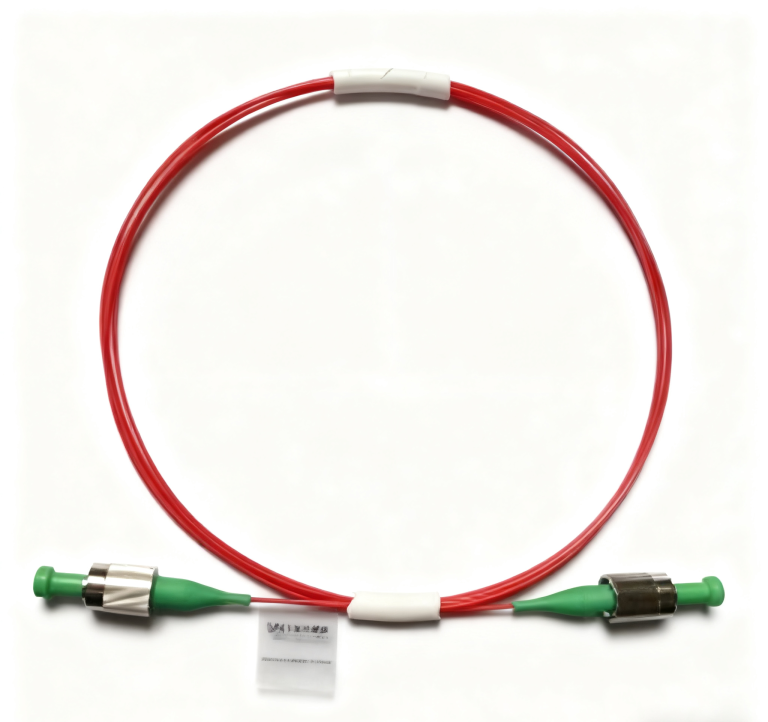

PLC Splitter Manufacturer: Match Split Count, Loss and Package to the Distribution Network
A buyer evaluating a PLC splitter manufacturer should decide the split architecture before choosing a box. The first engineering question is whether one input must be distributed to 2, 4, 8, 16, 32, 64 or 128 outputs, or whether the system needs a 2 x N configuration. The second question is how much insertion loss and channel-to-channel variation the network can tolerate at that split count. Only after those decisions should the project choose mini, insert-type or ABS-box packaging.
Feiyi publishes PLC Splitter – Mini, PLC Splitter – Insert Type and PLC Splitter – ABS Box products with 1 x N and 2 x N specifications across a 1260-1650 nm operating range. The pages list G657A1 fiber or customer-specified fiber, loss limits by split count, PDL, return loss, directivity and environmental ranges. That gives an engineering buyer enough information to build a real acceptance plan instead of ordering “1 x 16 PLC” by ratio alone.
A PLC splitter manufacturer should receive the actual optical distribution tree
A passive optical splitter divides one or more input signals among multiple output fibers. The nominal ratio tells only how many branches exist. The buyer still needs to know where the splitter sits, how many downstream branches are active, what optical margin remains after connectors and fiber, and how the module will be installed.
1 x 4 and 1 x 64 splitters create very different loss conditions
Feiyi’s published 1 x N PLC table lists P/S-grade insertion-loss limits of 7.1/7.3 dB for 1 x 4, 13.5/13.7 dB for 1 x 16, 20.5/21.0 dB for 1 x 64 and 23.8/24.2 dB for 1 x 128. Those values rise because the optical power is divided among more outputs and because the device itself contributes excess loss.
A PON planner should therefore choose the split count from the complete loss budget. If a feeder already contains several connector pairs and long distribution fiber, increasing the split ratio can push remote endpoints outside the available margin. The component cannot solve an architecture that demands more optical power than the source and receiver budget allow.
2 x N is a different input architecture, not a spare second lead
Feiyi also publishes 2 x N PLC options from 2 x 2 through 2 x 128. The second input changes how the splitter can be used and must be intentionally designed into the network. A purchase order should not specify 2 x N only because it appears more flexible.
An operator building a protected feeder or a laboratory distribution system may have a reason for two inputs. A straightforward one-source distribution network may not. The input topology should appear on the optical diagram so installers know whether both inputs are functional and how each is intended to be used.

Insertion loss and uniformity are linked when qualifying a PLC splitter manufacturer
For a splitter, the average output power is only part of the story. A network also needs the individual output branches to stay within an acceptable range. Feiyi’s PLC tables therefore publish both insertion loss and loss uniformity by split count.
Uniformity becomes more important as the branch count grows
For the published 1 x N values, loss uniformity is listed at 0.4 dB for 1 x 2, 0.8 dB for 1 x 8, 1.0 dB for 1 x 16, 1.5 dB for 1 x 32, 2.0 dB for 1 x 64 and 2.4 dB for 1 x 128. A larger split therefore deserves more attention to the weakest output rather than only the average.
Imagine an access network where two subscribers are already near the receiver sensitivity limit because their drops are longer. If those two branches also land on the higher-loss outputs of the splitter, the system can fail while closer branches remain healthy. Receiving inspection should sample or record outputs in a way that reveals the range, not only one convenient port.
PDL and wavelength-dependent loss belong in the passive budget
The 1 x N Feiyi table lists PDL from 0.2 dB at lower split counts up to 0.4 dB for 1 x 128. Wavelength-dependent loss is listed at 0.3 dB for lower split counts and 0.5 dB for higher counts in the published specification. These values describe how loss can vary with polarization state and wavelength.
For a broad 1260-1650 nm operating band, a buyer should not qualify the component at only one wavelength if the deployed service will use several. The exact acceptance wavelengths should come from the network design, and the results should remain linked to the same split configuration.
The PLC splitter package should match the cabinet, tray or terminal where it will live
Feiyi publishes mini, insert-type and ABS-box forms. Each contains the same general splitter function but creates a different installation interface. The best package is the one that reduces uncontrolled fiber handling at the intended site.
Mini PLC splitters fit compact assemblies where fiber routing is already controlled
The mini product is useful where the splitter is integrated into a protected enclosure or tray and the system designer can manage the pigtails directly. Feiyi’s published mini-module dimensions vary by split count, from compact formats for low port counts to larger housings for higher counts.
An OEM or terminal manufacturer should check not only the body size but also the fiber exit points, bend radius and service loop. A very small housing is not useful if the surrounding fibers must be sharply bent to reach adapters.
Insert-type PLC splitters fit modular distribution hardware
The insert-type product can make sense where a field enclosure is designed around removable or organized splitter units. In that environment, the physical interface and port numbering may matter as much as the optical specifications because technicians will service the splitter after installation.
A contractor replacing an existing insert module should compare the current enclosure dimensions, adapter positions and connector types before assuming another insert-type splitter will fit. “Insert type” describes a package class, not a universal mechanical standard.
ABS-box PLC splitters protect a larger pigtail assembly
Feiyi’s ABS-box version is useful when the project wants a protected module body and external fiber leads. This may suit distribution boxes or installations where the splitter is not mounted as a plug-in insert. The order should define cable construction, connectorization and lead lengths according to the site.

A PLC splitter manufacturer acceptance file should identify the weakest branch
Feiyi publishes return-loss values of 55/50 dB for the P/S grades in the 1 x N table and directivity of 55 dB. Those numbers support an incoming test plan, but a useful acceptance record must still be tied to individual outputs and test conditions.
Measure enough outputs to see whether the split is balanced
For a small 1 x 4 device, measuring every output is practical. For a very high split count, the project may define a sampling method or require a full port record depending on its quality needs. The important point is that the test can identify excessive branch variation rather than hiding it inside one aggregate result.
Before measurement, clean connector end faces and control the launch source. If pigtails are bare or spliced, document the launch method. An unexplained test-lead loss can otherwise be mistaken for splitter variation.
Temperature qualification should use the published component range as a boundary
Feiyi’s PLC Splitter pages list an operating-temperature range from -40 to +85 degrees Celsius and the same -40 to +85 degrees Celsius storage range. The published temperature-stability values are 0.4 dB for lower split counts and 0.5 dB for higher counts in the displayed table.
An outdoor network designer can use these component limits when building the enclosure qualification plan, but should also account for adapters, splices and cable behavior. The splitter datasheet does not replace testing of the complete field terminal.
PLC splitters and fused couplers should not be substituted just because both divide light
Feiyi also publishes single-mode couplers, double-window couplers and multi-film coupler products. Those devices can be useful for different split functions or wavelength behaviors. A buyer should not treat every “1 x 2” optical component as equivalent.
High-port-count equal distribution naturally points toward the PLC family
PLC technology is especially useful when one input must be divided across many outputs with controlled uniformity. Feiyi’s 1 x N range extending to 1 x 128 illustrates that high branch count. A 1 x 2 or specialized unequal split may lead the engineer to compare other coupler technologies instead.
The decision should therefore begin with the optical function: equal multi-port distribution, a specific tap ratio, wavelength-selective behavior or another routing requirement. The package name comes later.
A distributor should stock PLC splitters by split count and package as separate dimensions
For repeat industrial supply, “1 x 8 PLC” is still not a complete inventory description. A mini device, insert-type module and ABS-box version can all use the same nominal split count but serve different installation hardware.
Connector type and lead format determine whether a replacement is actually usable
A field replacement has to mate with the existing adapters and fit the available fiber-management space. If the original unit uses connectorized outputs and the spare arrives with bare fibers, the optical ratio may be correct but the service job changes completely.
Stock records should therefore preserve split configuration, package, fiber type, connector type and any approved lead length. For high-port-count parts, port numbering should also be consistent so a replacement can be installed without reinterpreting the distribution map.
Release the PLC splitter order from a loss budget, not from a catalog screenshot
The procurement file should show 1 x N or 2 x N topology, split count, wavelength range used by the service, maximum insertion loss, allowed uniformity, package, connector interface and environmental requirement. For a network with several splitter stages, calculate cumulative loss using the actual architecture rather than judging each component in isolation.
Feiyi product pages that can anchor the order include the PLC Splitter – Mini, PLC Splitter – Insert Type, PLC Splitter – ABS Box, the PLC splitter range and Feiyi’s broader optical splitter range.
For a municipal access build, the first question may be whether a 1 x 16 stage leaves enough power at the longest drop. For a distributor, it may be whether mini and insert versions need separate stock codes. For an equipment maker, it may be whether the output fibers can be routed without stress. All three buyers can use the same PLC technology, but they should not send the manufacturer the same incomplete specification.
Troubleshooting a high-ratio splitter should separate the splitter from the downstream drop
If one branch of a 1 x 32 or 1 x 64 network reports low received power, the field team should not replace the PLC module immediately. First compare that output at the splitter boundary with another known branch, then inspect the connector, splice and downstream drop separately. A controlled baseline from the original acceptance test makes this faster because it shows whether the port was already near the high-loss end of the allowed uniformity range. For repeat deployments, retain the port-level record with the cabinet documentation rather than only a single overall pass result.