
CWDM OADM Module Supplier: Plan East-West Add/Drop Nodes on the 20nm CWDM Grid
[Reading 56 lines from start (total: 56 lines, 0 remaining)]
CWDM OADM Module Supplier: Plan East-West Add/Drop Nodes on the 20nm CWDM Grid
A CWDM OADM module supplier should receive the physical network direction and wavelength plan before channel count is chosen. Feiyi’s CWDM OADM Module is a passive add/drop device for extracting or inserting selected CWDM wavelengths while other channels continue through a bus or ring. The product page lists the ITU-T G.694.2 CWDM grid from 1270–1610 nm or 1271–1611 nm at 20 nm spacing, with 4-, 8- and 16-channel configurations and single-sided or dual-sided East/West options.
That network topology is the first buying decision. A single-sided site interacts with one line direction; a dual-sided site can add/drop traffic toward both East and West. The buyer should therefore draw the node with line directions, local wavelengths and express wavelengths before selecting package, connector or fiber length.
A CWDM OADM module supplier needs to know whether the node is single-sided or dual-sided
Feiyi explicitly lists single-sided East or West and dual-sided East-and-West arrangements. These are not cosmetic port-label variations. They describe how the node sits in a bus or ring and which direction receives or transmits each wavelength.
For a simple spur, one-sided add/drop may be enough. For a ring node that must reach traffic in both directions, dual-sided architecture can be more appropriate. Put the network direction on the order so the module is labeled for the actual field route rather than for an abstract lab setup.
East and West labels should match the site’s physical fiber routes
If the network drawing calls one direction East while the installer labels the opposite duct East, troubleshooting becomes confusing. Define East and West from a site reference and keep the same convention on the OADM, patch panel and network map.
The 20nm CWDM grid should be fixed before deciding how many local channels the node needs
Feiyi lists CWDM center wavelengths across 1270–1610 nm or the alternate 1271–1611 nm convention with 20 nm spacing. A buyer should choose the wavelength convention used by the existing optics and transceivers. The number of local services does not determine whether the line uses the zero-ending or one-ending wavelength labels.
If an installed network already has CWDM transceivers, copy their actual center wavelengths into the OADM schedule. Do not rely on color names or generic “four-channel CWDM” descriptions when ordering a replacement node.
A future wavelength should be reserved by its actual center wavelength, not by an empty port number
When a site is expected to grow, mark the planned wavelength beside each spare local port. That prevents a later expansion from choosing a channel that is already used elsewhere on the bus or ring.
Four, eight and sixteen local channels create different loss and maintenance tradeoffs
The Feiyi table shows insertion-loss limits of about 1.5 dB for the 4-channel case, 2.5 dB for 8 channels and 3.5 dB for 16 channels in the displayed MUX/DEMUX configurations. A node should not be oversized automatically “for future capacity” if the extra filter path consumes optical margin the network does not need.
Choose the local channel count from realistic service growth and the route-level loss budget. If a four-channel node is likely to be full immediately, eight channels may be more practical. If only two or three wavelengths are expected for years, a larger module can add complexity without operational benefit.
The wide CWDM passband should still be compared with the transceiver wavelength
Feiyi lists a -0.5 dB channel passband of approximately ±7.5 nm or ±6.5 nm depending on the wavelength convention shown. CWDM channels are much more widely spaced than DWDM channels, but the buyer should still verify that the installed transceiver wavelength falls inside the intended OADM passband across temperature and device tolerance.
A field network may contain optics from several vendors. Record the nominal wavelength printed on the transceiver and the OADM port rather than assuming a colored latch or dust cap proves compatibility.
Adjacent isolation above 30dB and non-adjacent isolation above 40dB should be read with local launch power
The Feiyi page lists adjacent isolation above 30 dB and non-adjacent isolation above 40 dB for demultiplexing paths. These values help separate a dropped receiver from other CWDM carriers. If a locally added transmitter has much higher power than an incoming channel, verify the downstream spectrum after commissioning.
Isolation is not only a laboratory number. It becomes a network risk when one channel is amplified, one transmitter is unusually strong or the receiving optics have limited rejection outside their intended band.
A newly added wavelength should be checked on the line after the OADM, not only at the local patch cord
Measure or monitor the new service downstream together with a neighboring existing channel. This catches wrong-port patching and excessive launch power before the change is accepted.
Temperature shift and loss sensitivity support passive outdoor or access-node use
Feiyi lists insertion-loss temperature sensitivity below 0.005 dB/°C, wavelength shift below 0.002 nm/°C, operating temperature from -5 to +75 °C and storage from -40 to +85 °C. These values suit the passive nature of CWDM OADM deployment where no active wavelength control is built into the module.
If the OADM is mounted in a roadside cabinet, pole enclosure or unconditioned equipment room, compare the site temperature with the product range and include connector and fiber routing in the same environmental review.
PDL below 0.1dB and PMD below 0.1ps belong in the installed-node record
The current Feiyi table lists polarization-dependent loss below 0.1 dB and polarization-mode dispersion below 0.1 ps, with directivity at least 50 dB and return loss above 45 dB. These help describe the transparency of the passive node beyond simple insertion loss.
They may not be the first parameters a CWDM access-network buyer discusses, but keeping them in the approved specification provides a better baseline if the network later carries different optics or data rates.

ABS, LGX and rack packaging should follow the access method at the field site
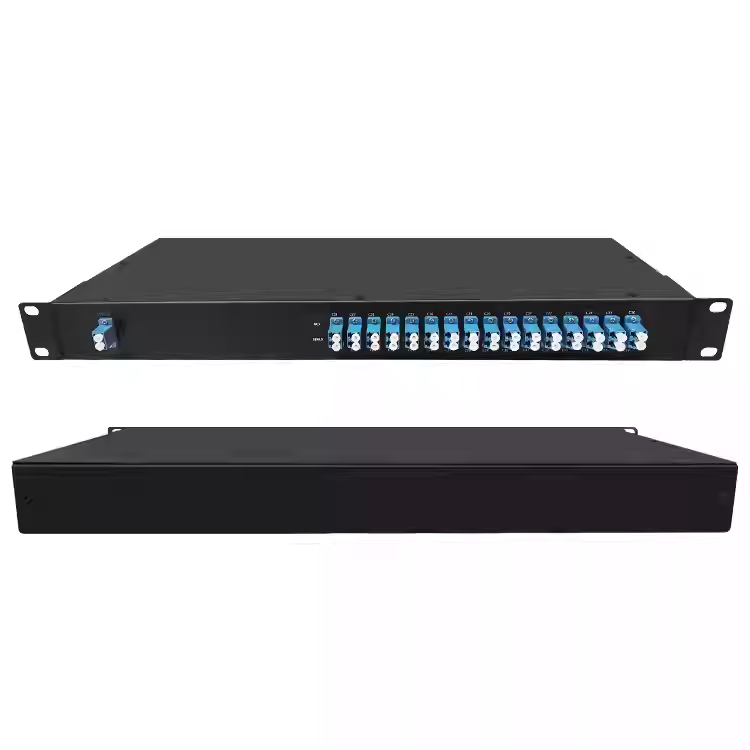
Feiyi offers ABS boxes, LGX formats and 19-inch rack options. A sealed access enclosure may use an internal ABS module, while a central-office or enterprise rack may benefit from a serviceable LGX or rack format with clear port labels.
Choose the package with the technician’s working environment in mind. An OADM hidden inside a crowded enclosure can be optically correct yet difficult to maintain if add/drop and line ports are not visible.
Cable and connector choices should match the access site’s repair practice
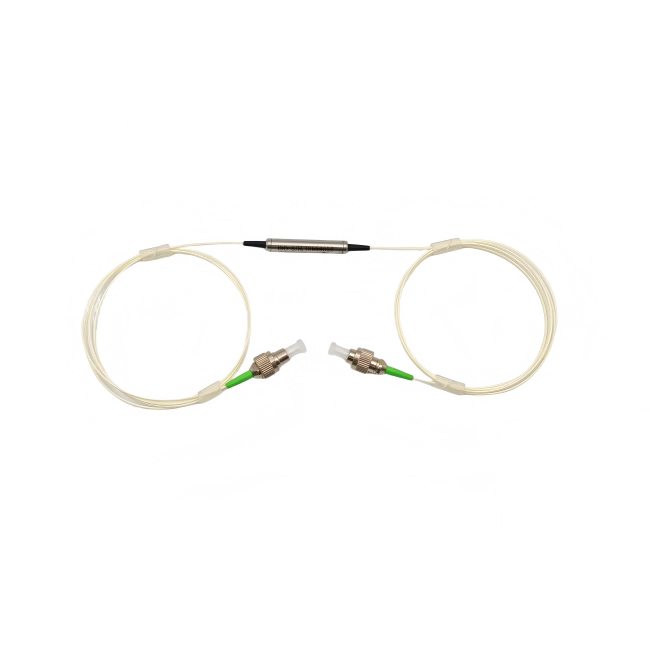
Feiyi lists 900 µm loose tube, 2.0 mm and 3.0 mm cable options and LC, SC and FC terminations in UPC or APC polish. A splice-oriented cabinet may favor loose-tube pigtails, while a rack site may use connectorized ports. Put the actual maintenance method into the order instead of selecting the connector from habit.
If dual-sided East/West packaging is used, label connector groups by direction as well as wavelength. A technician should not have to trace fibers through the enclosure to discover which line side a port belongs to.
Connector polish should remain consistent with existing patch panels and transceivers
A CWDM wavelength match does not make UPC and APC physically interchangeable. Record the polish in the site BOM and replacement-spare description.
Commissioning should prove both directions at a dual-sided CWDM OADM site
For an East/West node, test at least one local add/drop path toward each direction and verify a representative express wavelength through the site. This confirms that directional port labels, patching and wavelength identity all agree with the network drawing.
If the site is single-sided, the acceptance test should still distinguish local add, local drop and express traffic. The goal is to prove the node function, not just that light exits one connector.
A ring cut or fiber reroute can make old East-West labels misleading
Physical network routes change over time. If a cable cut, duct migration or site redesign reverses the practical direction of a link, update the OADM documentation and rack labels rather than leaving the original East/West convention in place. A future technician should be able to understand the current topology from the cabinet itself.
This matters most in dual-sided OADM designs because a directional misunderstanding can affect which way a newly added service enters the ring.
Service spares should preserve wavelength set, direction and package—not just channel count
A spare described as “8-channel CWDM OADM” can still be wrong if it uses a different eight-wavelength group, the wrong East/West configuration, another connector polish or a package that cannot fit the enclosure. The maintenance record should preserve the exact wavelength list and directional topology.
For operators with many nodes, standardizing a few wavelength groups and package styles can simplify spares, but that standardization should be intentional and reflected in the network plan.
A repeat CWDM OADM order should reproduce the node’s 20nm wavelength map and direction
After a site is approved, retain the wavelength convention, actual 20 nm channels, local add/drop/express roles, single- or dual-sided topology, 4/8/16-channel build, agreed loss and isolation limits, package, cable type, connector polish and fiber length. Keep the East/West reference tied to the site’s physical route.
Feiyi’s CWDM MUX/DEMUX article covers terminal channel planning. The OADM has a different job: selected wavelengths enter and leave an intermediate site while the rest of the CWDM line continues. That directional node behavior should remain the center of the procurement file.
Multiple CWDM OADM sites should be budgeted by the longest express wavelength route
A wavelength that passes through several intermediate sites accumulates loss even when it is not locally added or dropped. As the bus or ring grows, identify the express channel that crosses the greatest number of OADM nodes and update the optical budget using the loss of the actual 4-, 8- or 16-channel configurations installed along that route.
This prevents an expansion site from consuming the remaining margin of a through-service that looked healthy when the network had fewer nodes. The same review should include connectors, splices and any monitoring taps added during field work.
Single-fiber and dual-fiber network conventions should be explicit in the site handoff
The Feiyi page describes OADM use on one or two fibers depending on network architecture. A buyer should show whether upstream and downstream traffic share one fiber or use a fiber pair, and how the East/West ports map to that physical arrangement. Do not let installers infer this from the number of connectors on the module.
For a fiber-pair network, label transmit and receive directions consistently across the site. For a single-fiber bidirectional design, record which wavelength directions share the strand so replacement optics and OADM configuration remain compatible.
Expansion from four to eight or sixteen local wavelengths should trigger a fresh cabinet and loss review
A larger CWDM OADM changes more than available ports. It can increase insertion loss, require more patching space and create a denser labeling problem in the enclosure. Before replacing a four-channel unit with an eight- or sixteen-channel device, confirm the optical budget, package dimensions, connector access and planned wavelength set.
If the existing cabinet cannot support the extra service loops cleanly, a larger rack or LGX presentation may be better than forcing a higher-channel-count ABS module into the old space.
[executed on device: SK-20260121JOTG (a251fff9-956e-47b5-9307-14fb53329ed2)]