
Optical Circulator: Working Principle, Types, Key Specifications and Applications
In modern fiber-optic communication, sensing, and laser systems, optical signals often need to be transmitted, separated, and routed through the same fiber path. An optical circulator provides an efficient way to manage these signals by directing light from one port to the next while separating forward and backward optical paths.
For applications such as DWDM, EDFA, fiber lasers, FBG sensing, OTDR, and bidirectional fiber-optic transmission, selecting the right optical circulator can have a significant impact on system performance and reliability.
What Is an Optical Circulator?
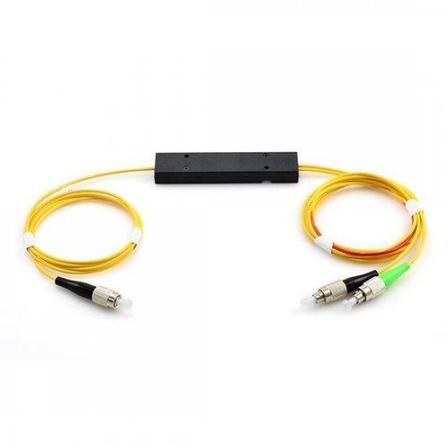
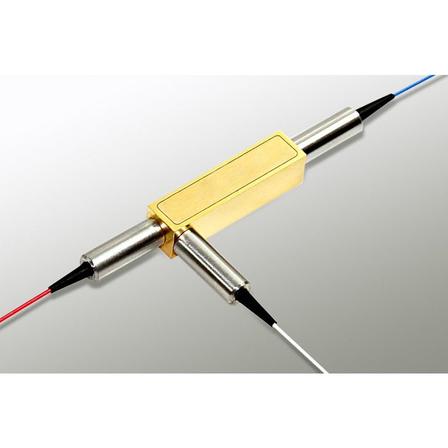
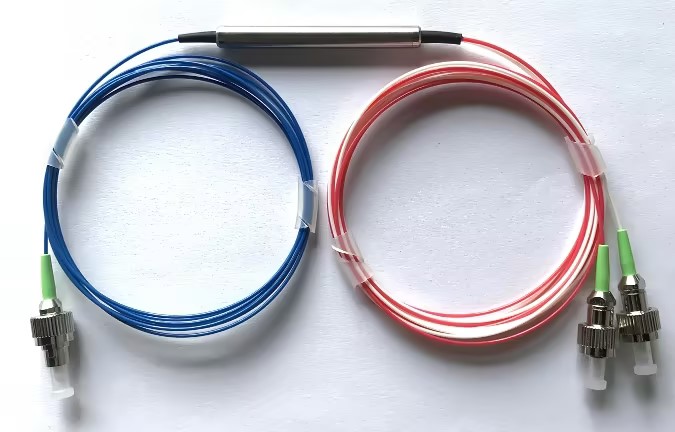
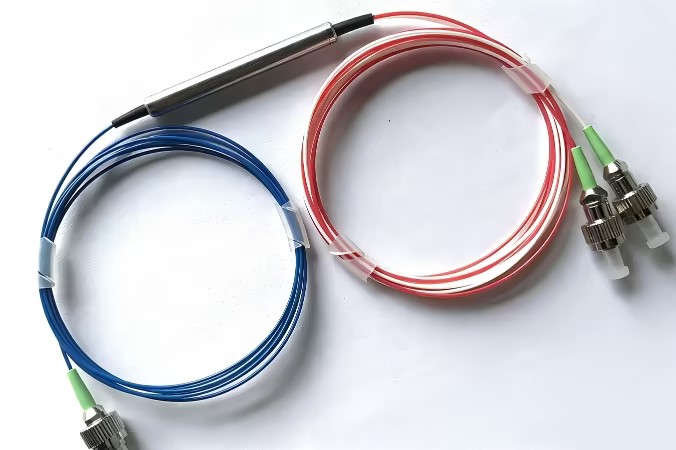
An optical circulator is a passive, non-reciprocal optical component that directs light signals between multiple ports in a predefined direction.
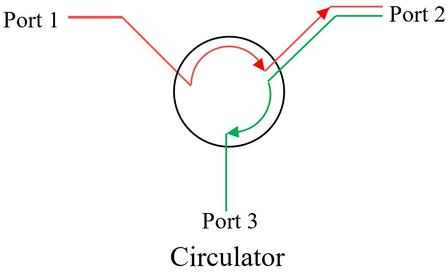
In a typical 3-port optical circulator:
Port 1 → Port 2 → Port 3
Light entering Port 1 is directed to Port 2. If a signal returns through Port 2, it is routed to Port 3 instead of going back to Port 1.
This allows the transmitted and reflected signals to be separated while using the same optical path.
Unlike an optical coupler, which divides optical power between multiple paths, a circulator provides directional routing with high isolation between ports. Unlike an optical isolator, which primarily blocks reverse-propagating light, a circulator redirects the returning optical signal to another port where it can be detected, processed, or further transmitted.
How Does an Optical Circulator Work?
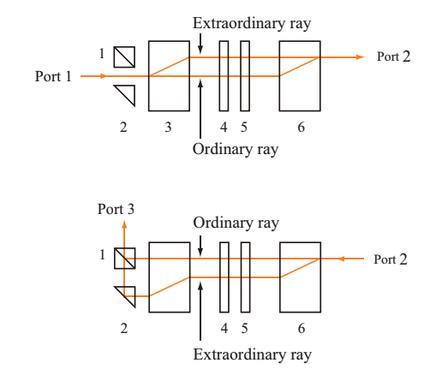
Optical circulators use non-reciprocal optical behavior, commonly based on the Faraday effect, to control the propagation direction of light.
The internal optical structure typically includes magneto-optic elements and polarization-management components that enable the optical signal to follow a predefined path.
For example:
3-Port Circulator
Port 1 → Port 2
Port 2 → Port 3
This configuration is particularly useful when a system needs to separate an outgoing signal from a returning or reflected signal.
In fiber-optic systems, polarization-independent designs are commonly used because the state of polarization can vary during transmission through the fiber. For polarization-sensitive applications, PM optical circulators can provide controlled polarization performance.
3-Port vs. 4-Port Optical Circulators
3-Port Optical Circulator
A 3-port circulator is one of the most widely used configurations.
Typical applications include:
- Fiber Bragg Grating (FBG) systems
- Optical sensing
- Bidirectional fiber transmission
- OTDR systems
- DWDM/OADM systems
- Optical signal monitoring
- Fiber laser systems
A typical signal path is:
Port 1 → Port 2 → Port 3
The reflected signal can therefore be separated from the transmitted signal without requiring a second fiber path.
4-Port Optical Circulator
A 4-port circulator provides additional routing flexibility for more complex optical architectures.
It can be used when multiple optical paths need to be separated or routed within the same system.
Typical applications include:
- Advanced optical communication systems
- Optical switching and routing
- Fiber sensing systems
- Test and measurement equipment
- Complex WDM architectures
- Specialized laser systems
The appropriate configuration depends on the system architecture, optical path, and required signal routing.
Optical Circulator vs. Optical Isolator
Although optical circulators and optical isolators are closely related passive components, their functions are different.
| Feature | Optical Circulator | Optical Isolator |
|---|---|---|
| Main function | Routes optical signals | Blocks reverse optical signals |
| Typical ports | 3 or 4 | 2 |
| Return signal | Redirected to another port | Suppressed |
| Bidirectional transmission | Yes | No |
| FBG sensing | Excellent fit | Limited |
| Laser protection | Possible | Primary application |
| Signal routing | Yes | No |
The key difference can be summarized simply:
An optical isolator protects. An optical circulator routes.
If the reflected signal is unwanted and should be prevented from reaching the laser source, an optical isolator is generally more appropriate.
If the reflected signal contains useful information and needs to be separated and collected, an optical circulator is usually the better choice.
Key Specifications When Selecting an Optical Circulator
Choosing a circulator should not be based only on wavelength and port number. Several optical and mechanical parameters can directly affect system performance.
1. Insertion Loss
Insertion loss indicates the optical power lost when the signal passes through the intended optical path.
Lower insertion loss helps preserve the system’s optical power budget, which is particularly important in long-distance communication, high-performance sensing, and optical amplifier systems.
2. Isolation
Isolation describes how effectively the circulator prevents unwanted optical power from propagating into the wrong port.
High isolation is particularly important when strong reflected signals could interfere with the transmitter, receiver, or measurement channel.
For demanding applications, high-isolation circulators can help improve system stability and signal separation.
3. Polarization Performance
For conventional single-mode communication systems, polarization-insensitive optical circulators are commonly used.
For polarization-sensitive systems such as PM fiber lasers, interferometers, fiber-optic gyroscopes, and specialized sensing systems, PM optical circulators may be required.
4. Return Loss
High return loss helps minimize unwanted reflections generated by the optical component itself.
This can be important in laser and high-sensitivity measurement applications.
5. Operating Wavelength
Optical circulators are available for different wavelength bands depending on the application.
Common wavelengths include:
- 1310 nm
- 1550 nm
- C-band
- L-band
- Other customized wavelength ranges
The wavelength should be selected according to the optical source, transmission system, or sensing architecture.
6. Fiber Type and Connector
The fiber and connector configuration should also match the system requirements.
Depending on the application, options may include:
- Single-mode fiber
- Polarization-maintaining fiber
- Different fiber lengths
- LC
- SC
- FC
- ST
- Other customized connector configurations
For OEM applications, customized fiber length, connector type, fiber type, and package configuration can be important when integrating the circulator directly into an optical module or instrument.
Major Applications of Optical Circulators
DWDM and WDM Systems
Optical circulators can be used for optical signal routing, wavelength add/drop functions, and separating forward and reflected signals in WDM architectures.
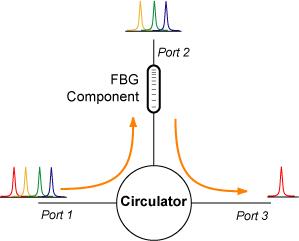
They are particularly useful when combined with wavelength-selective components such as Fiber Bragg Gratings.
EDFA and Optical Amplifiers
Optical circulators can help manage optical signal paths within amplifier architectures.
Depending on the system design, circulators may be used for signal routing, reflection management, and integration with other passive components.
Fiber Bragg Grating (FBG) Systems
One of the classic applications of an optical circulator is FBG-based systems.
A signal can be sent from Port 1 to Port 2 toward the FBG. The reflected wavelength returns through Port 2 and is redirected to Port 3 for detection.
This allows the same fiber path to be used for both transmission and reflection measurement.
Fiber-Optic Sensing
Optical circulators are widely applicable to fiber sensing architectures where reflected or backscattered optical signals need to be separated from the transmitted signal.
Potential applications include:
- Distributed fiber sensing
- FBG sensing
- Structural monitoring
- Temperature sensing
- Strain measurement
- Industrial monitoring
OTDR and Optical Test Equipment
In test and measurement systems, a circulator can separate transmitted optical pulses from returning signals, allowing the same fiber to be used for both transmission and reception.
This makes circulators useful in optical diagnostic and measurement architectures.
Fiber Laser Systems
Fiber lasers can require precise control of optical signal direction and reflection.
Depending on the architecture, optical circulators can be integrated with isolators, couplers, WDM components, and other passive optical devices to achieve controlled optical routing.
For polarization-sensitive fiber laser systems, PM optical circulators can be considered when polarization performance is a key system requirement.
How to Choose the Right Optical Circulator
Before selecting a circulator, it is recommended to define the following requirements:
- Operating wavelength
- Number of ports
- Single-mode or PM fiber
- Maximum insertion loss
- Required isolation
- Return loss
- Operating temperature
- Fiber length
- Connector type
- Package dimensions
- Power handling requirements
- Quantity and OEM customization requirements
For standard applications, a standard 3-port SM circulator may be sufficient.
For high-performance laser, sensing, or polarization-sensitive applications, a PM circulator with tighter optical specifications may be more appropriate.
Customized Optical Circulators for OEM Applications
For equipment manufacturers and system integrators, a standard catalog product may not always meet the mechanical and optical requirements of the final system.
A customized optical circulator can be specified according to:
- Wavelength
- Fiber type
- PM or SM configuration
- Connector type
- Fiber length
- Package dimensions
- Port configuration
- Optical performance
- Environmental requirements
This makes customized circulators suitable for integration into fiber lasers, optical amplifiers, sensing instruments, WDM equipment, and other photonic systems.
Feiyi Optoelectronic Optical Circulators
Feiyi Optoelectronic manufactures passive optical components for fiber-optic communication and photonic applications, including optical circulators for different wavelength, fiber, connector, and packaging requirements.
Our optical circulator solutions can be configured for applications such as:
- Fiber-optic communication
- DWDM/WDM systems
- EDFA and optical amplifiers
- Fiber lasers
- FBG sensing
- Distributed fiber sensing
- Optical test and measurement
- OEM/ODM photonic equipment
For projects requiring specific optical or mechanical configurations, customized specifications can be discussed with our engineering team.
Conclusion
Optical circulators play an important role in modern photonic systems by providing controlled, non-reciprocal signal routing between multiple optical ports.
From DWDM and EDFA systems to fiber lasers, FBG sensors, OTDR equipment, and advanced fiber-optic sensing platforms, the right circulator can improve signal separation, optical routing, and overall system performance.
When selecting an optical circulator, engineers should consider not only wavelength and port configuration, but also insertion loss, isolation, polarization performance, return loss, fiber type, connector configuration, package size, and environmental requirements.
For OEM manufacturers and system integrators, a customized optical circulator can provide greater flexibility for system integration and product development.
Looking for an optical circulator for your next photonics project? Contact Feiyi Optoelectronic to discuss your wavelength, fiber, connector, packaging, and performance requirements.