Optical Line Protection System Manufacturer: Set the Power Threshold From the Real Primary and Backup Fiber Routes
[Reading 56 lines from start (total: 56 lines, 0 remaining)]
Optical Line Protection System Manufacturer: Set the Power Threshold From the Real Primary and Backup Fiber Routes
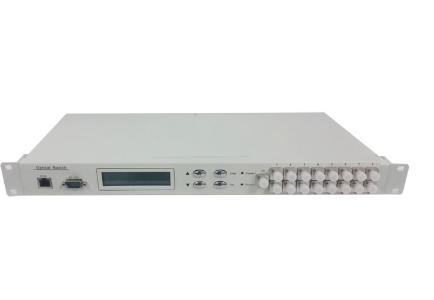
An optical line protection system manufacturer should receive measured primary and backup route behavior before a switching threshold is approved. Feiyi’s OLP1-1 Optical Line Protection System continuously monitors the working and standby fibers and switches the optical path when the working power falls below the configured threshold. The product page lists 1310±50 nm and 1550±50 nm operation, an optical-power monitoring range of +23 to -50 dBm, monitoring accuracy of ±0.25 dB, resolution of ±0.01 dB and switching time below 15 ms.
For a telecom, enterprise or industrial fiber link, the first design step is not choosing a rack unit. It is understanding the normal receive power on both routes, the expected variation during daily operation and what level should be treated as a real failure. A threshold set too close to normal fluctuation can cause unnecessary switching; one set too low can leave traffic on a degraded route longer than the application allows.
An optical line protection system manufacturer needs baseline power for both fibers
Before deployment, measure the working and standby paths under normal conditions. Record connector losses, splices, passive modules and any known difference in route length. The backup fiber should not be treated as healthy merely because it exists; its optical power and continuity need their own baseline.
Feiyi’s +23 to -50 dBm monitoring range gives the system a broad measurement window, but the operational threshold must still belong to the customer’s link. The useful value is the margin between normal route power and the point where service is no longer acceptable.
A backup route should be tested before the primary route fails
A protection system cannot compensate for a standby fiber that has accumulated its own loss, contamination or undocumented patching error. Include backup-path power in commissioning and periodic maintenance so the route is ready before an emergency.
The ±0.25dB monitoring accuracy should be considered when setting the switching margin
Feiyi lists optical-power monitoring accuracy of ±0.25 dB and resolution of ±0.01 dB. Resolution shows how finely the system can display or evaluate changes, while accuracy describes closeness to the actual power value. A threshold policy should leave enough margin that small measurement uncertainty does not become the reason for a route change.
For a stable link with several decibels of failure margin, this is straightforward. For a route already operating close to its receiver limit, the network design should address the weak optical budget rather than rely on an extremely tight protection threshold.
Sub-15ms switching is valuable only if the protected service tolerates the complete interruption
The Feiyi page lists switching time below 15 ms. That is the device-level optical-path change. The application engineer should compare it with the service’s tolerance to interruption and with any additional recovery time in transceivers, protocols or equipment beyond the OLP.
External OLP products often advertise similar millisecond switching for line protection, which shows why this class of equipment is used for rapid fiber-fault recovery. The actual service impact, however, should be verified on the customer’s equipment rather than inferred from the switch time alone.
A live-service test should be planned before the protection policy is signed off
During commissioning, create a controlled condition that causes the working route to fall below the chosen threshold and verify that the optical path changes as expected. Observe the protected equipment as well as the OLP indicators. This proves the complete system rather than only the internal switch.
Insertion loss below 1.0dB should be budgeted on both protected routes
Feiyi lists insertion loss below 1.0 dB for the OLP1-1. Add that loss to the working and backup link budgets rather than only to the primary path. If the standby route is longer or contains more splices, the receiver may see a different power level after switching even when the OLP itself is within specification.
For a long-haul or access link, keep before-OLP and after-OLP power references in the commissioning record. They make later fault isolation faster when a route repair or connector replacement changes the optical budget.
Return loss, PDL and WDL help describe transparency beyond the switching event
The product page lists return loss at least 55 dB, polarization-dependent loss at no more than 0.05 dB and wavelength-dependent loss at no more than 0.1 dB. These values matter because the protection equipment remains in the live optical path during normal service, not only during a fault.
If the protected system uses wavelengths across the stated 1310 or 1550 bands, keep WDL in the approved specification. If future equipment becomes more polarization sensitive, the low PDL value is also useful context for evaluating the existing protection layer.

Dual-power redundancy should be treated separately from optical-path redundancy
Feiyi lists -48 V DC and 220 V AC power options and support for dual-power redundancy. A network can have a healthy backup fiber but still lose protection if the OLP itself loses power. The rack design should therefore decide how the two power feeds are sourced and whether they share a common upstream failure point.
The product page also states that the unit can maintain the current channel or switch to the standby channel on power loss. Because that behavior can affect traffic during a facility power event, the buyer should select and document the intended power-off state for the deployed system.
The selected power-off state should appear in the commissioning checklist
A technician should not discover the configured fail state during an outage. Verify it during controlled commissioning and record whether the unit remains on the current path or moves to standby when power is removed.
SC or LC optical interfaces should match the protected patch environment
Feiyi lists SC and LC as optional optical interfaces. Choose the connector family and polish supported by the installed patch panels and transmission equipment, then preserve that interface on the spare-unit record. A protection chassis is not a useful spare if emergency installation requires an unplanned adapter chain.
Keep working and standby fibers physically distinguishable at the rack. Labels should show route identity rather than only OLP port numbers so field teams do not accidentally swap the two diverse paths during maintenance.
RJ-45 and RS-232 management should be planned with the site’s operations model
The product page lists RJ-45 and RS-232 management interfaces and describes centralized monitoring through the network management system. The buyer should decide where alarms are observed, who owns threshold changes and how the device is accessed during a WAN outage.
If remote monitoring is required, include the management connection and IP or serial documentation in the site handoff. If a site relies on local maintenance, make sure technicians can read route state and optical power without depending on an unavailable remote platform.
A 19-inch 1U chassis should be positioned where both fiber routes and both power feeds remain serviceable
Feiyi lists a 19-inch, 1U form factor. Rack position should be chosen from cable routing and maintenance access rather than from the first open unit of space. The primary and standby fibers should enter the equipment without tight bends, and the management and redundant power connections should remain accessible for testing.
If the two protected fibers are supposed to be physically diverse, do not route both patch cords through the same crowded tray immediately before the OLP. Route diversity can be lost in the last meter if both fibers share one vulnerable path inside the rack.
Operating life above ten million switching cycles is not a reason to create unnecessary route flapping
The Feiyi specification lists operating life above 10^7 cycles. That supports long-term mechanical switching, but protection logic should still avoid repeated switching caused by a poorly chosen power threshold or unstable link. Frequent oscillation between primary and standby paths can make network behavior harder to diagnose even when the switch mechanism is durable.
If power sits near the threshold and causes repeated transitions, investigate the optical route, connector cleanliness and threshold margin instead of treating the repeated switching as normal use.
Threshold history can reveal a degrading fiber before a hard failure occurs
If the management system records power changes or alarms, use that information to identify a route whose loss is gradually increasing. Protection equipment is most useful when it supports maintenance decisions before the primary fiber becomes completely unavailable.
Operating temperature from -10 to +60°C should be compared with the actual equipment room or cabinet
Feiyi lists operating temperature from -10 to +60 °C and storage from -20 to +75 °C. A central office normally sits comfortably inside that range, while an outdoor or poorly ventilated enclosure may need a closer thermal review. Include the OLP’s own power supplies and neighboring equipment when evaluating cabinet temperature.
If the protection device is expected to operate at a temperature extreme, verify the switching and monitoring behavior under the relevant environmental condition rather than relying only on a room-temperature commissioning test.
Maintenance drills should verify the standby route after real fiber work
A backup fiber that was healthy at installation can be changed later by construction, patch-panel work or repairs. After maintenance on either route, compare the measured power with the commissioning baseline and verify that the protection path can still carry the service. A scheduled drill can expose a hidden standby-path issue before the next real failure.
This is especially important when the standby fiber is rarely used. Physical diversity does not guarantee ongoing readiness.
A repeat order should preserve the threshold policy, power-off state and route interfaces
Once the OLP deployment is approved, retain the operating wavelength, monitoring range, chosen switching threshold, primary and standby baseline powers, insertion-loss budget, SC/LC interface, management method, dual-power arrangement, selected power-off behavior and rack wiring. The replacement unit should enter the network with the same protection policy rather than only the same chassis size.
The product’s <15 ms switch time is only one part of the protected service. A useful procurement and operations record connects that switch to real route power, diverse fiber paths and the equipment that must remain online when the primary line fails.
Return-to-primary behavior should be documented as an operations requirement even when the page does not define the mode
Many optical-protection platforms in the industry offer revertive and non-revertive operating choices, but the current Feiyi product page does not state those modes explicitly. A buyer should therefore describe the required behavior after the primary fiber recovers and ask Feiyi to confirm how the proposed OLP1-1 configuration handles that event. Some networks want traffic to return automatically to the preferred path; others prefer an operator-controlled maintenance window to avoid a second interruption.
This requirement belongs in the site operating procedure even if it is implemented outside the OLP itself. The important point is that restoration behavior should not be discovered during the first real outage.
Route diversity should be verified beyond the OLP ports
Primary and standby fibers only provide meaningful protection when they avoid the same likely failure. Trace whether both routes share a duct, handhole, building entrance, patch panel or power-dependent active device. If both fibers can be cut by one construction event, the OLP can switch perfectly and still have no usable backup.
The OLP order does not need to contain a complete civil-route drawing, but the project acceptance package should show that the two optical paths are genuinely diverse for the risks the customer is trying to mitigate. This turns optical switching equipment into a real resilience design rather than an expensive two-port patch selector.
[executed on device: SK-20260121JOTG (a251fff9-956e-47b5-9307-14fb53329ed2)]