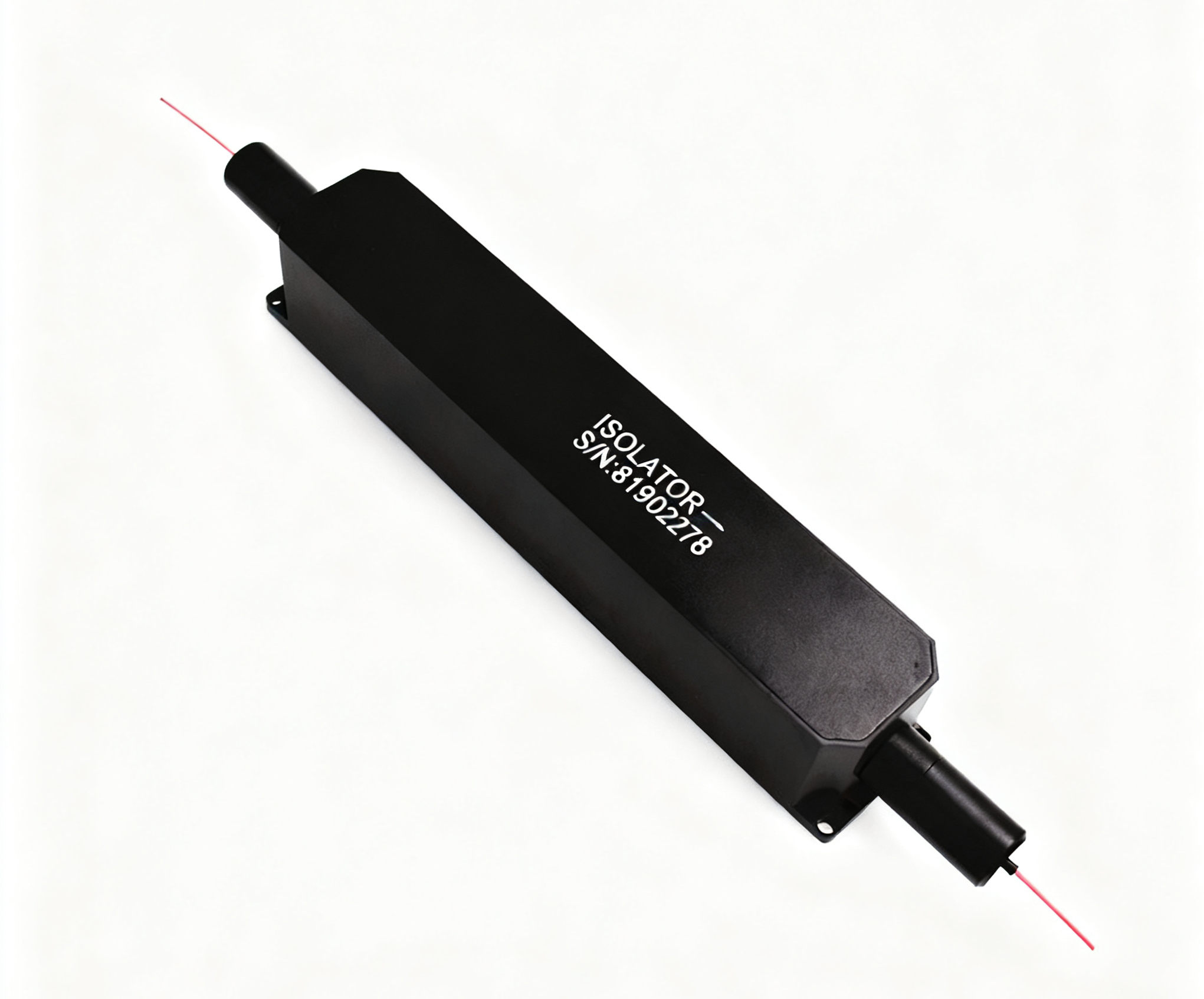
PM 980nm High Power Optical Isolator Supplier: Qualify Power, Fiber and Back-Reflection Together
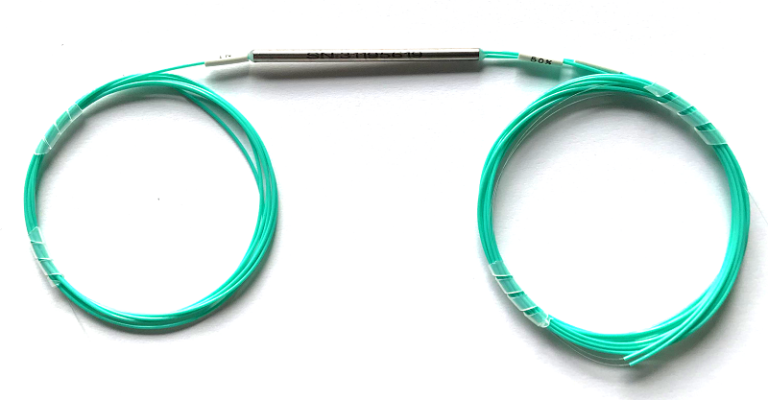
A PM 980nm high power optical isolator supplier should be given the source power before the connector preference. Feiyi’s PM 980nm High-Power Optical Isolator (TGG Based) is listed for the 980 ± 15 nm region with a 1–100 W power-handling range, high isolation, PM operation and a large 150 × 28 × 26 mm package. Those facts make it a different procurement problem from a compact 300 mW PM isolator. The buyer should define continuous-wave or pulsed operation, delivered power, polarization axis, fiber interface and the exact quoted power grade before treating the part number as approved.
This matters for MOPA fiber lasers, PM fiber amplifiers and other systems where back-reflected light can return toward a sensitive source. Feiyi also lists CATV links and optical-system testing among the applications. The isolator’s role is to pass wanted light forward while suppressing backward propagation; it does not replace a PM 980nm Circulator, which sends returned light to another port, or a PM 980/1030/1064nm Coupler, which divides or combines optical power.
A PM 980nm high power optical isolator supplier order should start with source power and pulse regime
The Feiyi product page lists maximum power handling from 1 W to 100 W. Do not write “100 W isolator” on a purchase request unless the exact configuration being quoted is actually approved for that level. A product family can cover several power classes while package details, fiber construction and termination conditions vary between builds. State the intended average power, expected operating margin and whether the source is continuous or pulsed.
For pulsed systems, add pulse energy, pulse width and repetition rate. The Feiyi page provides the broad 1–100 W family range but does not publish one universal peak-power condition for every option. A buyer should therefore request the specific pulse capability for the selected build rather than convert average watts into an assumed peak rating.
A high-power prototype should be qualified at the production operating point
A laser team often aligns a new amplifier at low power and increases output only after beam quality and splices are stable. If the isolator is approved during that low-power phase, the test record can give a false sense of margin. Include the production power and worst expected return condition in the qualification file. A component that behaves correctly during alignment is not automatically proven for the final laser setting.
External industry guidance supports this distinction. DK Photonics’ 980 nm TGG isolator documentation separates optical power classes and notes that connector conditions can affect high-power use. Those figures belong to DK’s products, not Feiyi’s; the useful lesson is that power, fiber and termination must be qualified together.
The Feiyi 980 ± 15 nm band should remain separate from isolation and loss acceptance
Feiyi lists an operating wavelength of 980 ± 15 nm, typical isolation of 65 dB and minimum isolation of 50 dB. Typical insertion loss is listed as 0.8 dB with 1.2 dB maximum. Return loss is 45 dB and polarization-dependent loss is 0.2 dB. These are separate acceptance dimensions. A high isolation reading does not prove that insertion loss is within limit, and a low forward loss does not establish the required backward suppression.
In a PM amplifier, the engineer should decide which metric protects the source and which metric belongs in the forward power budget. Keep both on the receiving record. If the project later moves from 980 nm to another pump wavelength, do not carry the same acceptance numbers into a different isolator family without checking that product’s current specification.
| Feiyi PM 980nm high-power line | Published value | Procurement use |
|---|---|---|
| Operating wavelength | 980 ± 15 nm | Match the actual source spectrum |
| Isolation | 65 dB typical, 50 dB minimum | Define the required reverse suppression |
| Insertion loss | 0.8 dB typical, 1.2 dB maximum | Reserve forward power-budget margin |
| Power family | 1–100 W | Confirm the exact quoted power grade |
| Package | 150 × 28 × 26 mm | Check mounting, heat and fiber-exit space |
PM fiber identity must be confirmed because high-power performance depends on the delivered interface
The Feiyi performance table identifies PM1060 fiber, while its ordering information also includes PM980 among selectable fiber entries. Treat that as a reason to put the exact fiber type on the quotation and final drawing rather than assuming the catalog label settles the choice. The same principle applies if the laser uses a specialty large-mode-area or custom fiber: do not infer compatibility from wavelength alone.
For a replacement order, record the accepted fiber on both input and output sides. A change in fiber can change splice behavior, mode-field matching and the polarization handoff even if the isolator body’s optical function is unchanged. If a transition is required, engineering should approve the transition rather than leaving it to purchasing.
Slow-axis operation with fast-axis cutoff should be carried through the assembly drawing
Feiyi lists slow-axis operation and fast-axis cutoff, with a minimum extinction ratio of 20 dB for the PM fiber type. The laser’s polarization reference should therefore be shown at the isolator input and at the next PM component. If a connector key or splice mark defines the physical reference, include that orientation on the controlled drawing.
A MOPA builder may have several PM splices between seed, amplifier stages and the isolator. One rotated connection can reduce the system’s polarization performance even when each individual component was purchased as PM. Receiving inspection should confirm the ordered axis configuration before the unit is spliced into the laser.
High-power connector decisions should be reviewed as part of the optical-power path
The Feiyi ordering information lists bare fiber, 900 µm loose-tube options and FC/PC, FC/APC, SC/PC and SC/APC connector choices. Those choices should not be treated as mechanically interchangeable at high power. The buyer should confirm the allowed power for the selected termination, the cleanliness procedure and whether the production design is intended to be connectorized or fusion-spliced.
Industry high-power isolator documentation often recommends direct splicing for demanding power levels because a connector introduces another optical interface. That is a general engineering consideration, not a statement that every Feiyi high-power configuration must be connectorless. The Feiyi quotation should define the power capability of the actual termination being supplied.
A connectorized sample and a bare-fiber production unit are different acceptance configurations
Sometimes a lab requests connectors for fast evaluation and later moves to spliced pigtails in production. That change can be sensible, but the new interface should be documented. Do not compare loss data from the connectorized sample directly with a bare-fiber unit without stating the reference planes used in each test.
The 150 × 28 × 26 mm body and 10 to 50 C operating range belong in the laser-head layout
Feiyi lists a 150 × 28 × 26 mm package, 10 to 50 °C operating temperature and 0 to 60 °C storage range for this high-power product. Those limits are notably different from some compact passive components on the same site. The laser-head designer should allocate body clearance, pigtail bend space and the thermal environment before the mechanical drawing is released.
A distributor should also keep this package separate from small cylindrical PM isolators in inventory. A buyer asking for “980 nm PM isolator” may be referring to a low-power micro-optic device or a high-power TGG-based assembly. The body dimensions and requested source power help distinguish the intended product quickly.

MOPA amplifier protection should be reviewed from the seed source to the output interface
A high-power isolator is one part of the reflection-control plan, not a substitute for understanding where backward light can originate. In a MOPA chain, reflections may come from splices, connectors, free-space optics, test taps or the final workpiece interface. A buyer should tell the supplier where the isolator sits in that chain and what forward power reaches it at normal and maximum operation. That context helps keep the requested power class connected to the real optical location rather than to the laser’s nameplate output alone.
For example, an amplifier manufacturer may test an isolator immediately after a gain stage, while the production machine later adds another connectorized module downstream. The returned optical condition can change even if the amplifier output power does not. Revisit the source-protection requirement when the downstream path changes. Do not assume that a previous isolation result proves the new assembled route is equally protected.
The same discipline applies to service replacements. If a technician replaces only the isolator but the original system has accumulated different connectors or splices, record the current path before interpreting a change in backward power as a component defect. The isolator should be evaluated in the context of the installed optical chain.
A distributor should separate requested power grade from wavelength and connector stock
“980 nm high power” describes a family, not one universal stocking identity. A distributor carrying Feiyi units should keep the confirmed power grade, fiber choice, working axis and termination in the item description. Two assemblies can share the 980 nm label while serving very different laser powers. Shipping a lower-power configuration because the connector and package look familiar creates a risk that cannot be detected from the outside of the box.
When a customer repeats an order, compare the quotation revision and controlled configuration before substituting stock. If the customer changes from bare fiber to FC/APC, or from one approved power class to another, treat that as a configuration change and retain the updated acceptance record. The exact manufacturer packing method can be confirmed on the order, but the labeling should be sufficient to keep visually similar high-power variants distinguishable through receiving and storage.
Nearby 980 nm PM components solve different parts of the laser chain
Feiyi’s PM 980nm VOA attenuates optical power and is useful where the system needs adjustable level control. The PM 980nm Circulator routes a returned signal toward another port. The PM 980nm Collimator couples between fiber and a free-space beam. The PM 980/1030/1064nm Coupler divides or combines power. None should be described as a substitute for the isolator’s one-way protection function.
An engineering buyer can use those distinctions to make the BOM self-explanatory. Write the intended optical function beside each 980 nm component instead of letting the wavelength label become the only clue.
Repeat orders should preserve the exact high-power build and its acceptance conditions
Once a PM 980 nm high-power isolator has been qualified, retain the selected power grade, operating band, fiber type, working axis, connector or splice condition, pigtail length, package and the isolation/loss limits used for acceptance. A later order should not be reduced to “same 980 nm isolator.” The 1–100 W family range is too broad for that shorthand to define one build.
Feiyi’s existing PM optical isolator manufacturer guide can help place this high-power product beside the site’s lower-power wavelength families. For a laser program, the controlled item description should make source power and polarization configuration visible enough that purchasing and incoming inspection can distinguish the approved TGG-based high-power unit from any compact low-power alternative.
The safest release point is when the supplier can read the same facts the laser engineer used: 980 ± 15 nm, the requested power grade and source regime, the approved PM fiber and axis, the selected termination, the mechanical package and the optical acceptance lines. That produces a part definition that can survive the move from one prototype to repeated production orders.
Keep any approved test reference, fiber orientation record and power-grade identification with the production item so a later service replacement can be compared against the same optical boundary.