
PM Dual Fiber Collimator Manufacturer: Decide Whether Two Fibers Should Share One Optical Interface
PM Dual Fiber Collimator Manufacturer: Decide Whether Two Fibers Should Share One Optical Interface
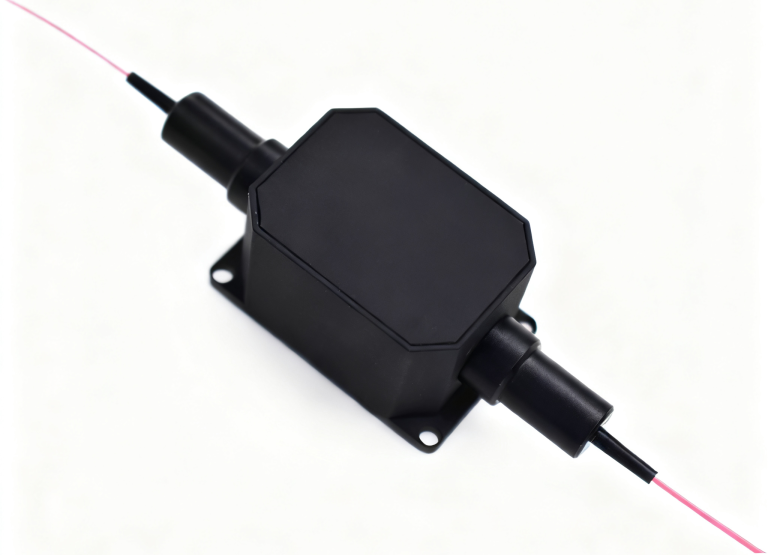
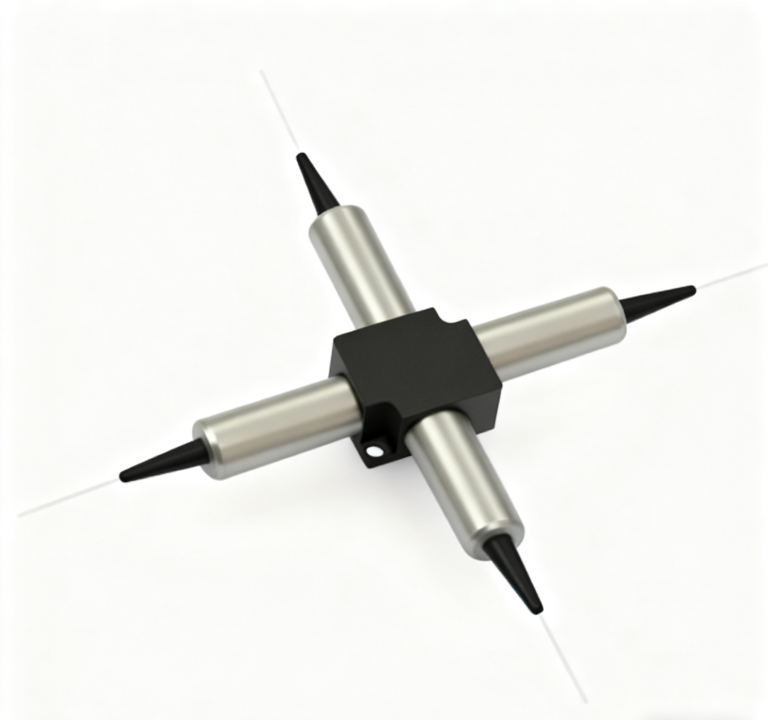
A PM dual fiber collimator manufacturer should be brought into the design after the buyer has decided what the two fibers are doing. Two fibers entering one collimator can serve a bidirectional path, a paired transmit/receive path, a compact optical switch interface, a WDM assembly or another two-channel optical function. The number of fibers is not enough to define the part. Feiyi’s PM Dual Fiber Collimator is listed for 630, 780, 850, 980, 1064, 1310 and 1550 nm, with typical insertion loss of 0.2 dB, maximum insertion loss of 0.25 dB, return loss of 60 dB and a minimum extinction ratio of 21 dB at 23 掳C.
For a real project, start with the optical path drawing. Show which fiber carries which signal, whether both channels must preserve polarization, the wavelength used on each path, the required working distance and what component faces the collimated beam. Only after those interfaces are known should the buyer select lens type, package and termination.
A PM dual fiber collimator manufacturer needs the job of each fiber before the lens is chosen
Two fibers can be placed in one compact optical interface for very different reasons. In a sensing instrument, one path may launch light while the second collects a returning signal. In a switch or circulator assembly, the pair may represent two controlled internal routes. In a WDM assembly, the fibers may belong to different wavelength paths. Those designs can all use a dual-fiber geometry, but the optical acceptance test will not be the same.
Feiyi lists isolators, circulators, switches, WDM, signal processing and optical sensing among the applications associated with its PM collimator family. A buyer should therefore write the functional role beside each fiber on the drawing rather than labeling them only Fiber 1 and Fiber 2.
Transmit and receive paths should stay identifiable after the pigtails are installed
If the two fibers perform different jobs, mark them in a way that survives assembly. Once two similar PM pigtails enter a housing, a technician can no longer rely on visual appearance to know which path is which. Port identity should be preserved in the incoming inspection record and in the final harness drawing.
630 to 1550 nm coverage does not make one dual-fiber build universal
The Feiyi product page lists wavelength options across 630, 780, 850, 980, 1064, 1310 and 1550 nm and corresponding PM fiber families including PM630, PM780, PM850, PM980, PM1060, PM1310 and PM1550. That range is useful for a supplier, but a purchase order still needs one defined optical configuration.
A project operating at 1064 nm should keep the selected PM1060 fiber and wavelength in the controlled item. A 1550 nm sensing unit should not receive a mechanically similar 1064 nm build because both fit the same cylindrical package. The wavelength and fiber pair are part of the optical interface, not optional catalog metadata.
A mixed-laboratory inventory should label wavelength before technicians look at connector color
When several PM collimators are stored together, the body can look nearly identical. Add wavelength and fiber identity to the stock label. This is particularly useful in research or test environments where a bench may contain 780 nm, 1064 nm and 1550 nm systems at the same time.
Working distance should be derived from the actual free-space gap
Feiyi’s ordering information includes C-Lens and G-Lens choices and selectable working distances. The buyer should measure the real distance from the collimator reference plane to the intended optical element rather than choosing a nominal working distance because it appears common. The gap may include a filter, crystal, mirror, MEMS element or another collimator.
External dual-fiber collimator documentation from DK Photonics also treats working distance, working type and lens choice as independent configuration variables. Its numerical values belong to DK products, not Feiyi, but the design lesson is useful: the free-space geometry should be defined before the collimator is approved.
The listed 0.2 dB typical loss should be evaluated together with both channel paths
Feiyi lists typical insertion loss of 0.2 dB and maximum insertion loss of 0.25 dB for the PM Dual Fiber Collimator. A two-fiber assembly should not be accepted from one channel measurement if both paths are used in the product. Record the result for each defined optical route and keep the launch condition consistent.
If one fiber is the transmit path and the other is receive, the project may care about different system budgets on the two sides. The collimator itself can still have one product specification, but the system acceptance sheet should show how each fiber contributes to the complete link.
Low total loss cannot replace a polarization check
The minimum extinction ratio is listed at 21 dB at 23 掳C. A cable and lens assembly can deliver acceptable optical power while the polarization state is not aligned with the downstream device. For polarization-sensitive equipment, keep insertion loss and extinction ratio as separate checks.
Fast-axis and slow-axis choices should match the next polarization-sensitive component
Feiyi lists fast-axis and slow-axis directionality. The buyer should state which convention is needed at the output and how that convention is referenced mechanically. If the collimator feeds a PM isolator, PM circulator or another PM optical assembly, the downstream axis requirement should be part of the same interface drawing.
This becomes especially important when the dual-fiber collimator is mounted inside a module and cannot be rotated after bonding. An incorrect axis assumption at the collimator stage can become an expensive module-level rework later.
A beam diameter below 0.5 mm should be checked against the component facing the collimator
Feiyi lists beam diameter below 0.5 mm. That value should be considered with the aperture and active area of the next free-space element. A small beam may be useful for a compact optical train, but the project should confirm that the downstream element is designed for that beam size and working distance.
If the optical train includes a filter or mirror near an edge or aperture, mechanical tolerance can matter as much as nominal beam size. Put the allowable decenter or mechanical reference into the module drawing rather than expecting the collimator specification alone to control alignment.

300 mW power handling should be checked at the actual operating wavelength and termination
The Feiyi page lists maximum power handling of 300 mW. That figure is useful for the current product family, but a buyer should still state the expected continuous and transient power in the application. If the design requires substantially higher optical power, the project should move to a high-power collimator route instead of treating a standard dual-fiber device as a power component.
Feiyi also has a High Power Fiber Collimator product family. That is a different procurement path and should not be substituted automatically for a PM dual-fiber part because high power, polarization preservation and fiber count are separate design requirements.
Dual fiber is appropriate when the system has two real optical paths, not when expansion is only hypothetical
A buyer sometimes chooses a two-fiber or multi-fiber collimator “for future flexibility.” That can create more pigtail management, more identification work and a more complicated module without improving the current design. If the instrument only needs one optical route, Feiyi’s Custom Polarization Maintaining Fiber Collimator or another single-fiber route may be more direct.
Dual fiber becomes useful when both paths are part of the approved architecture. If the design genuinely requires four, five, nine or sixteen channels, moving to the corresponding multi-fiber family is cleaner than accumulating several independent dual-fiber assemblies without a deliberate layout.
Four- and five-fiber products solve density problems that are different from a two-path interface
Feiyi offers a PM Four Fibers Collimator and a PM Five Fibers Collimator. Those parts are more appropriate when channel density is the primary system requirement. A dual-fiber collimator should not be forced into a dense array design merely because it is familiar to the engineering team.
Mechanical package dimensions should be frozen before module alignment is released
Feiyi lists package diameter/length options including approximately 1.4脳8, 1.8脳8, 2.78脳8 and 3.2脳9 mm in the product table. These dimensions should be checked against the ferrule holder, adhesive pocket, clamp or module bore used in the assembly. A change in body size after the optical prototype is aligned can shift the mechanical datum even when the optical function remains unchanged.
For an OEM module, define the mounting reference and allowable insertion depth in the drawing. For a replaceable laboratory component, make sure the holder can accept the selected body without forcing or excessive clearance.
The temperature rows on the product page should be confirmed before environmental limits are frozen
The current Feiyi table shows operating and storage temperature entries that appear inconsistent with conventional formatting. Rather than interpreting corrupted symbols as confirmed environmental limits, use the page’s clearly stated optical values and request current confirmation of the temperature range for the exact build when environmental qualification matters.
A room-temperature optical bench and an outdoor sensing enclosure do not need the same environmental test. The requirement should come from the system, and the supplier should confirm the product build against that requirement.
Receiving inspection should verify two paths, two identities and one mechanical reference
For a dual-fiber component, receiving inspection should confirm the wavelength/fiber build, Fiber 1 and Fiber 2 identity, lens type, working distance, package, pigtail style and the axis convention. Then verify the optical path conditions that matter to the system. A single “collimator passed” line loses the information needed to troubleshoot a crossed channel later.
If the two fibers are paired with a second optical element, keep that pairing information in the assembly record. External industry documentation sometimes recommends shipping paired collimators together when they are qualified as a pair. Feiyi’s page does not state that as a standard practice, so a buyer who needs matched pairs should specify the requirement rather than assume it.
Transport should protect both pigtails from becoming the alignment problem
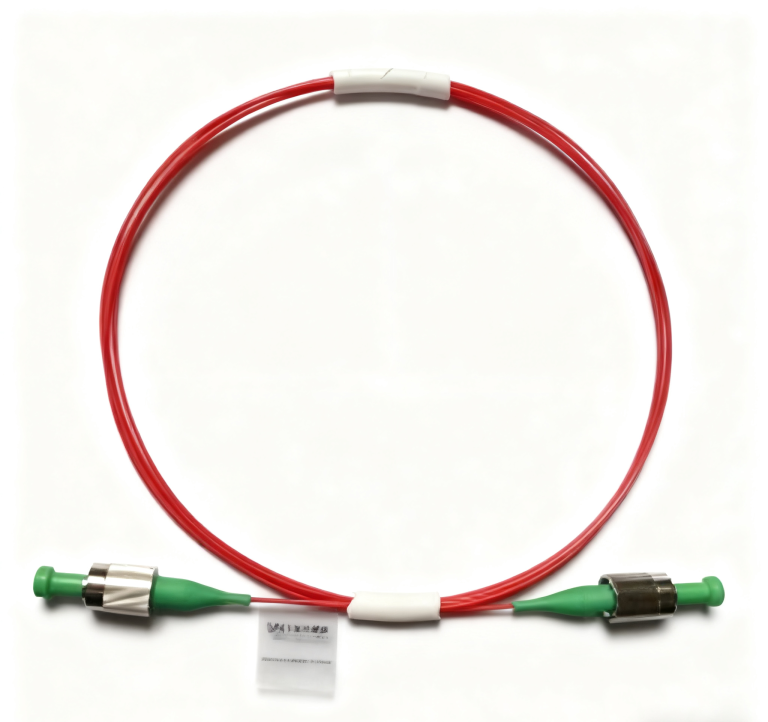
A dual-fiber collimator leaves the supplier with two small optical leads that can be bent, twisted or confused during handling. If the project has a defined minimum bend practice, end-A/end-B labeling or matched-pair identification, put those requirements into the order. Do not assume a generic shipping pack will preserve a project-specific orientation record. At receiving, compare the pigtail labels and body reference with the drawing before the component is installed in a holder.
For an OEM line, this check is inexpensive compared with diagnosing an apparent optical imbalance after the collimator has been bonded into a module. The goal is not to invent special packaging; it is to make sure the mechanical identity that supports the optical alignment survives the trip from supplier to assembly station.
A repeat order should reproduce the two-path optical drawing, not only the product name
Once the first module is approved, preserve the wavelength, fiber type, fast/slow-axis convention, lens type, working distance, package, connector or pigtail construction, fiber length and the identity of both optical paths. That record is more useful than a request for “PM dual fiber collimator” because it tells the next buyer and assembler why the component worked in the first place.
Feiyi’s broader PM fiber collimator manufacturer article discusses beam-interface definition. For this dual-fiber product, the extra discipline is keeping both fiber functions visible from quotation through module assembly. If a technician can identify both paths and the free-space target without reopening the original lab notebook, the purchasing file is doing its job.