DWDM MUX DEMUX Manufacturer: Specify Channels, Isolation and Package Before Ordering
A procurement team looking for a DWDM MUX DEMUX manufacturer is usually trying to solve one of three different problems: place several ITU-grid channels onto one fiber, recover those channels at the far end, or add and drop selected wavelengths somewhere in between. The manufacturer cannot choose the correct assembly from “DWDM, 8 channels” alone. The order needs the actual channel plan, 100 or 200 GHz spacing where applicable, Mux/Demux direction, package format, connector interface and the loss/isolation limits that the link budget can accept.
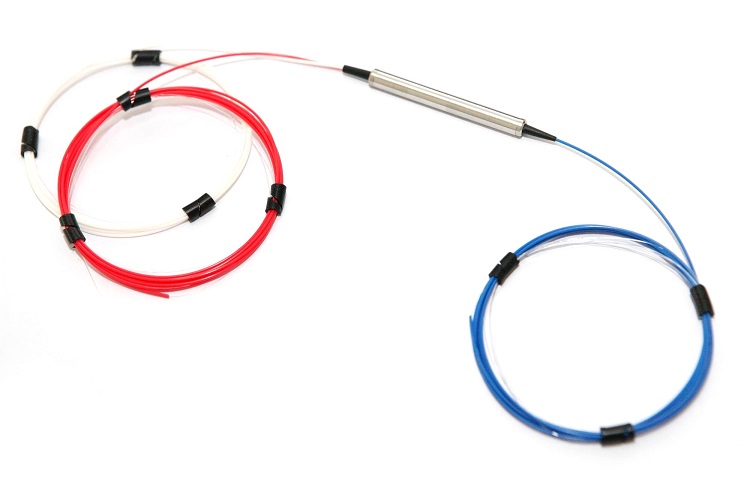
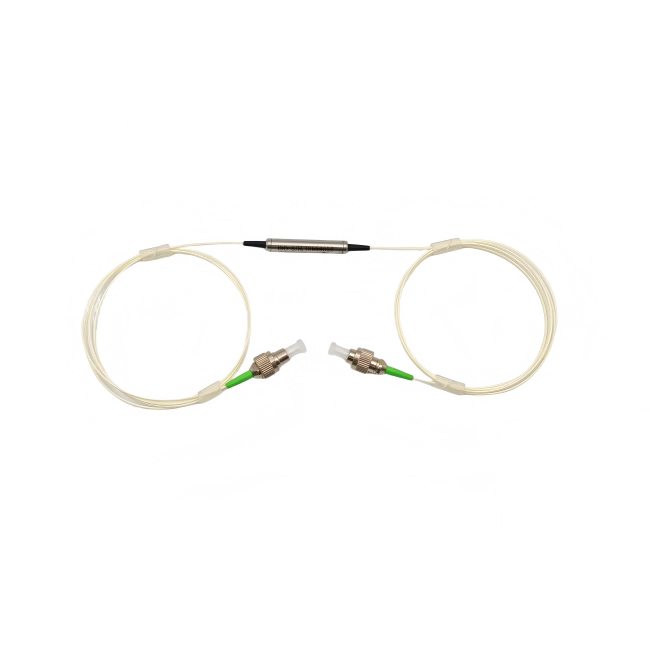
Feiyi publishes a DWDM Module family, a 3 Port DWDM Device, DWDM OADM Module, LGX-box and 1U rackmount formats, plus dense-channel AWG products. For a real project, begin with the optical route and only then choose the mechanical format. A compact component can be correct for an OEM enclosure while the same wavelength plan may need a rack-mounted version in a network room.
A DWDM MUX DEMUX manufacturer needs the ITU channel plan before channel count
Dense wavelength routing is not defined by the number of outputs alone. Every channel occupies a specific frequency position, and the filter must pass the wanted spectrum while rejecting neighboring channels strongly enough for the receiver. ITU-T G.694.1 provides the frequency-grid framework used for DWDM systems, including the familiar grid anchored around 193.1 THz. The project drawing should identify the selected channels rather than use approximate color or wavelength descriptions.
100 GHz and 200 GHz options change the optical passband decision
Feiyi’s DWDM Module lists both 100 GHz and 200 GHz channel-spacing options. Its published channel passband at the -0.5 dB condition is at least 0.22 nm for the 100 GHz option and at least 0.5 nm for the 200 GHz option. That difference matters when the transmitter spectrum, wavelength tolerance or temperature drift approaches a filter edge.
A system engineer should therefore compare the actual occupied spectrum with the selected filter window. A clean center-channel measurement on a bench does not prove that the whole transmitted spectrum remains comfortably inside the passband under all operating conditions. The manufacturer should receive the intended channel and spacing rather than infer them from a transceiver label.
Four, eight and sixteen channels carry different loss budgets
The Feiyi DWDM Module page publishes 4-, 8- and 16-channel configurations. Maximum insertion loss is listed at 1.8 dB for the 4-channel version, 3.0 dB for the 8-channel version, and either 3.5 dB for the low-loss 16-channel version or 5.0 dB for the standard 16-channel version. Those figures show why channel count cannot be changed late in a project without recalculating the optical budget.
A distributor upgrading a customer from four channels to sixteen should not assume the existing transmitter margin will absorb the change. A network integrator should review every passive element between transmitter and receiver, including patch cords, connectors, OADM stages and any additional splitters. The Mux/Demux is only one contributor to the complete path loss.
The right DWDM MUX DEMUX manufacturer configuration depends on where the device sits
The same set of wavelengths can be packaged differently depending on whether the device is built into equipment, mounted in a distribution frame or installed as a serviceable network element. Feiyi’s ordering information separates the optical configuration from the module type, which is useful because those are two different engineering decisions.
ABS modules fit embedded or protected equipment assemblies
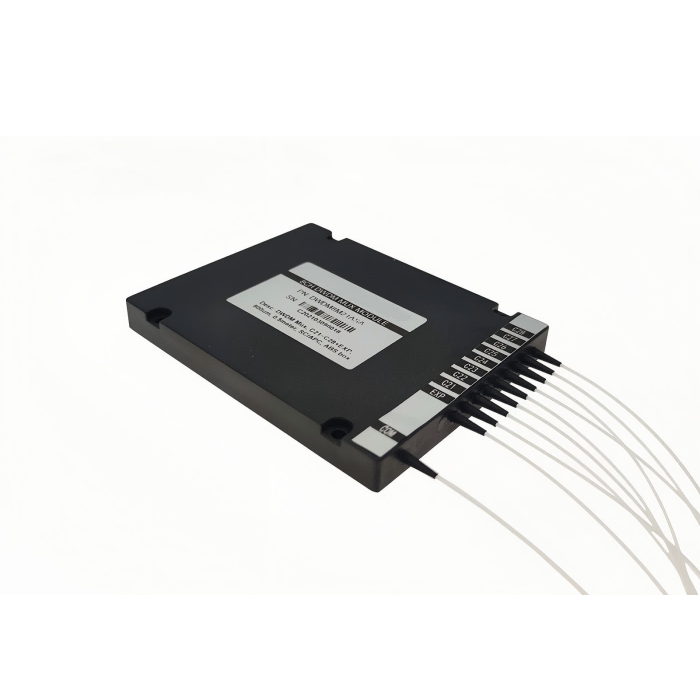
The DWDM Module ordering information lists several ABS-box formats, including 80 x 60 x 12 mm, 100 x 80 x 10 mm, 120 x 80 x 18 mm and 140 x 115 x 18 mm options. A compact OEM assembly may prefer a protected module with fiber leads because the equipment chassis already provides strain relief and external connectors.
When an OEM moves from prototype to production, lead exit direction and service loop length become important. A module that was easy to position on a laboratory table may place stress on the fibers inside a smaller enclosure. The approved drawing should therefore show the actual package and lead routing, not only the optical channel list.
LGX and 1U rack formats fit field-serviceable installations
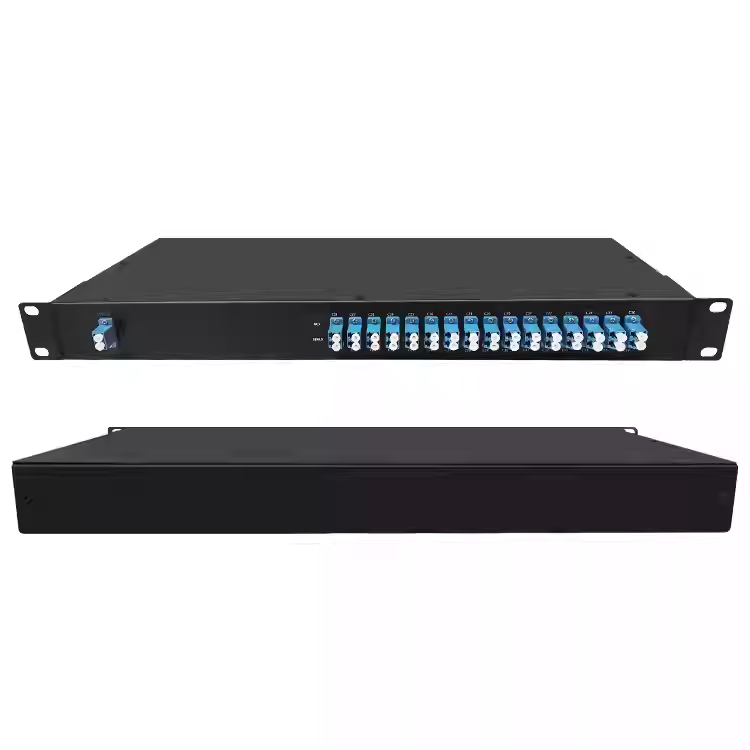
Feiyi lists LGX and 19-inch 1U options in the DWDM ordering information, and separate product pages show DWDM Module in LGX Box and DWDM Module in 1U Rackmount. These formats are useful when technicians need front access, visible channel labels and replaceable patching interfaces.
A network operator replacing an installed rack unit should verify connector type and front-panel sequence before ordering. Two 1U units can support the same optical channels but present them in a different physical order. Port labeling should match the site documentation so that a maintenance technician does not move traffic to the wrong wavelength during a swap.
OADM belongs to an intermediate-node problem, not a simple end-to-end pair
A DWDM OADM Module is appropriate when selected wavelengths must be added or dropped while other channels continue through the node. That is a different topology from a Mux at one end and a Demux at the other. The engineering drawing should identify express channels, added channels and dropped channels separately.
If a buyer simply requests an “8-channel DWDM module” for a mid-span site, the manufacturer cannot know which wavelengths should pass through untouched. The OADM requirement must describe the actual node behavior. This is especially important in staged network expansion, where new wavelengths may be added later and the pass-through route must already accommodate them.

Isolation is a receiver-protection requirement, not just a datasheet number
Feiyi’s DWDM Module publishes adjacent-channel isolation of at least 30 dB and non-adjacent isolation of at least 40 dB. Those values describe different interference conditions. Adjacent-channel leakage can be especially relevant because the nearest optical channel is close in frequency to the wanted channel.
Test the neighboring channels that can actually interfere with the receiver
Suppose a receiver is assigned one channel while the next channel carries a much stronger signal. The procurement team should not reduce the acceptance test to “isolation greater than a single number” without identifying the interfering channel. The correct test launches the defined unwanted channel and measures what reaches the receiver port under the agreed conditions.
For a distributor supplying mixed channel plans, this also means a generic certificate copied across multiple configurations is not enough for traceability. The purchase file should identify which channel plan the result belongs to. A dense wavelength component is only meaningful when its ports and channels stay connected to the same record.
Channel ripple and temperature behavior matter after the room-temperature test
Feiyi’s DWDM Module lists channel ripple no greater than 0.5 dB, insertion-loss temperature sensitivity no greater than 0.5 dB and wavelength temperature shifting no greater than 0.001 nm per degree Celsius. The published operating range is -10 to +70 degrees Celsius, with storage from -40 to +85 degrees Celsius.
These figures are useful when an equipment designer decides how much margin to reserve. They should not be turned into a system-level environmental guarantee without considering connectors, other passive devices and the transmitter/receiver. Instead, use the component limits as inputs to the complete link budget and qualification plan.
Connectorization should be finalized with the DWDM MUX DEMUX manufacturer, not added as an afterthought
Feiyi’s DWDM ordering table lists LC/UPC, LC/APC, SC/UPC, SC/APC, FC/UPC and FC/APC options, along with no-connector and specified alternatives. Cable choices include 900-micron loose tube, 2.0 mm and 3.0 mm constructions, with 0.5 m, 1.0 m, 1.5 m or specified lengths.
UPC and APC interfaces should follow the installed mating hardware
An APC connector should not be selected simply because lower reflection sounds desirable. It must mate with the correct adapter and patching system. A field rack already standardized on LC/UPC requires a different practical choice from an optical instrument designed around FC/APC interfaces.
For repeat orders, connector polish, connector family and lead length belong in the controlled part description. If a supplier receives only a wavelength plan, a mechanically incompatible build can still be optically correct. That is why the optical and physical specifications should be approved together.
Mux, Demux and combined assemblies need clear direction labels
Feiyi’s ordering structure distinguishes Mux, Demux and Mux+Demux configurations. That distinction should appear on the order and on the installation documentation. In a bidirectional or paired system, technicians need to know which common port and channel ports belong to each direction.
An integrator commissioning two ends of a link should label the assemblies before shipment to site. Relying on identical housings and handwritten notes increases the risk of reversing the intended optical direction. The manufacturer can provide the correct component, but the project team must preserve the directional identity through installation.
When an AWG is a better dense-channel route than a thin-film DWDM module
Feiyi also offers 40-channel 100 GHz and 48-channel 100 GHz Athermal AWG products, plus a 40CH/48CH AWG Module. AWG becomes relevant when the project needs a higher channel count and a structured multi-channel mux/demux architecture. It should be evaluated as a separate product family rather than treated as the same internal technology as the thin-film DWDM module.
High channel count changes the questions a buyer should ask
Feiyi’s 48-channel 100 GHz Athermal AWG publishes a C-band channel plan, center-wavelength accuracy of plus or minus 0.05 nm, insertion loss up to 5.5 dB at center wavelength and up to 6 dB across the full bandwidth, adjacent-channel isolation of at least 27 dB and non-adjacent isolation of at least 30 dB. Its common-port optical power handling is listed up to 24 dBm.
Those values belong to the AWG product, not the standard DWDM module. A buyer comparing architectures should use the correct table for each candidate. If the project needs only four or eight channels, a thin-film DWDM module may provide a simpler fit. If the design needs forty or forty-eight fixed dense channels, an AWG may align more naturally with the channel count.
Release a DWDM order only after the acceptance record can be reproduced
Before production approval, ask the engineering team to identify the channel list, spacing, Mux/Demux/OADM function, insertion-loss limit, adjacent and non-adjacent isolation requirements, package, connector, fiber construction and lead length. If the application is temperature-sensitive, record the operating range expected for the installed device.
Incoming inspection should use the same port names and channel identifiers that appear on the drawing. Measure insertion loss on the intended routes, check the neighboring channels that matter to the receiver and inspect connector end faces before optical testing. If a rack or LGX assembly is involved, verify physical port labels against the approved channel map before the unit reaches site.
Feiyi product pages that can anchor a purchase review include the DWDM Module, DWDM Module in LGX Box, DWDM Module in 1U Rackmount, DWDM OADM Module, 3 Port DWDM Device and the 40-CH 100G Athermal AWG.
A buyer can then compare offers on the information that determines whether the link will work: the exact channels, optical loss, unwanted-channel rejection and physical interface. That is far more reliable than comparing two quotations that both say “DWDM Mux/Demux” but describe different optical and mechanical products.