PM Circulator Manufacturer: Match Wavelength, Isolation and Axis to the Return Path
A buyer searching for a PM circulator manufacturer usually knows the signal must move through a directional three-port path, but the product still cannot be selected from the word “circulator” alone. The practical decisions are wavelength, isolation requirement, insertion-loss budget, polarization extinction ratio, working axis, fiber type, connectorization and power. Those decisions become even more important when the same optical platform exists at 980, 1064, 1310 or 1550 nm.
Feiyi publishes PM circulators across 780, 850, 980, 1064, 1310, 1480, 1550, 1950 and 2000 nm. That range lets engineering teams compare the same routing function across different laser and sensing platforms. The useful manufacturer discussion is therefore not “do you make PM circulators?” but “which published wavelength family and isolation configuration matches this return path?”
A PM circulator manufacturer should start with wavelength and direction, not package size
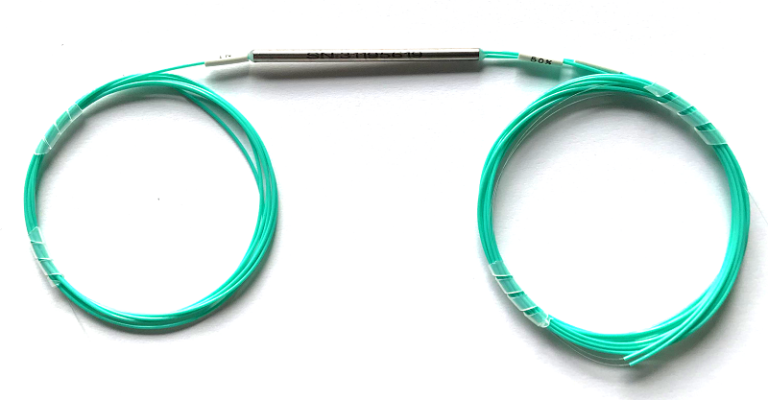
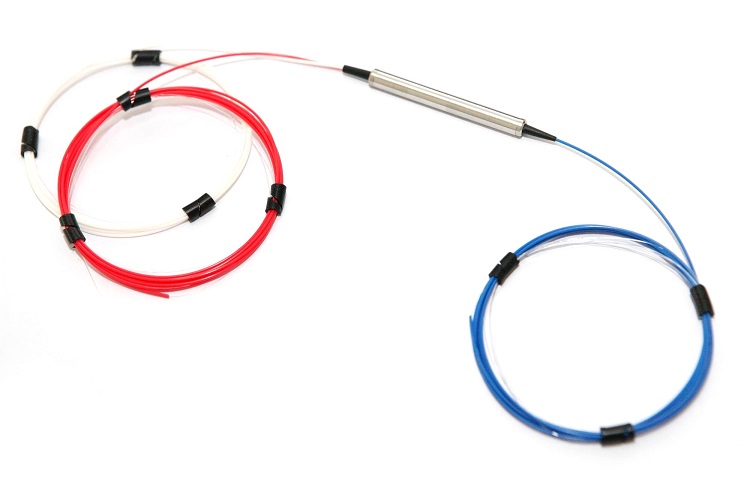
In a three-port circulator, light is intentionally routed from port 1 to port 2 and then from port 2 to port 3. That directional behavior is what makes the device useful in reflected-signal sensing, bidirectional links and optical test arrangements. A small cylindrical housing may look similar to an isolator or WDM package, but the internal optical job is different.
1550 nm PM circulators fit sensing and communication paths built around the C-band region
Feiyi’s PM 1550 nm circulator page specifies a center wavelength of 1550 +/-30 nm. The published typical insertion loss is 0.7 dB, with maximum insertion loss of 0.9 dB for one configuration and 1.0 dB for the higher-isolation configuration. Typical isolation is at least 30 dB or at least 46 dB depending configuration, while minimum isolation is at least 22 dB or 40 dB.
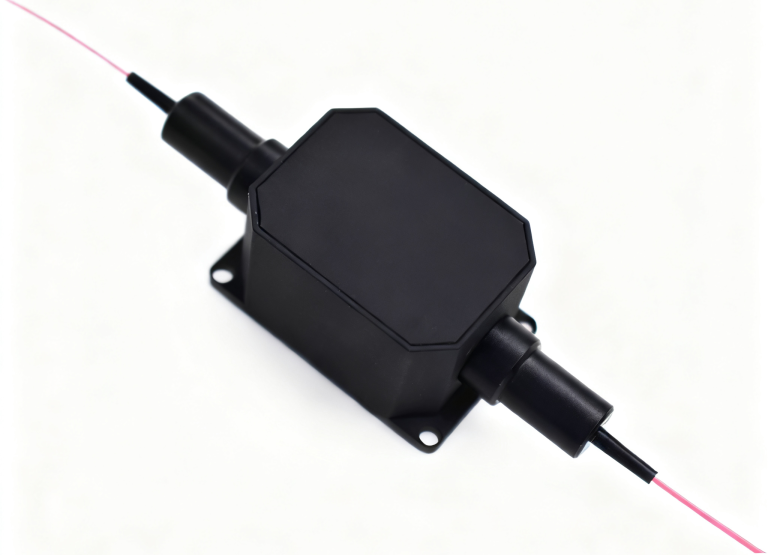
The same table lists minimum extinction ratio of 20 dB, crosstalk of at least 50 dB, PDL no greater than 0.15 dB, return loss of at least 50 dB and maximum power handling of 300 mW. Published package choices include 5.5 mm diameter cylindrical formats and an ABS box. For a 1550 nm sensor, those figures allow the engineer to balance isolation against loss instead of buying by wavelength alone.

980 and 1064 nm circulators belong in a different laser-system discussion
Feiyi also lists PM 980 nm and PM 1064 nm circulator products. These wavelengths appear in laser, amplifier and sensing systems where the surrounding PM fiber and source technology differ from a 1550 nm telecom-oriented setup. A buyer should therefore identify the actual center wavelength and fiber type rather than request a “near-infrared PM circulator.”
For an engineering team supporting both 1064 nm and 1550 nm instruments, using the same manufacturer can simplify drawings and supplier communication, but the two products should still have separate approved specifications. Connector loss, fiber choice and isolation targets cannot be copied from one wavelength family without checking the published device data.
PM circulator manufacturer evaluation should distinguish isolation grades from optical-loss budgets
Higher isolation can be valuable when a strong launched signal sits near a weak returned signal, but the decision is not free of trade-offs. The Feiyi 1550 nm page shows that its configurations carry different isolation figures and different maximum insertion-loss limits. The buyer should define how much reverse leakage is tolerable and how much forward loss the link budget can accept.
A weak reflection sensor may prioritize isolation more than a short laboratory link
Consider a 1550 nm reflection sensor where the launched signal is orders of magnitude stronger than the returned measurement. The circulator has to direct the return toward the receiver while limiting unwanted leakage. In that scenario, the higher-isolation option may be more important than saving a small amount of insertion loss.
Now consider a short laboratory setup where the return signal is relatively strong but the total power budget is narrow because several other passive devices are in series. The engineer may place more weight on insertion loss. These are not statements that one circulator grade is universally superior; they are examples of why the manufacturer needs the system requirement before the final configuration is selected.
Extinction ratio belongs in the complete PM chain, not only the circulator datasheet
A circulator may publish an extinction-ratio value, but the system-level polarization result also depends on patch cords, connectors, splices and any WDM or VOA around the device. Feiyi’s 1550 nm circulator lists a minimum extinction ratio of 20 dB. Its PM patch cord family also publishes extinction ratio of at least 20 dB and states that connector keys are aligned to the slow axis for connectorized devices.
If a buyer measures a lower system extinction ratio after assembly, the circulator should not automatically be blamed. Connector key alignment, fiber stress and the axis orientation of adjacent components should be checked. A PM circulator manufacturer can supply the directional element, but preserving polarization requires the complete chain to use the same axis convention.
Maintaining-bias three-port circulators create another option for PM routing
Feiyi also publishes a product called Maintaining Bias 3-port Circulator. Its page lists 1310, 1550 and 1480 nm wavelength options with a +/-10 nm range, typical insertion loss of 0.7 dB and maximum insertion loss of 0.9 dB. Typical isolation is at least 50 dB and minimum isolation at least 40 dB.
The same table specifies extinction ratio of at least 20 dB, crosstalk of at least 50 dB, PDL no greater than 0.15 dB, directivity above 50 dB, return loss of at least 50 dB and maximum power handling of 500 mW. Published operating temperature is -20 to +75 deg C, with storage from -40 to +85 deg C.
Do not merge two PM circulator families because both have three ports
When a product family offers several wavelength and package choices, procurement should preserve the exact approved model or ordering description. A 1550 nm product approved for one sensor is not automatically interchangeable with a broader maintaining-bias model simply because both route light through three ports. The accepted sample, drawing and test conditions need to stay linked to the ordered family.
This is especially relevant for repeat OEM orders. If the first build used a defined package, connector and fiber length, the purchase record should retain those details. Replacing the line item with “PM 3-port circulator” removes information that receiving inspection needs.
A PM circulator manufacturer needs the connector and axis definition before production
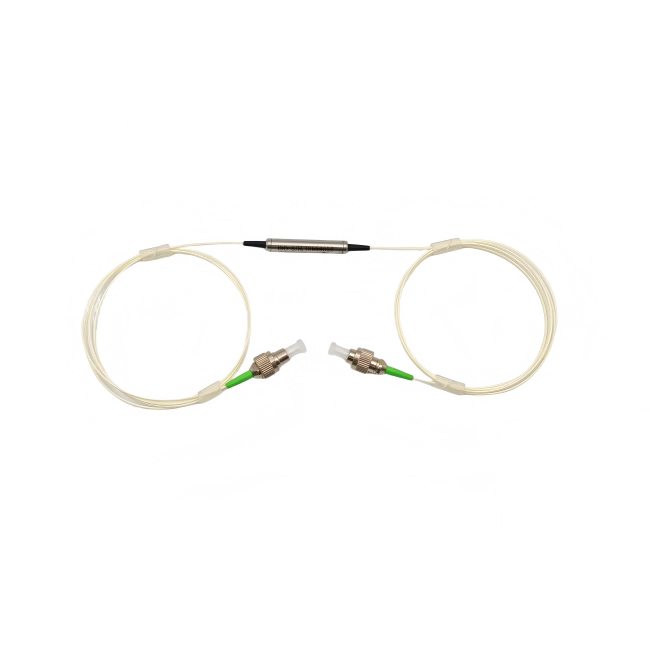
Feiyi’s circulator ordering information includes bare-fiber and connectorized options, with FC/PC, FC/APC, SC/PC and SC/APC among the listed connector choices and several fiber-length choices. Those options change the installed assembly even when the internal circulator is the same.
Connector polish should match the reflection sensitivity of the optical path
An APC connector may be selected where back-reflection at the connector interface is a concern, while a UPC interface may be required for compatibility with existing equipment. The correct choice depends on the rest of the system. A buyer should not ask the manufacturer to choose connector polish without knowing which mating adapters and instruments exist in the field.
The same applies to axis orientation. In a PM system, the purchase description should record whether the design uses slow- or fast-axis operation and how the connector key represents that axis. If the circulator connects to a PM patch cord or PM WDM, all participating parts need a consistent convention.
PM circulators, isolators and WDMs may share a housing but not a system role
One reason circulator RFQs become ambiguous is that several compact fiber components can look alike after they are packaged. A PM isolator protects a source from reverse light. A PM WDM separates wavelengths. A PM circulator directs light between ports in sequence. When a system engineer hands only photographs or old part labels to purchasing, the wrong family can enter the replacement discussion even when all of the parts operate near the same wavelength.
A laser-protection problem should not be solved with a circulator by default
Feiyi’s PM 1310/1550 nm isolator family publishes single- and dual-stage versions. The single-stage P grade lists typical isolation of 40 dB and typical insertion loss no greater than 0.55 dB, while the dual-stage version increases typical isolation to 55 dB. Those figures describe reverse-light suppression rather than the port-routing behavior of a circulator. If a source only needs protection from reflections, an isolator may be the more direct function.
A circulator becomes appropriate when the returned light must be preserved and delivered to another path, as in a reflective sensor. That distinction should appear in the system block diagram before the RFQ reaches a manufacturer. It avoids paying for extra port behavior where it is not needed and avoids losing a wanted return signal through an isolator.
A wavelength-separation problem belongs to PM WDM rather than PM circulation
Feiyi’s PM WDM family includes filter-WDM and three-port DWDM products. These parts route according to wavelength, not simply according to propagation direction. A system may use a WDM and a circulator together鈥攆or example, when different wavelengths share a fiber and one of them also produces a reflected measurement鈥攂ut their specifications should remain separate.
For purchasing, write the circulator port route and the WDM wavelength map as two different drawings. If both are compressed into one sentence such as “1550 nm three-port PM device,” the order leaves too much room for interpretation. The manufacturer should receive enough information to identify not only the wavelength and number of leads but the optical function assigned to each part.
Incoming acceptance for a PM circulator should reproduce the intended light path
A useful incoming check begins with the port map. Confirm the product wavelength and the labeled input, output and return ports. Then measure insertion loss in the intended forward route and isolation in the blocked route using the agreed wavelength. If the project depends on polarization performance, confirm extinction ratio using a defined setup and avoid introducing uncontrolled fiber stress during the measurement.
For a connectorized device, inspect and clean end faces before optical measurement. For bare-fiber versions, protect the fiber and record the splice or launch method used in the test. If the component will operate in a wider environmental range, the qualification plan can use the published temperature limits as a reference, but the exact environmental test requirement should come from the project.
Feiyi’s earlier 1550 nm PM circulator sensor article focuses on return-path logic. The manufacturer selection described here goes one step broader by comparing wavelength families, isolation choices and repeat-order controls.
Choose the circulator family that matches the optical platform you actually build
For 1550 nm reflection sensing, begin with the 1550 nm PM circulator data and decide whether the standard or higher-isolation configuration fits the signal dynamic range. For 980 or 1064 nm laser platforms, move to the wavelength-specific PM products instead of adapting a 1550 nm assumption. For 1310/1480/1550 nm designs that fit the maintaining-bias three-port family, compare its published loss, isolation and power figures with the project requirement.
Useful Feiyi navigation includes the PM circulator range, the PM 1550 nm circulator, the PM 1064 nm circulator and the PM 980 nm circulator. The final order should name the exact wavelength, port behavior, isolation target, fiber, connector, axis and lead length rather than relying on the family name alone.