
PM 1030nm Optical Isolator Manufacturer: Choose the Stage From the Reflection Path
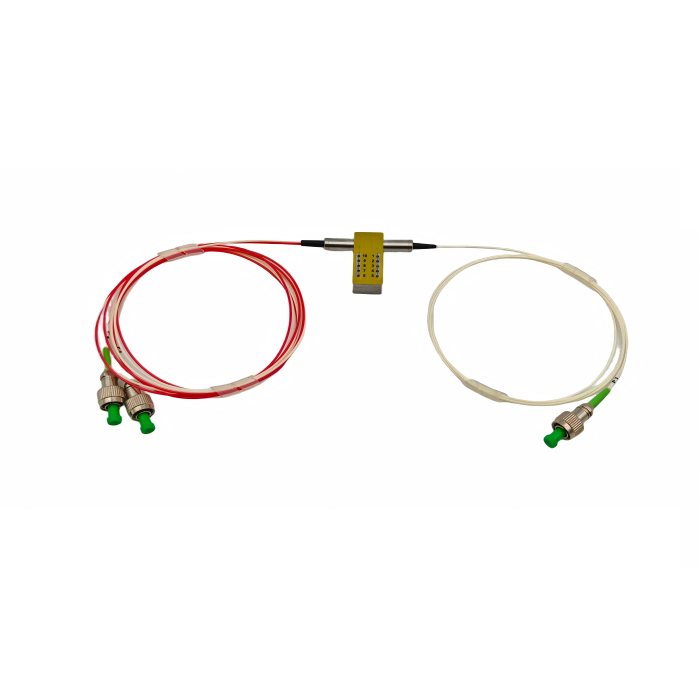
A PM 1030nm optical isolator manufacturer should know whether the instrument needs a single-stage or dual-stage protection path before the order is reduced to connector and cable choices. Feiyi’s PM 1030nm Polarization Maintaining Fiber Isolator is listed for 1030 ± 10 nm, with PM980 fiber, slow-axis operation and fast-axis cutoff, single- and dual-stage isolation options, and a 300 mW power-handling line. It is positioned for fiber amplifiers, test systems, LAN/telecom equipment and other polarization-sensitive links.
For a buyer integrating a 1030 nm seed source, amplifier or precision test bench, the first questions are the expected backward reflection, the allowed forward loss, the polarization axis and the actual source spectrum. The stage count comes from those conditions. A dual-stage device is not automatically “better” if the extra optical path consumes loss budget the system does not have; a single-stage device is not automatically sufficient merely because the source wavelength is correct.
A PM 1030nm optical isolator manufacturer should separate stage choice from wavelength choice
The Feiyi product page lists 1030 ± 10 nm for both single- and dual-stage options. That means wavelength alone does not choose the stage. The system designer should document how much reverse suppression is required at the source and how much forward loss can be tolerated. Feiyi lists typical isolation of 30 dB for the single-stage configuration and 50 dB for the dual-stage configuration, with minimum values of 28 dB and 40 dB respectively.
External 1030 nm PM isolator documentation follows the same engineering logic. AC Photonics’ 1030 nm PM isolator datasheet separates single- and dual-stage products and treats isolation and insertion loss as different design parameters. Those figures belong to AC Photonics, not Feiyi; the useful point for a buyer is that stage count is a controlled optical architecture, not a cosmetic option.
Single-stage isolation can be appropriate when the return path is already controlled
A test instrument with well-managed terminations and modest back-reflection may not need the highest available isolation. In that case, the buyer can evaluate whether the single-stage route meets the source-protection requirement while preserving forward margin. The decision should be tied to the actual optical chain, not to a general preference for fewer parts.
If the instrument later adds a reflective element, a connectorized sensor head or another free-space interface, the old stage decision should be reopened. The source may see a different return condition even though the nominal wavelength remains 1030 nm.
Dual-stage isolation belongs in the purchase file when the source needs a stronger reverse barrier
For a more reflection-sensitive source, the Feiyi dual-stage isolation values provide a different protection class. The buyer should identify why the additional isolation is needed and retain that requirement with the approved build. A repeat order should not be silently changed to single stage because the package or connector looks similar.
When the optical chain contains more than one isolator, document the location and direction of each device. Isolation values are not simply additive under every installed condition, and the buyer should avoid converting a component table into an unsupported complete-system guarantee.
The current 1030 nm insertion-loss table should be confirmed before it becomes an acceptance limit
The Feiyi page currently shows an internal inconsistency in the insertion-loss rows: the displayed “typical” entries are higher than the displayed “maximum” entries. Because a maximum loss should not ordinarily be lower than the typical value for the same configuration, those numbers should not be copied into a production acceptance document without confirmation. The safer procurement step is to request the current manufacturer specification for the quoted single- or dual-stage build and use that confirmed revision for incoming inspection.
This is exactly the kind of issue a technical buyer should catch before volume purchasing. A website table is useful for identifying the product family and available options, but the controlled order should resolve any contradictory line before the part is released. Do not repair the table by guessing which number was intended.
What the buyer can use directly from the current Feiyi 1030 nm page
The page consistently identifies the 1030 ± 10 nm operating band, single- and dual-stage isolation classes, 50 dB return loss, 0.15 dB PDL, PM980 fiber, slow-axis operation with fast-axis cutoff, 300 mW power handling, temperature limits and package/connector choices. The conflicting insertion-loss line should be confirmed separately instead of being repeated as a firm acceptance number.
PM980 fiber and the slow-axis reference should follow the 1030 nm isolator through assembly
Feiyi identifies PM980 fiber for this isolator and lists slow-axis operation with fast-axis cutoff. A buyer should show the polarization reference at the source, isolator and next PM component. “1030 nm PM isolator” is not enough to preserve that orientation through a splice or keyed connector.
Consider an OEM using the isolator between a seed source and a downstream PM amplifier. If the prototype is fusion-spliced, the assembler may have a clear axis-alignment process. A later service version might introduce connectors for replaceability. That mechanical change creates a new polarization reference at the mating interface and should be documented rather than assumed to preserve the prototype orientation automatically.
The 20 dB and 18 dB extinction-ratio entries belong to different stage configurations
The Feiyi table lists a minimum extinction ratio of 20 dB for the single-stage column and 18 dB for the dual-stage column. Keep those values attached to their respective configurations. Do not quote the single-stage value as a universal product-family specification after selecting a dual-stage part.
For receiving inspection, the buyer should also define the launch condition used when checking polarization performance. A result measured with an uncontrolled launch state cannot demonstrate the same thing as a test performed with the intended PM-axis alignment.
The 300 mW power line should be checked against both normal operation and service conditions
Feiyi lists maximum power handling of 300 mW for the 1030 nm PM isolator. The product should be selected against the highest optical power expected at its actual location in the system. A seed laser may operate well below that level while an amplifier output does not. Putting the isolator in a different place in the chain changes the power requirement even if the wavelength remains 1030 nm.
If the source is pulsed, give the manufacturer pulse width, repetition rate and expected peak condition because the page does not publish a universal pulse capability. Do not infer a peak-power rating from the 300 mW line. Likewise, do not substitute the much higher power range of Feiyi’s 980 nm TGG high-power isolator; it is a different wavelength and product architecture.
The 1030 nm package and pigtail choices should match how the isolator will actually be installed
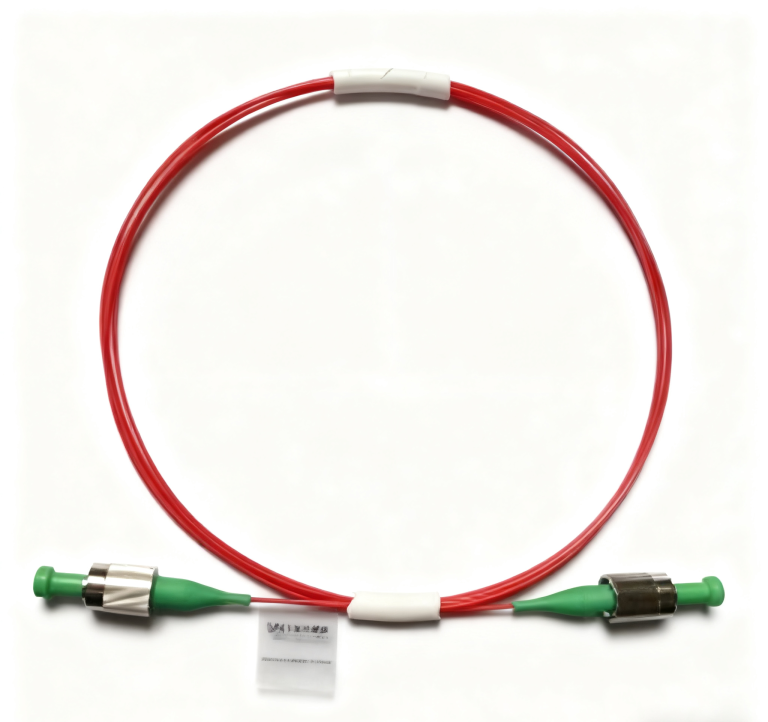
Feiyi lists cylindrical package choices around 5.5 mm diameter with L35 and L50 lengths, a minimum fiber length of 1 m each end, and ordering options that include bare fiber, 900 µm loose tube, FC/PC, FC/APC, SC/PC and SC/APC. The mechanical drawing should name the finished configuration. A compact cylinder with long pigtails may require more routing space than the body dimensions suggest.
An instrument builder who expects to splice the isolator internally may prefer bare-fiber ends and a controlled PM splice process. A field-serviceable module may use connectors instead. Those choices change the number of mated interfaces and should be reflected in the loss and reflection plan rather than treated as interchangeable packaging details.

Operating and storage ranges should follow the quoted 1030 nm build
The current Feiyi table lists an operating range from -20 to +75 °C and storage from -40 to +85 °C. A bench instrument may never approach those limits, while an enclosure mounted near heat-generating electronics could. Include the actual internal temperature requirement in the mechanical/electrical handoff so the selected build is not qualified only at room temperature.
A 1030 nm isolator should not be confused with nearby 1064 nm or polarization-insensitive devices
Feiyi also lists a PM 1064nm Fiber Optic Isolator and several polarization-insensitive isolators. The wavelength difference between 1030 and 1064 nm is small compared with a telecom band change, but it is still large enough that the buyer should not treat the product names as interchangeable. Match the actual source spectrum to the isolator’s specified band.
Likewise, a polarization-insensitive isolator is selected for systems where the input polarization is not controlled in the same way. A PM 1030 nm source chain needs the PM fiber and axis relationship preserved. Choosing a polarization-insensitive device simply because it offers isolation would change the polarization architecture.
1030 nm amplifier and test-instrument buyers should describe different reflection scenarios
A fiber-amplifier buyer usually cares about protecting a source or gain stage from downstream reflections while maintaining a controlled PM state. A test-instrument buyer may instead be switching fixtures, connectors or devices under test, so the magnitude and location of the reflected signal can change from one setup to another. Both customers can order a 1030 nm PM isolator, but they should not send the manufacturer the same vague requirement.
For an amplifier, identify the isolator’s location relative to the seed, gain fiber and any reflective termination. For an instrument, identify the range of external loads and whether the isolator remains permanently installed or moves with a test module. That information helps the supplier understand why the selected isolation class and connector arrangement are being requested without pretending that the isolator alone defines complete-system performance.
Distributors should keep single- and dual-stage 1030 nm units as separate stock identities
If a distributor stocks both stage options, the stage should appear in the SKU description along with PM980 fiber, connector polish and pigtail configuration. A visually similar cylindrical body is not enough to identify the approved optical class. Receiving labels should let the warehouse and customer distinguish the single-stage and dual-stage builds before either is installed.
When a customer asks for a substitute, compare the controlled optical requirements rather than substituting by wavelength alone. A dual-stage unit may offer the requested isolation but alter the forward-loss budget; a single-stage unit may fit mechanically but fail the source-protection requirement. The quotation should make the tradeoff visible before the replacement is accepted.
Repeat purchasing should lock the stage, axis and confirmed specification revision together
After the first 1030 nm isolator is approved, retain the selected stage, 1030 ± 10 nm band, PM980 fiber, slow-axis reference, connector or splice condition, pigtail length, package, 300 mW class and the confirmed isolation/loss specification in one controlled item record. That record is more useful than an email saying “same 1030 isolator.”
Feiyi’s PM optical isolator manufacturer overview can help compare wavelength and power families, while the PM isolator supplier article for laser chains explains how reflection conditions affect supplier approval. For this 1030 nm order, the decisive document should still be the exact current specification for the selected stage.
A careful manufacturer qualification is complete when the buyer can explain why the selected stage is needed, what spectrum and power it will see, how the PM axis is referenced, and which specification revision will be used at receiving. Resolving the inconsistent loss row before release is part of that discipline, not a reason to invent a number that the product page does not reliably establish.
Keep the verified 1030 nm datasheet revision with the purchase record so future buyers do not repeat the same uncertainty around stage, insertion loss or axis when the next production lot is released.