Fiber Optic Passive Components Manufacturer: Build the BOM Around Optical Function
For a buyer evaluating a fiber optic passive components manufacturer, the most useful question is not how many products appear in the catalog. It is whether the manufacturer can cover the passive functions that actually exist in the network or instrument: splitting power, separating wavelengths, routing a returning signal, blocking back-reflection, changing an optical path, reducing power and coupling between fiber and free space.
Feiyi’s published portfolio includes WDM devices, optical circulators, isolators, mechanical optical switches, variable optical attenuators, PLC splitters, fused couplers, pigtails and collimators, alongside polarization-maintaining versions of many of those families. A project buyer can therefore compare several passive functions inside one product system. The selection still has to begin with the job each component performs, because devices with similar housings can solve completely different optical problems.
A fiber optic passive components manufacturer should map every device to one optical job
A metro access project, laboratory switching platform and fiber sensor may all buy “passive optical components,” but their bills of material are different. WDM products separate wavelengths. Splitters distribute optical power. Circulators direct light sequentially between ports. Isolators suppress reverse light. Optical switches select a route. Attenuators reduce power. Collimators move between guided fiber and a free-space beam. Treating those names as interchangeable is one of the fastest ways to create a technically complete-looking but unusable order.
Circulators route reflected or bidirectional signals between ports
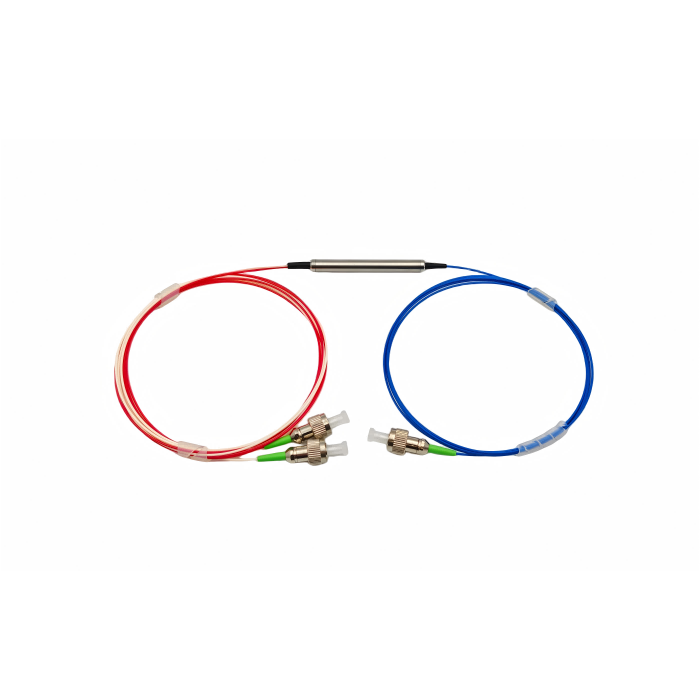
Feiyi’s standard three-port optical circulator is published for 1310 +/-30 nm or 1550 +/-30 nm operation. Its page lists typical insertion loss around 0.6 dB with a maximum of 0.8 dB, typical isolation of at least 50 dB, minimum isolation of at least 40 dB, PDL no greater than 0.15 dB, directivity above 50 dB and maximum power handling of 300 mW. Package options include cylindrical packages and an ABS box.
That makes a circulator relevant to reflection sensing, bidirectional communication and add/drop arrangements where the same fiber carries light in more than one direction. It is not a substitute for a power splitter. If the design needs one input to feed several outputs simultaneously, a splitter or coupler belongs in the BOM instead.
Isolators protect sources when reverse light is the real risk
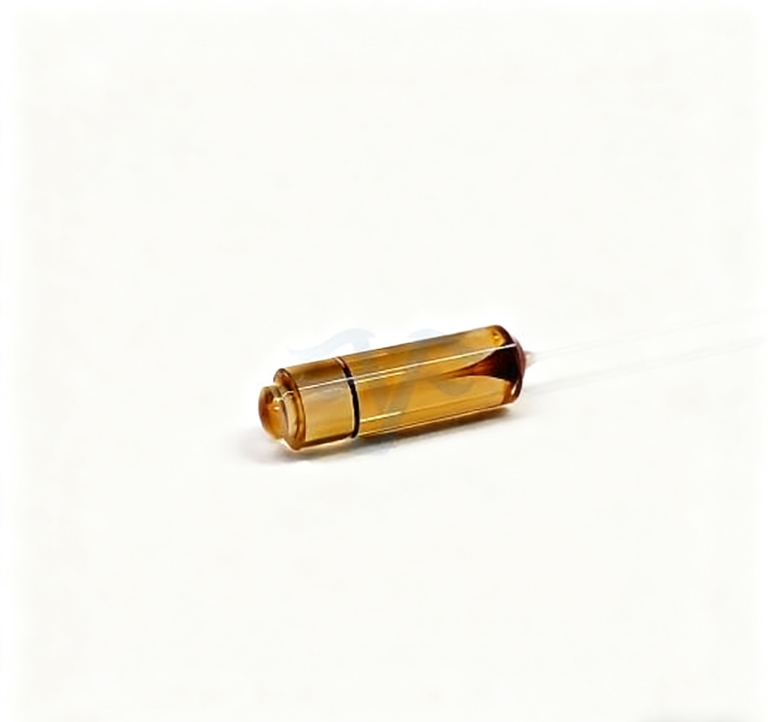
Feiyi also publishes polarization-insensitive optical isolators and mini single- or dual-stage isolator products. An isolator belongs near a laser or amplifier when back-reflected light can disturb the source. The key buying variables are therefore isolation, insertion loss, return loss, wavelength, power and fiber termination rather than a multi-port routing map.
A buyer replacing an older laser module should not automatically replace an isolator with a circulator merely because both are non-reciprocal optical devices. The circulator intentionally sends returned light to another port; the isolator is selected to suppress reverse propagation. That difference should be visible in the schematic and in the purchase description.
Optical passive components supplier choices for wavelength management start with the channel plan
Feiyi’s wavelength-management family includes CWDM, DWDM, FWDM, OADM and AWG products. Those categories cover very different channel densities and packaging choices. Before choosing a module, the buyer should write down the required wavelengths or frequencies, channel count, mux/demux direction, connector family and the physical format that fits the rack or enclosure.
CWDM modules fit projects built around 20 nm channel spacing
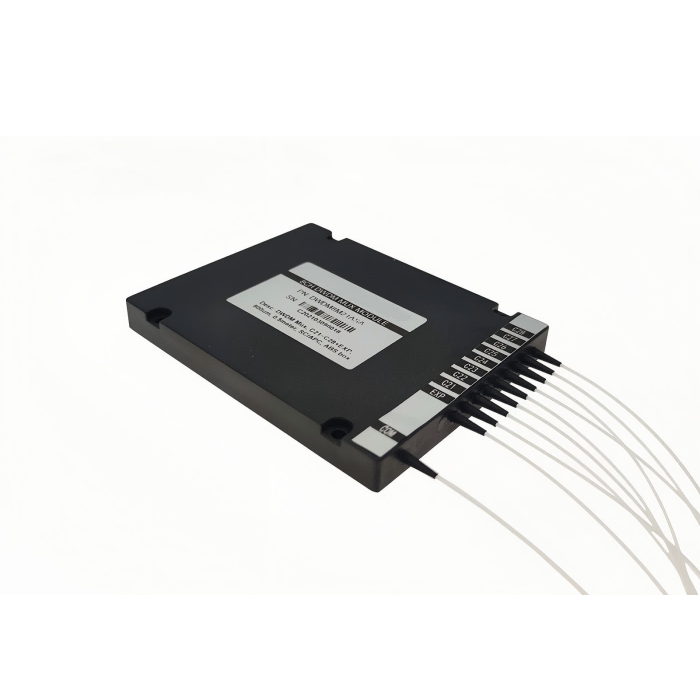
Feiyi publishes 4-channel, 8-channel and 16-channel CWDM Mux/Demux products. The shared table specifies channel wavelengths from 1270 to 1610 nm or 1271 to 1611 nm with 20 nm spacing and a passband of at least 13 nm. Published insertion-loss limits scale with channel count: no greater than 1.5 dB for 4 channels, no greater than 2.5 dB for 8 channels and, for the 16-channel configuration, no greater than 3.5 dB in the low-loss option or 4.5 dB in the standard option.
The same table lists adjacent-channel isolation of at least 30 dB and non-adjacent isolation of at least 40 dB, PDL no greater than 0.2 dB, return loss of at least 45 dB and 300 mW maximum power handling. Available module forms include ABS boxes, LGX formats and 19-inch rack options, with LC, SC and FC connector choices in UPC or APC polish. That makes the purchasing decision both optical and mechanical.

DWDM and AWG belong in denser wavelength plans
Feiyi’s catalog includes three-port DWDM devices, DWDM modules, LGX-box modules, 1U rackmount modules, DWDM OADM products and athermal AWG devices. A buyer moving from CWDM to a denser grid should not copy a CWDM RFQ and simply change the product name. Frequency grid, passband, channel isolation and thermal stability become more important as spacing narrows.
For example, the Feiyi 48-channel 100G athermal AWG publishes 100 GHz spacing, 40/48-channel configurations, an ITU-grid frequency range from 191.7 to 196.4 THz and center-wavelength accuracy within +/-0.05 nm. The published module is approximately 80 x 40 x 9 mm. This kind of device is suited to a dense channel plan that would not be appropriately described by a 20 nm CWDM specification.
A fiber optic passive components manufacturer should offer splitter forms that match the enclosure
Power distribution creates a different design problem. Feiyi lists PLC splitter products in mini, insert-type and ABS-box formats, as well as single-mode couplers and multi-film couplers. The optical ratio and port count matter, but so does the way the splitter is installed. A compact internal splice tray, a removable insert and a protected ABS module do not place the same mechanical constraints on the installer.
PLC splitter form factor should be selected with the installation space in mind
A distribution enclosure with limited internal volume may favor a mini PLC splitter. An access cabinet designed around replaceable modules may favor an insert type. A project that needs a protected standalone module can consider an ABS-box implementation. Even before the final optical ratio is agreed, defining the enclosure and fiber-entry method narrows the correct product form.
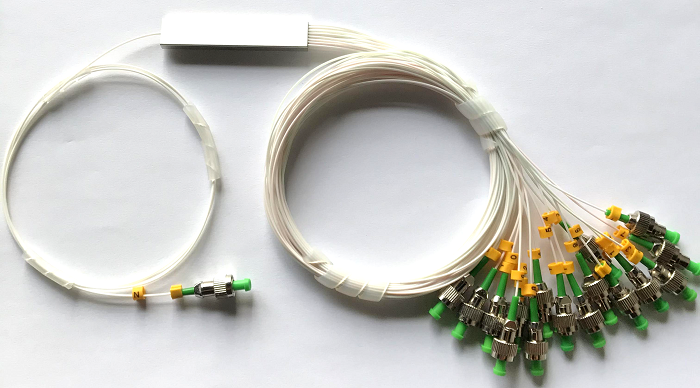
For a distributor, those forms also affect stocking. Keeping every possible split ratio in every enclosure is rarely efficient. It is more useful to understand which customers install inside trays, which use plug-in boxes and which buy finished protected modules, then stock the formats that match those field conditions.
Mechanical optical switches add control behavior to a passive optical platform
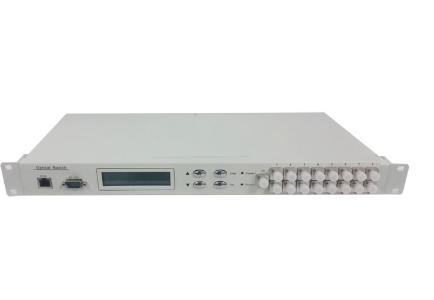
Although optical switches contain an actuator, they are commonly procured alongside passive optical routing components because they do not perform optical-electrical conversion on the signal path. Feiyi’s range includes 1×1, 1×2, 1×4, 1×8, 1×10, 2×2 and rack-mounted switching products, as well as the F2x2 mechanical fiber optic switch.
The F2x2 switch shows why route state, voltage and lifetime belong in the RFQ
The F2x2 page covers 850 +/-40 nm and 1260-1650 nm operation. For the single-mode version, typical insertion loss is 0.6 dB and maximum insertion loss is 0.8 dB; return loss is at least 50 dB and crosstalk at least 70 dB. PDL is no greater than 0.05 dB, switching time no greater than 8 ms and the rated lifetime is at least 10 million cycles. The product supports 3 V or 5 V operation and latching or non-latching control.
A network protection application may prioritize defined failover behavior and lifetime. A test bench may prioritize repeatability and switching speed. A transmitter/receiver protection path may care about crosstalk and the state maintained after power changes. Those are different reasons to buy the same switch family, so the manufacturer needs the project context rather than only a port count.
Collimators and VOAs solve interface problems that wavelength devices do not
A mixed passive-component order may also include devices that are not part of the channel-routing plan. Feiyi publishes single-fiber, dual-fiber, four-fiber, nine-fiber and higher-count collimators, along with high-power and 100G single-fiber versions. A collimator is selected when the project has to launch from fiber into a free-space beam or couple a beam back into fiber. Its specification should therefore follow the optical interface: fiber type, wavelength, channel count and beam geometry. It should not be selected from a WDM or splitter specification simply because all three products may sit inside the same optical chassis.
Variable optical attenuators solve another independent problem. Feiyi lists single-mode fiber VOA products, an online adjustable VOA and a MEMS VOA. A receiver test platform may need attenuation to simulate link loss; an amplifier setup may need controlled power reduction before a detector or following stage. The buyer should state the wavelength, attenuation behavior and connector/fiber interface instead of treating a VOA as a generic loss element. This keeps intentional attenuation separate from unwanted insertion loss elsewhere in the BOM.
These components also change how an incoming-inspection plan is organized. A collimator should be checked against its mechanical and beam interface, while a VOA should be checked through its attenuation states. The fact that both are supplied as fiber components does not make one inspection method appropriate for the other. A manufacturer with multiple passive families is most useful when the documentation keeps those functional boundaries clear.
Incoming inspection should follow the function of each passive component
A single inspection checklist is too blunt for a mixed passive BOM. For a CWDM module, verify channel labels, common/mux/demux ports and connector polish before optical measurements. For a circulator, verify port direction and wavelength before measuring insertion loss and isolation. For a PLC splitter, verify port count, enclosure form and fiber labels before split-ratio testing. For an optical switch, verify route state and electrical drive definition before cycling the device.
The same principle applies to documentation. Preserve the exact approved configuration, not only the family name. If a repeat order changes from LC/APC to SC/UPC or from an ABS box to an LGX module, the change should be visible in the purchasing record. Feiyi’s product pages expose many of these options, so buyers should convert the selected options into controlled order information.
Manufacturer qualification should separate factory facts from product-fit evidence
Feiyi’s About page states that Shenzhen Feiyi Optoelectronic Communication Co., Ltd. was established in May 2014, operates about 6,000 m2 of production space across Shenzhen and Shaoguan, and is ISO9001:2015 certified. The company describes its passive portfolio as including pigtails, collimators, WDM products, circulators, optical switches, splitters, isolators and optical modules.
Those facts can support an initial supplier review, while the product pages support the engineering review. A purchasing team should keep the two decisions separate: first verify that the manufacturer is a suitable business and quality-system partner, then verify that the specific CWDM, circulator, splitter, switch or other device meets the project specification.
For buyers building a mixed passive bill of materials, useful starting points are Feiyi’s WDM range, circulators, optical splitters and optical switches. A buyer comparing directional components can also use the published circulator routing example as a reminder to define signal direction before ordering.
The practical goal is a passive BOM in which every device has one clear optical job and every option is traceable to that job. Once the function, wavelength, port map, connector and physical format are written down, manufacturer comparison becomes much more precise than a catalog-by-catalog search.