Importing From a Fiber Optic Components Manufacturer in China: Define the Technical Acceptance File
Receiving an overseas optical-component shipment should not be the first time your engineering and purchasing teams agree what counts as an acceptable unit. When evaluating a fiber optic components manufacturer in China, define the technical acceptance file before the order is released. Feiyi identifies its business as Shenzhen Feiyi Optoelectronic Communication Co., Ltd. and offers PM connectivity, wavelength modules and passive splitting products. Start from the actual DWDM module or mini PLC splitter required by the project, then agree the version, optical limits and receiving evidence.
For an international integrator, the immediate question is not whether a broad product range looks impressive. It is whether the selected configuration can be identified, inspected and accepted without ambiguity after it arrives. A useful file connects the approved product description to the connector ends, wavelength or branch labels, test reference planes and any agreed shipping protections.
A fiber optic components manufacturer in China should be assessed against the selected build
Consider a communications integrator buying a mixed shipment: several DWDM modules for a transport rack, PLC splitters for an access cabinet and connector assemblies for the interconnection. A single description such as “fiber optic components, tested” cannot identify the different acceptance conditions. The DWDM channel plan, PLC branch count and connector ferrule type require separate controlled entries even when the same manufacturer supplies them.
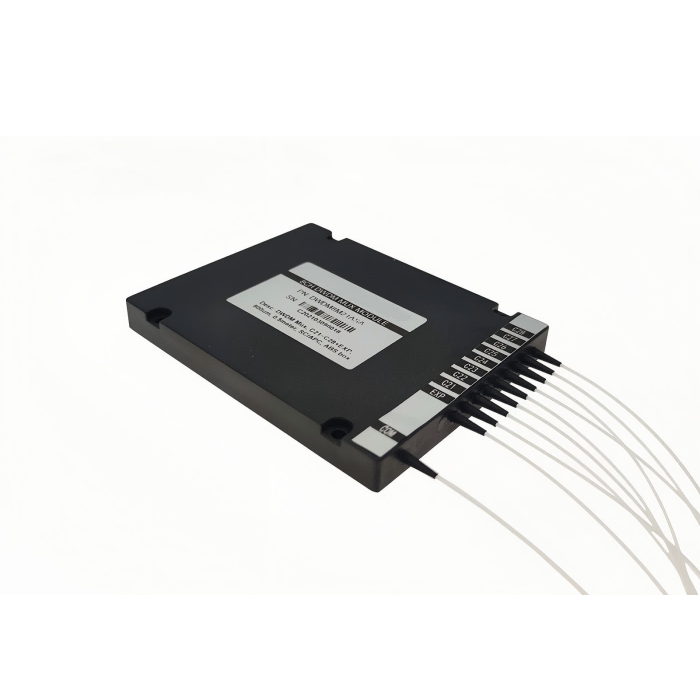
Feiyi’s DWDM module lists ITU-grid channels with 100 or 200 GHz spacing. Its ordering information distinguishes mux, demux and mux-plus-demux configurations. The PLC entry instead specifies a 1260–1650 nm band and 1×N or 2×N port arrangements. A receiving clerk cannot infer those differences from a similar-looking plastic housing. Put the approved optical function on the unit identification and packing list as well as on the engineering drawing.
DWDM channel names should survive the journey from purchase order to rack
Attach a channel schedule containing the actual nominal wavelengths or frequencies, port labels and common-port assignment. State whether the shipment contains one directional module or the matched functions needed at both ends. Feiyi lists four-, eight- and sixteen-channel performance columns, so the accepted loss limit must remain associated with the selected channel count and grade rather than being copied from the lowest-loss column.
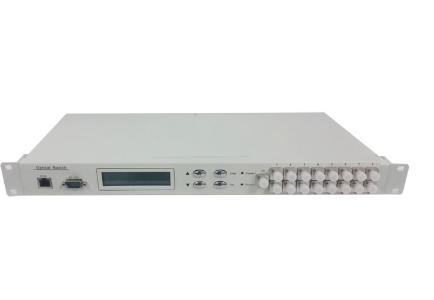
The DWDM order options include ABS, LGX and 19-inch 1U arrangements, with 900 µm loose tube, 2.0 mm or 3.0 mm leads. Those choices determine how the part is handled at receiving and installed. Require the label and drawing to identify the supplied format; a unit that fits the optical specification can still require a different rack plan if the enclosure changes.
China optical-component sourcing needs limits tied to measurement reference planes
For a DWDM order, the measurement definition also includes the accepted passband. Feiyi lists a −0.5 dB channel bandwidth of at least 0.22 nm for its 100 GHz option and at least 0.5 nm for the 200 GHz option. Those entries cannot be merged into one bandwidth claim. The selected spacing and corresponding limit should travel together in the file, so receiving tests do not use the broader window of another version.
A frequent acceptance disagreement starts when one party measures a bare optical device and another measures the delivered connectorized assembly. The measured path has changed, so the same numerical threshold may no longer mean the same thing. Define the reference plane at the connector ends, fiber ends or module ports that the order actually supplies. Keep connector allowances explicit rather than arguing about them after the shipment is received.
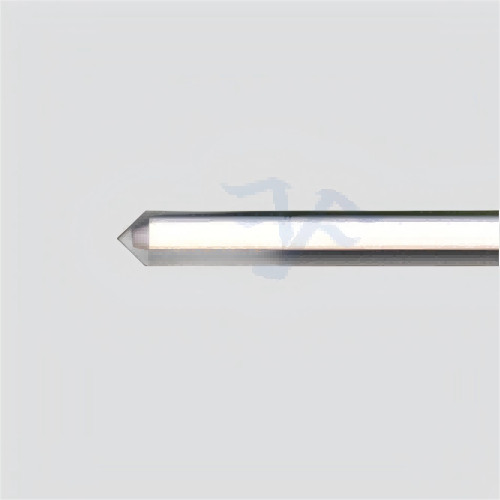
Feiyi’s PM 1550 nm optical patch cord includes PM1550 fiber, a minimum extinction-ratio entry of 22 dB and fast-axis, slow-axis or customized alignment options. If the lead is intended for a polarization-sensitive instrument, receiving acceptance needs its axis orientation in addition to insertion loss. A correctly labeled cable length is insufficient when the optical instrument references a particular connector key.
The PM jumper needs an axis reference as well as an optical-loss record
An overseas instrument purchaser may qualify a sample with slow-axis orientation and later order the same general jumper family with an unspecified key convention. A replacement can then satisfy its ordinary transmission test yet fail in the instrument. The approved file should show both ends, viewing direction and key-to-axis relationship. Test reports should identify the launch polarization and the receiving reference used for the delivered configuration.
OZ Optics’ PM patch-cord documentation provides technical context for connector alignment. Fujikura’s PM fiber information explains the role of PM fiber in polarization-sensitive applications. Neither reference certifies an imported Feiyi lead. They help the engineer define a meaningful acceptance condition instead of substituting an unrelated fiber loss measurement.
Keep the accepted specification revision with the purchasing description. Where a catalog field is unclear or inconsistent, the order should use the confirmed drawing or written value. Do not silently resolve an unclear field in favor of whichever number makes the design appear easier. That creates a dispute between the product received and the assumption made during selection.

PLCs, filter WDMs and MPO assemblies need different receiving evidence
The mini PLC lists a 1×16 P/S-grade insertion-loss entry of 13.5/13.7 dB and a 1×32 entry of 16.5/16.9 dB. Those are different output configurations. A report for a smaller split count cannot demonstrate conformity of a larger supplied splitter. Identify the tested branches and measurement wavelength, and agree whether the loss values include the delivered connectors.
Feiyi’s PM filter WDM presents pass and reflection bands, including 1520–1580 nm paired with 960–990 nm. The acceptance file should identify which physical lead carries each band. The product’s listed pass- and reflection-channel insertion-loss limits of 0.8 dB belong to those particular routes, not to every possible connection between the package’s leads.
MPO single-mode APC and multimode PC versions cannot share one acceptance entry
The MPO/MTP optical patch-cord entry distinguishes single-mode and multimode MT ferrules and standard versus low-loss types. Single-mode APC and PC finishes also have different return-loss entries. Capture the selected class, finish, pin gender and fiber map in the purchase description. Acceptance based on the housing color alone is too weak for an assembly that must mate with an installed interface.
US Conec’s MTP connector overview identifies a particular branded connector construction. If an order specifically requires that construction, confirm the supplied connector identity rather than treating a generic MPO interface as evidence of the brand. Where the project permits a generic MPO assembly, use its approved interface and performance limits instead of importing another manufacturer’s claims.
The multi-fiber endface also deserves protection and identification that remain intact during receiving. Ask for the agreed end caps and unit separation to be specified for the supplied assembly. This is a purchasing requirement to confirm, not a statement that one unverified packaging method is Feiyi’s standard. The inspection team should be able to find the correct unit and connector end without pulling on a bundle of loose fiber exits.
International receiving should separate shipping condition from optical conformity
For the MPO assembly, the published operating-temperature interval is −20 to +60 °C and its storage interval is −40 to +80 °C. A transport-temperature requirement belongs to the storage and packaging discussion; an installed cabinet requirement belongs to service. Other components in the mixed shipment have their own intervals. Do not convert one assembly’s broader storage range into a blanket operating approval for all optical parts in the carton.
A crushed carton, displaced end cap or sharply folded loose-tube lead is a shipping observation. An out-of-limit insertion-loss result is an optical observation. Record both, but do not treat one as proof of the other’s cause. Photograph the relevant condition, identify the affected unit and preserve the optical test setup. That allows a precise discussion about a DWDM lead, PLC branch or connector assembly instead of a general complaint about a mixed shipment.
For a PLC assembly, the branch identifiers should remain attached while leads are unpacked. For a PM jumper, the agreed axis/end identification should not depend on a temporary carton position. For a filter WDM, the pass and reflection port labels should follow the unit into the cabinet. Tie these identification requirements to the actual components on the order rather than requesting a generic “professional export package.”
A connectorized optical replacement should retain its drawing revision
The replacement drawing should state which evidence changes with the configuration. A prototype PM lead might need detailed axis verification because it establishes the interface, while the PLC order needs branch results tied to its selected port count. The DWDM order needs channel-specific evidence. This is a request for an agreed evidence package, not an assertion that an unverified factory performs every listed test on every unit.
Suppose a purchasing team accepts a substitute connector or a longer lead to meet an installation change. The manufacturer needs a revised interface definition before building the replacement. The receiving team needs that same revision before judging it against the original file. Otherwise, a deliberate change can be rejected as a defect or an unintended substitution can be accepted as equivalent.
For the DWDM unit, preserve the channel map when changing enclosure type. For the PLC, preserve branch count and accepted grade when changing termination. For the PM jumper, preserve axis convention when changing connector form. These are different change controls because the optical function being protected is different. A blanket instruction that “all performance remains unchanged” should not replace a review of the changed configuration.
Confirm commercial matters separately: agreed quantities, shipping responsibility, document requirements, delivery schedule and the remedy for a nonconforming item. The product descriptions do not establish a universal delivery time, warranty or international shipping term. Keeping those items in the actual commercial agreement prevents a technical guide from being mistaken for a supply promise.
When reviewing a manufacturer’s response, look for the conditions attached to the answer. A DWDM loss value without channel count, or a PLC test without wavelength, leaves the original acceptance question open. A PM measurement without a launch-state reference has the same problem. Resolve missing qualifiers before treating a neat report format as proof of conformity; the value becomes useful only when it describes the supplied configuration.
Feiyi’s article on passive-component reliability and qualification offers broader background. For this shipment, the stronger document is the selected build file with the measurement conditions and physical interfaces your receiving team can verify.
Before releasing the order, have the receiving engineer read the file without relying on the person who selected the products. If that engineer can identify the DWDM channels, PLC branches and connectorized PM reference planes, the technical handoff is usable. If not, clarify those named interfaces now; a favorable sample result cannot resolve a specification that the next shipment never actually defined.