
PM Circulator Supplier China: Build the Technical Acceptance File Before Repeat Orders
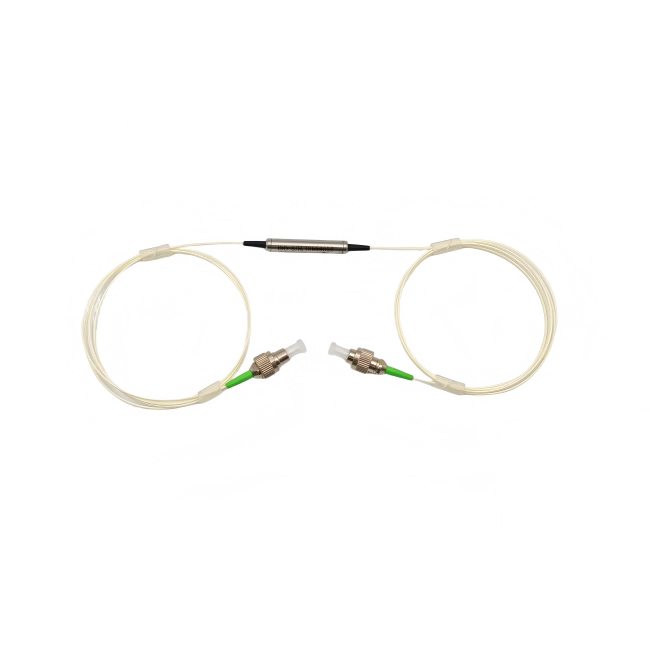
An overseas buyer searching for a PM circulator supplier China should treat the purchase as a controlled optical interface, not as a generic three-port component sourced by country and price. Feiyi-OEO states on its site that it is based in Shenzhen, China, and its PM circulator range covers 780, 850, 980, 1064, 1310, 1480, 1550, 1950, and 2000 nm products. That breadth is useful for OEMs and distributors, but it also creates a responsibility: every order needs a wavelength-specific route, polarization-axis definition, connector configuration, and acceptance record.
For international purchasing, the safest first document is a short technical acceptance file that can travel with the RFQ, sample, repeat order, and receiving inspection. It should show the P1→P2 and P2→P3 routing required by the instrument, the wavelength family, isolation and insertion-loss limits, PM fiber and axis convention, connector or bare-fiber interface, lead length, and the exact product revision that passed the sample stage. That file is more valuable than a long general supplier questionnaire because it lets both sides discuss the same physical device.
A PM circulator supplier in China should receive the route map before commercial terms are finalized
A three-port circulator directs light sequentially between adjacent ports. In a typical three-port use, light entering Port 1 is routed to Port 2, while light entering Port 2 is routed to Port 3. For a sensing or bidirectional system, that directionality is the reason the component is installed. If a purchase order identifies only “PM circulator 1550 nm,” a later production or service team still has to guess how the port labels correspond to the instrument.
Port names should match the buyer’s schematic and the delivered labels
The buyer can define P1 as source, P2 as sensor or remote path, and P3 as receiver, or use another naming convention appropriate to the design. What matters is that the drawing, test report, physical labels, and instrument schematic all use the same relationship. A photograph of a sample is not enough if the fiber leads can be rearranged during packaging or installation.
For a repeat order, include a small route diagram on the controlled drawing. It can be as simple as arrows from P1 to P2 and P2 to P3 with the wavelength and connector identity written next to each lead. This prevents a correct optical component from becoming a wiring error at final assembly.
Do not use the word “circulator” as a substitute for the required isolation class
Feiyi’s PM 1550 nm Circulator publishes a center wavelength of 1550±30 nm. Depending on the listed configuration, typical isolation is at least 30 dB or 46 dB and minimum isolation is at least 22 dB or 40 dB. Typical insertion loss is 0.7 dB, with maximum values shown as 0.9 or 1.0 dB for the corresponding versions.
Those differences should remain on the approved part record. A buyer who needs the higher-isolation version should not accept a lower-isolation configuration simply because both are labeled 1550 nm PM circulators. The correct acceptance target comes from the exact configuration that was reviewed during engineering.

PM circulator supplier China sourcing should keep wavelength families separate
Feiyi’s PM circulator catalog spans several wavelength platforms. This is helpful for a buyer consolidating sourcing, but it does not make the products interchangeable. The fiber, coating design, optical behavior, and surrounding components are selected around the operating wavelength. A company running both 1064 nm laser instrumentation and 1550 nm sensing equipment should maintain separate approved circulator part numbers.
| Feiyi PM circulator | Typical buyer context | What must remain distinct |
|---|---|---|
| PM 780 nm Circulator | Shorter-wavelength PM optical platform | 780 nm product family, PM fiber, port map |
| PM 980 nm Circulator | 980 nm laser or amplifier-related route | Wavelength, isolation class, interface |
| PM 1064 nm Circulator | 1064 nm laser, sensing, or instrument path | PM fiber, direction, connector axis |
| PM 1550 nm Circulator | 1550 nm sensing or bidirectional communication | Isolation option, PM1550 fiber, lead identity |
| PM 2000 nm Circulator | Longer-wavelength PM photonics platform | 2 µm product family and approved interfaces |
A distributor should stock by wavelength and optical route, not by housing appearance
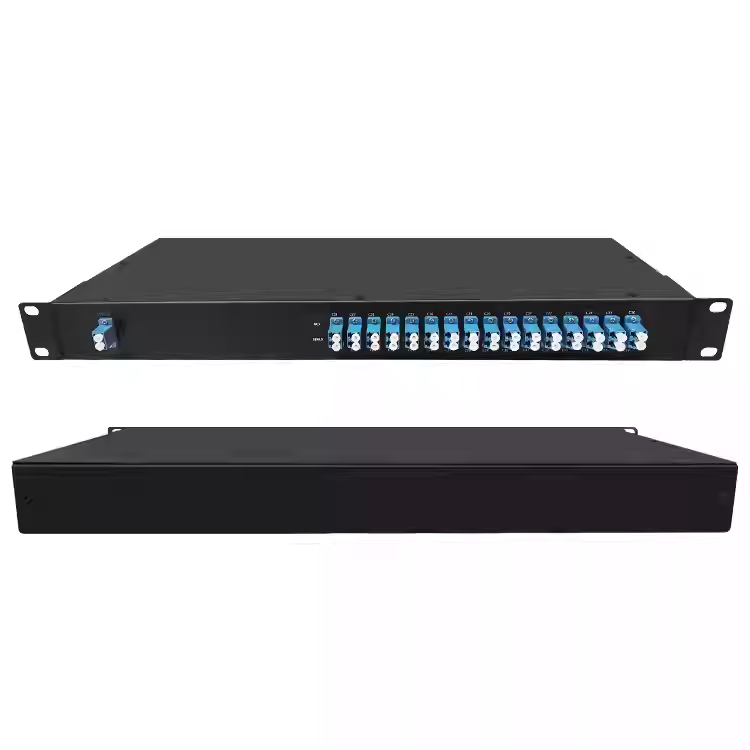
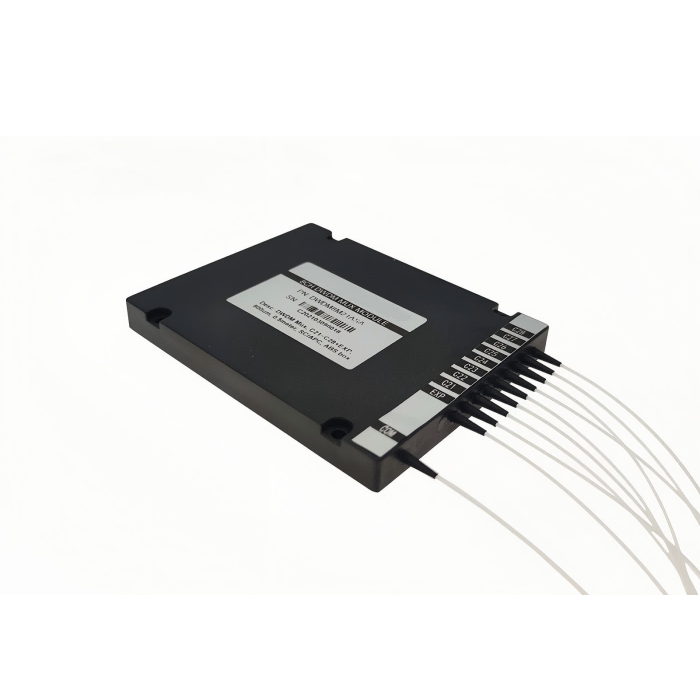
Several PM circulators can look nearly identical from outside. A distributor receiving mixed wavelengths should therefore preserve the supplier product identity and customer-approved configuration on the inventory label. Connector type alone is not a sufficient stock discriminator.
If a customer later requests the same route at a new wavelength, create a new approved line item. That gives the technical team a chance to review the corresponding product page and limits rather than assuming that the 1550 nm test data apply to 1064 or 2000 nm.
The PM axis and connector key must survive the cross-border handoff
The Feiyi 1550 nm page lists PM1550 fiber and a minimum extinction ratio of at least 20 dB. It also offers fast- or slow-axis operation depending on the ordered configuration. That makes axis orientation part of the component definition.
FC/APC or FC/PC describes the end face, not the complete polarization reference
Connector polish addresses the physical optical interface, while the PM axis describes the rotational relationship of the polarization-maintaining fiber. An overseas purchase should state both. If the customer’s patch cord is keyed to a defined slow-axis convention, the circulator drawing should show the same convention at each connectorized port.
For bare-fiber builds, the splice or assembly process becomes responsible for preserving the intended axis. The buyer can include the PM-axis requirement in the drawing and use an agreed launch orientation during sample acceptance. This is especially important when the device will be integrated by a contract manufacturer in a different country from the component supplier.
Extinction ratio should be checked after the real connector arrangement is assembled
A component-level extinction-ratio result is useful, but a finished instrument contains patch cords, adapters, and other PM devices that can introduce alignment errors. During sample approval, test the circulator in the same connector arrangement that the production instrument will use wherever practical. That helps separate a circulator problem from a mating-interface problem before volume ordering.
Feiyi’s existing article PM Optical Circulator Supplier: Resolve the Return Path in a 1550 nm Sensor focuses on the sensing route. The sourcing file described here is meant to carry that approved route through cross-border purchasing and repeat delivery.
Overseas PM circulator acceptance should define the measurements before the shipment arrives
When buyer and supplier are in different countries, disputes are easier to avoid if the measurement conditions are agreed during sample approval. The acceptance sheet should identify the optical wavelength, launch polarization, route under test, connector state, and which limits are compared with the selected product specification.
Insertion loss, isolation, return loss, and crosstalk answer different questions
On the PM 1550 nm page, Feiyi publishes return loss of at least 50 dB, crosstalk of at least 50 dB, PDL no more than 0.15 dB, and maximum optical power of 300 mW in addition to the insertion-loss and isolation values. Each parameter describes a different part of performance. A receiving test should not substitute one measurement for another simply because the source and power meter setup is convenient.
For example, low insertion loss confirms that wanted forward light is not excessively attenuated. Isolation checks rejection of the unwanted reverse relationship. Crosstalk checks leakage between routes. Return loss describes reflected power at an interface. A buyer can prioritize according to the system while still retaining the manufacturer’s complete approved specification.
Port-by-port measurement records make repeat orders easier to compare
For a sample, record the P1→P2 and P2→P3 results under the same setup and retain the report with the approved configuration. On later orders, the buyer can compare incoming results against that reference and the published product limits. This is more useful than comparing photographs or package dimensions.
The same file can note the operating-temperature range of -10 to +75°C and storage range of -40 to +85°C published for the 1550 nm circulator. Those values are product boundaries; they should not be converted into claims about an entire instrument unless the rest of the assembly is qualified to the same conditions.
A China supplier evaluation should focus on traceable technical changes, not unsupported assumptions
Country of origin does not replace technical qualification. For Feiyi-OEO, which states that it is based in Shenzhen, China, the useful supplier questions are the same ones an engineering buyer should ask anywhere: which exact product configuration is being supplied, what changed from the approved sample, which drawing revision applies, and which optical results accompany the delivered configuration.
A buyer does not need to invent requirements about factory size, annual capacity, export countries, or guaranteed lead times if those points are not documented for the specific order. Instead, request the technical documents that control the component you are actually buying: product identification, ordered wavelength, port map, axis convention, connector and fiber description, and any agreed sample or inspection report.
A repeat order should reference the accepted configuration instead of reopening the design
After the first lot is approved, the purchase order should reference the customer part number and the supplier configuration or drawing revision that passed. If the supplier proposes a change to fiber, connector, package, wavelength option, or optical design, the buyer can decide whether the change requires requalification.
This protects both sides. The supplier has a clear technical target, while the buyer can distinguish an intentional revision from a manufacturing variation. It also makes service spares easier to order years later because the approved interface is written down instead of being stored only in an old email thread.
Packaging and receiving should protect identity as carefully as the fiber leads
Feiyi’s public circulator pages do not state one universal shipping package for every PM circulator configuration, so an overseas buyer should not assume a specific packing method. What can be specified is the required delivery condition: fiber leads and connectors protected from avoidable damage, ports clearly identifiable, and each unit traceable to the ordered wavelength and configuration.
At receiving, check product identity before removing labels or reorganizing stock. Inspect connector end faces where applicable, verify the port designations, and perform the agreed optical checks under the recorded setup. If several wavelengths are delivered together, segregate them before they reach the assembly floor.
For engineering teams that approve parts in one country and assemble instruments in another, include a simple bilingual-independent diagram rather than relying only on prose. Port arrows, wavelength labels, connector names, and axis symbols are less likely to be misread across purchasing, logistics, and contract-assembly teams. The goal is not to create more paperwork; it is to preserve the optical decisions through every handoff between supplier, importer, warehouse, and production line.
Use one technical file to connect the China RFQ, sample, purchase order, and incoming test
The Feiyi PM Circulator range gives buyers a wavelength-by-wavelength starting point, while the existing PM Circulator Manufacturer: Match Wavelength, Isolation and Axis to the Return Path article explains component selection in more detail. For overseas procurement, the next step is to keep those decisions attached to the commercial transaction.
A strong PM circulator supplier China purchase file contains the exact wavelength product, route arrows, isolation configuration, insertion-loss limit, extinction-ratio and crosstalk requirements, PM fiber and axis convention, connector or bare-fiber interface, lead length, accepted drawing revision, and the test conditions used for the sample. With that information, price, logistics, and repeat ordering can be discussed without losing the optical definition that made the original sample work.