PM Optical Devices Manufacturer China: Qualify a Polarization-Controlled BOM, Not Isolated Components
[Reading 50 lines from start (total: 50 lines, 0 remaining)]
PM Optical Devices Manufacturer China: Qualify a Polarization-Controlled BOM, Not Isolated Components
When an engineer searches for a PM optical devices manufacturer China, the useful question is whether one supplier can keep polarization conventions, wavelengths, fiber choices and connector interfaces consistent across a complete optical chain. Shenzhen Feiyi Optoelectronic Communication Co., Ltd. states that it develops and produces fiber-optic communication components and presents a broad polarization-maintaining range including PM circulators, isolators, couplers, WDM devices, optical switches, variable optical attenuators, collimators, pigtails and patch cords.
For a laser, sensing, gyroscope, test or optical-routing project, that breadth is valuable only when the BOM is controlled as one system. A PM patch cord can preserve polarization correctly and still connect poorly to a circulator if the slow-axis reference, connector key or wavelength family is inconsistent. Supplier evaluation should therefore start with the complete optical path and the interfaces between products, not with a list of individual catalog pages.
A PM optical devices manufacturer in China should be reviewed against the complete wavelength chain
Feiyi’s PM product range spans multiple wavelength families. Its PM circulator pages include products from 780 and 850 nm through 980, 1064, 1310, 1480, 1550, 1950 and 2000 nm. Its PM patch-cord family includes 630, 780, 850, 980, 1064, 1310 and 1550 nm products. PM isolators and couplers cover overlapping but not identical bands.
A buyer should therefore create a wavelength chain for the project and confirm each component against it. If the source is 1064 nm, the PM 1064nm Circulator, PM 1064nm Fiber Optic Isolator, PM 980/1030/1064nm Coupler and PM 1064nm Optical Patch Cord should be reviewed as an interface set rather than four unrelated purchases.
A wavelength label should be paired with the actual fiber family used by each device
Feiyi’s individual product pages often identify PM fiber families such as PM1060, PM980, PM1310 or PM1550. Keep those fiber identities in the engineering BOM. Two components can carry the same nominal wavelength while using different construction or termination choices that still need interface review.
Polarization-axis conventions should be made common before multiple PM components are approved
PM products can use fast-axis, slow-axis or customized orientation. Patch cords and collimators make this especially visible because the connector key, pigtail orientation or mechanical body can become the reference used by the next component.
Ask the manufacturer to review one axis diagram covering source, cable, isolator, circulator, coupler and receiving device. The diagram should show what the connector key means at every mated interface and how a bare-fiber or splice interface is oriented. This is more useful than asking each product salesperson separately whether the component is “PM.”
A connector key is only a useful polarization reference when both sides use the same convention
If one product drawing references slow axis to the key and another references fast axis, a mechanically perfect connection can create an optical mismatch. Resolve that before the first production assembly rather than after an extinction-ratio problem appears in system test.
PM circulators, isolators and switches should be separated by optical function
A buyer consolidating suppliers should not collapse different PM products into one generic “routing component” category. A circulator routes light directionally between ports, an isolator protects a source from reverse propagation, and an optical switch actively selects a route. They can share a wavelength and PM fiber while solving completely different system problems.
For a sensing chain, define where returning light must go before selecting the circulator. For a laser chain, define the reflection risk before selecting the isolator. For a test system, define the route states and control logic before selecting the PM optical switch. This function-first method makes the manufacturer’s broad catalog useful without encouraging wrong substitution.
Couplers, beam combiners and WDM devices should be chosen from what is being combined
Feiyi offers PM optical couplers, polarization beam combiner/splitter products and PM WDM devices. A coupler divides or combines optical power according to a coupling ratio. A polarization beam combiner can combine defined polarization states. A WDM combines or separates wavelengths. Those three operations may appear in the same optical assembly but are not interchangeable.
For example, a 1064 nm system that needs power monitoring may use a PM coupler; a system combining orthogonal polarization states may need a polarization beam combiner; a multi-wavelength source chain may need Polarization Maintaining Filter WDM. The purchase file should state the physical job rather than only the product family.
Coupling ratio, polarization state and wavelength map should never be reduced to one “combining” requirement
These parameters answer different questions. If procurement receives only a generic request to combine two fibers, the supplier cannot know whether the project needs power splitting, polarization combining or wavelength multiplexing.
PM VOA selection should be tied to detector or system power, not added as a generic safety margin
Feiyi’s PM VOA family includes several wavelength versions such as 850, 980, 1064, 1310, 1550 and 2000 nm. A variable optical attenuator is useful when the system needs controlled reduction of optical power, but the buyer should define the attenuation role, wavelength and detector or downstream limit before approving it.
If the project uses a fixed operating point with no need for adjustment, a VOA can add unnecessary complexity. If the source level changes or a test platform must sweep power, an adjustable PM VOA may be appropriate. The manufacturer should understand which of those scenarios applies.

Manufacturer qualification should use product-specific test records rather than one corporate quality statement
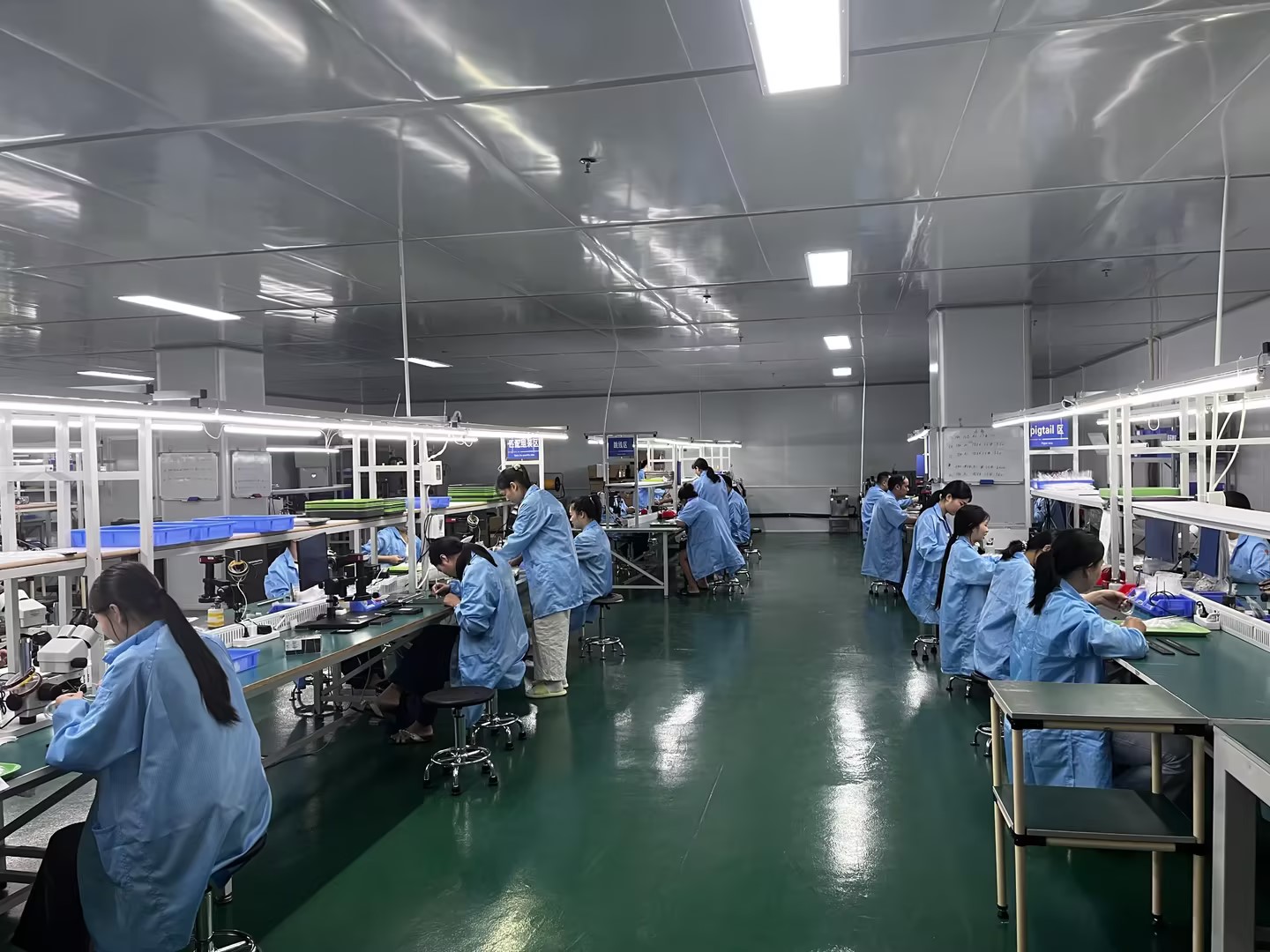
Feiyi’s About page states that the company is ISO 9001:2015 and ISO 14001 certified and operates optical testing, production and precision assembly facilities. Those company-level facts are useful in supplier qualification, but they do not replace product-level acceptance criteria.
For each critical PM component, define the measurements that matter: insertion loss and extinction ratio for a patch cord, isolation for an isolator, port routing for a circulator, attenuation behavior for a VOA, switching state for an optical switch, or wavelength/passband behavior for a WDM. The purchase record becomes stronger when corporate quality systems and device-specific acceptance are used together.
A certificate cannot resolve an undefined optical interface
Quality-management certification helps describe process discipline. It does not tell an assembler which PM axis should align to the connector key or which port carries the returning signal. Engineering details still need to be explicit.
Connector polish and fiber termination should be standardized across the PM BOM where possible
A multi-device order becomes harder to assemble when every product arrives with a different connector family or polish. Feiyi’s PM patch cords, collimators and other fiber components offer several connector and pigtail options. The project should decide which interfaces need FC/APC, FC/UPC, LC or another termination and where bare fiber or splicing is more appropriate.
Standardization can reduce adapters and accidental UPC/APC mismatch, but it should not override an optical requirement. A source-sensitive interface may justify APC while a test fixture already built around another connector needs a different choice. The supplier should see the whole interface map before termination is finalized.
A Chinese PM manufacturer should be evaluated on customization boundaries as well as catalog breadth
Feiyi’s site presents customized options across patch cords, collimators, lensed fibers, couplers and other devices. A buyer should distinguish what is a published standard option from what requires engineering confirmation. Wavelength, fiber type, axis orientation, connector, fiber length and package can often be configured, but the exact achievable combination should be confirmed for the requested device.
This matters in global procurement because the quotation should describe the final build clearly enough for receiving inspection in another country. Avoid accepting a quote that says only “custom PM device” without the dimensions, optical limits and interface details that make the customization reproducible.
Packaging requirements should follow the fragility of the actual component, not one company-wide rule
A connectorized PM patch cord needs end-face protection and cable identification. A bare-fiber collimator needs protection for the pigtail and optical body. A lensed fiber needs clearance around its processed tip. A rack-mounted optical switch needs mechanical and electrical protection. These products should not all use one generic packing requirement in the purchase specification.
If the customer has special tray, reel, label or clean-pack needs, bind them to the specific product. Otherwise, use the manufacturer’s normal packaging and verify at receiving that the optical interface has remained protected.
Repeat orders should preserve the approved cross-product interfaces, not only the supplier name
After a PM optical chain passes system test, retain the wavelength, fiber family, axis convention, connector polish, port map, package, relevant optical limits and the exact Feiyi product links or controlled part numbers used for each position. If one component changes later, review the interfaces on both sides before approving substitution.
Feiyi’s Polarization-Maintaining product range gives buyers a broad starting point, while the individual product pages provide the configuration details needed for engineering approval. A useful manufacturer relationship is one where the next order can reproduce the optical chain without relying on the memory of the engineer who built the first prototype.
Global buyers should make the technical handoff self-contained before production starts
When engineering, purchasing and manufacturing teams work across countries and time zones, assumptions become expensive. Put the final optical path, wavelength list, PM-axis convention, connector keying, product configuration and acceptance limits into one package that can be reviewed asynchronously. This reduces the risk that a supplier answers one part of the requirement while another interface remains implicit.
That documentation also makes supplier comparison fairer. Two quotations can be compared against the same controlled BOM instead of against slightly different email conversations.
Prototype-to-production changes should be controlled across every PM component in the chain
A prototype often evolves one part at a time: a patch cord length changes, an isolator moves to another package, a coupler ratio is adjusted or a switch connector is replaced. Each individual change can look small, but the accumulated result may no longer match the polarization and mechanical interfaces of the system that originally passed testing. Before releasing a production BOM, compare the final configuration of every PM component with the prototype actually validated.
For repeat production, give each approved configuration a clear revision and retain the supplier drawing or product specification that belongs to it. When Feiyi confirms a custom axis, connector or fiber option, keep that confirmation with the controlled item so a later buyer does not fall back to a default catalog configuration.
Distributors should separate visually similar PM inventory by wavelength and interface
A distributor may stock PM patch cords, isolators, circulators and couplers that look similar from outside but serve different wavelengths or axis conventions. Warehouse labels should therefore include wavelength, product function, connector polish and any important PM orientation rather than relying on package color or body shape. This is especially useful for 980/1064 nm and 1310/1550 nm product families that may share common connector styles.
When a customer requests a replacement, match the controlled optical identity before offering an available item. A part that fits physically is not automatically a suitable PM substitute. Keeping manufacturer documentation tied to each stocked configuration protects both the distributor and the engineering customer from accidental cross-use.
Supplier review should separate confirmed site facts from configuration-specific promises
Feiyi’s site confirms its Shenzhen identity, PM product families, production and R&D role, and quality-system certifications. Configuration-specific performance, delivery, packaging or custom capability should still be confirmed for the exact order. This distinction keeps supplier evaluation factual: company-level information can establish the manufacturing context, while the quotation and product drawing establish what will actually be delivered for the project.
[executed on device: SK-20260121JOTG (a251fff9-956e-47b5-9307-14fb53329ed2)]