Fiber Optic Components Manufacturer China: A Due-Diligence Path for Overseas Buyers
A global buyer searching for a fiber optic components manufacturer China is usually trying to answer two questions at once. First, can the supplier manufacture the optical component families required by the project? Second, can the buyer qualify the company and the exact product configuration without relying on vague factory claims? The safest way to answer both is to separate company due diligence from component approval.
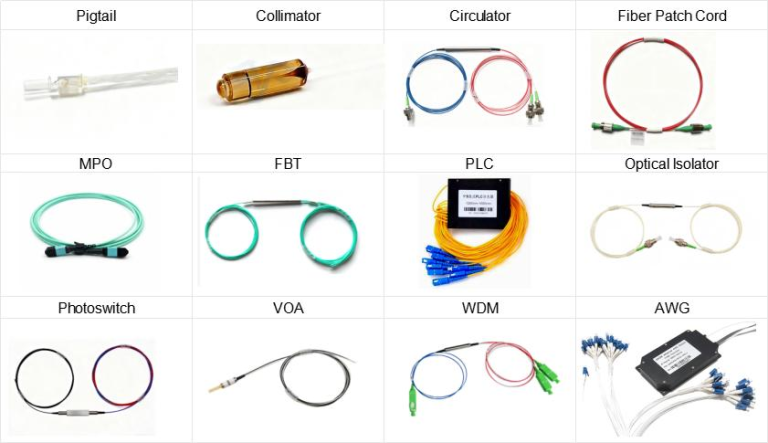
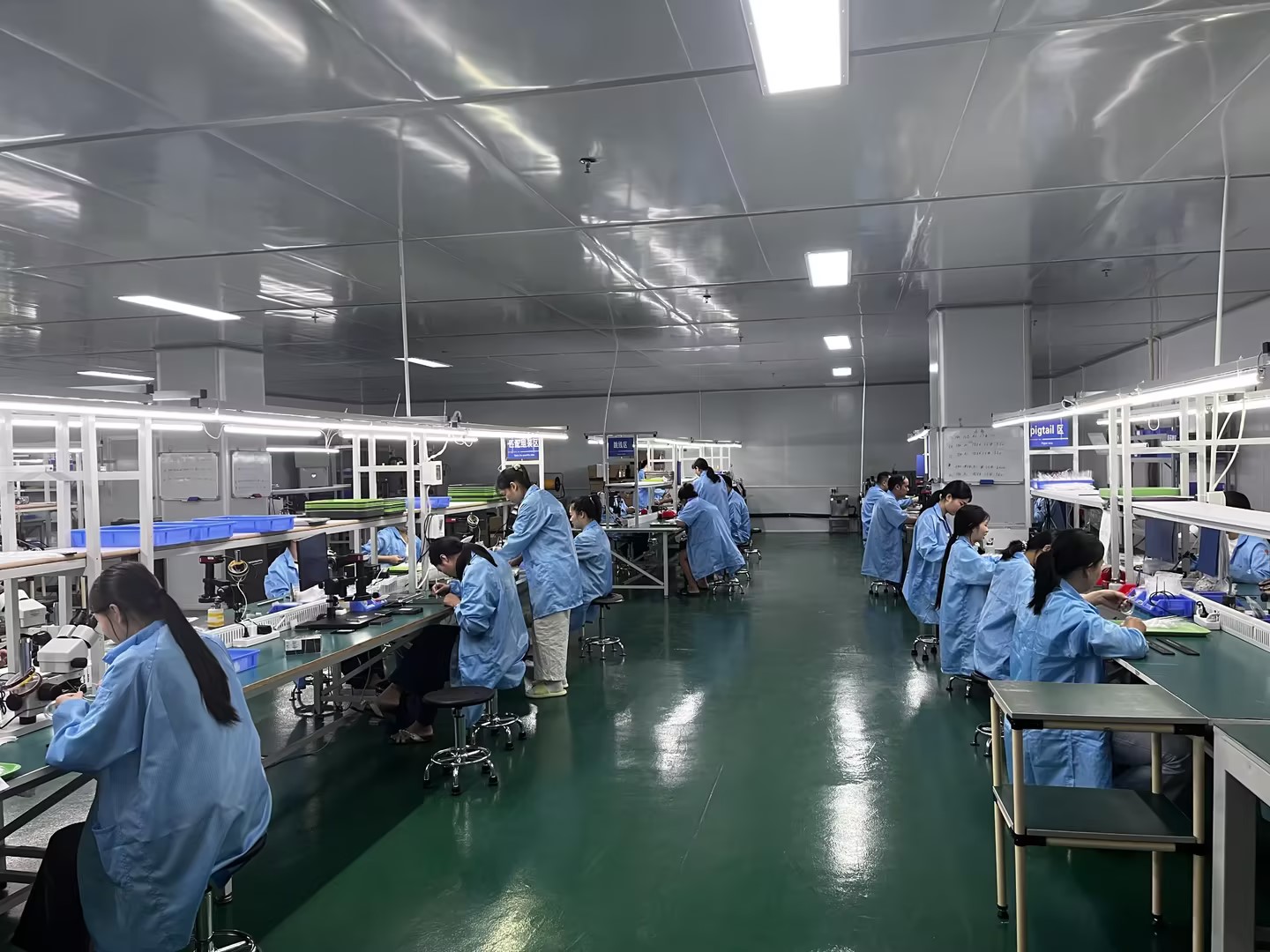
Feiyi’s current company profile states that Shenzhen Feiyi Optoelectronic Communication Co., Ltd. was established in May 2014, operates production bases in Shenzhen and Shaoguan totaling about 6,000 m2, is ISO9001:2015 certified, and develops and manufactures fiber-optic communication equipment and components. Its published passive range includes pigtails, collimators, CWDM/DWDM/FWDM/OADM/AWG wavelength devices, circulators, optical switches, splitters, isolators and optical modules, with both single-mode and polarization-maintaining product families.
Those facts are appropriate for the company file. They should not be turned into assumptions about every product, every order size or every delivery schedule. For an overseas purchasing team, the useful process is to verify the manufacturer at company level, then qualify the required component from its own datasheet and sample.
Evaluating a fiber optic components manufacturer in China starts with verifiable company scope
Supplier qualification works better when the buyer asks for evidence that matches a decision. A quality-system certificate addresses management and process controls. A factory location and production scope show where the supplier says manufacturing takes place. Product pages and technical files show what is actually offered. None of those documents alone proves that a specific component will meet a project drawing.
Feiyi’s company profile defines the manufacturing scope without promising every possible configuration
The About page identifies Feiyi as a company focused on R&D, production and sales of fiber-optic communication equipment and components. It states a combined production area of about 6,000 m2 in Shenzhen and Shaoguan and identifies ISO9001:2015 certification. It also describes a passive-component portfolio spanning standard single-mode and PM devices.
For a buyer opening an approved-vendor record, those statements are useful because they connect the company to the product category being sourced. A buyer should still request the current document set relevant to its own vendor-approval procedure. The public website does not state one universal export market, standard lead time or fixed production capacity for every product, so those items should be confirmed for the actual order rather than inferred.
Product-family depth matters when one project contains several optical functions
A photonics instrument may need PM patch cords, a circulator, an isolator, a VOA and a collimator. A telecom assembly may need CWDM or DWDM modules, optical switches, splitters and ordinary single-mode patching. Feiyi publishes all of those families. Supplier depth can reduce the number of separate technical handoffs, but only if the buyer keeps specifications distinct between families.
For example, the same 1550 nm label can appear on a circulator, isolator, WDM or patch cord. The wavelength is common, but port behavior, insertion loss, isolation, extinction ratio and connector requirements are not. A manufacturer qualification should therefore confirm breadth at the company level and performance at the individual part level.
A China fiber optic components manufacturer should be reviewed through real product data
Product pages are most useful when they expose enough detail to turn an RFQ into a measurable configuration. Feiyi’s catalog provides numerical specifications for key passive families. An overseas buyer can use those tables to create an internal acceptance sheet instead of repeating marketing language in the purchase order.
PM patch cords show why connector and polarization data belong in sample approval
Feiyi’s custom PM fiber patch cords are published for 780, 850, 980, 1064, 1310 and 1550 nm. The table lists extinction ratio of at least 20 dB, repeatability no greater than 0.1 dB, interchangeability no greater than 0.2 dB and at least 1,000 mating cycles. Connector choices include FC, SC and LC in UPC or APC polish, and the page states that connector keys on connectorized devices are aligned to the slow axis.
For an international OEM, sample approval should capture the exact wavelength, PM fiber, connector polish, axis convention and cable length. Approving a generic “PM patch cord” sample without preserving those choices makes the repeat order ambiguous. Feiyi’s axis-alignment article explains why the connector orientation belongs in the engineering handoff.

WDM products require a channel plan that survives language and time-zone differences
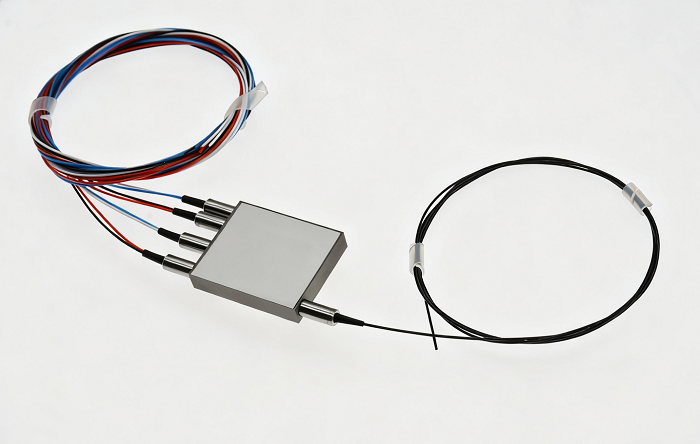
Feiyi publishes CWDM, DWDM, FWDM, OADM and AWG products. The 4CH, 8CH and 16CH CWDM Mux/Demux family uses 20 nm channel spacing over 1270-1610 nm or 1271-1611 nm. The table lists adjacent isolation of at least 30 dB and non-adjacent isolation of at least 40 dB, with ABS, LGX and rackmount package options and LC/SC/FC connector choices.
An overseas buyer should send a channel map or configuration table rather than rely on product-family names in email. For DWDM and AWG, include the required grid or frequency list. For CWDM, list the actual wavelengths and mux/demux direction. That documentation is useful regardless of supplier location because it eliminates interpretation from the order.
Factory review should not replace optical acceptance testing
A factory visit, video audit or document review can establish confidence in a supplier’s operation, but it cannot prove that a specific optical component matches the project. The acceptance plan should follow the failure mode of the part being purchased. Feiyi’s product range illustrates why one universal optical test is not enough.
Circulators should be checked by port direction, loss and isolation
Feiyi’s three-port optical circulator is published for 1310 +/-30 nm or 1550 +/-30 nm. Its table lists typical insertion loss around 0.6 dB, maximum 0.8 dB, typical isolation of at least 50 dB, minimum isolation of at least 40 dB, PDL no greater than 0.15 dB and directivity above 50 dB. Those figures create a useful acceptance framework for a standard device.
Incoming inspection should first confirm wavelength and port labels, then measure the direction that matters in the design. If a reflection sensor sends light from port 1 to port 2 and expects the return at port 3, verifying only insertion loss in one direction does not confirm the complete routing function.
Mechanical switches add electrical states to an optical qualification
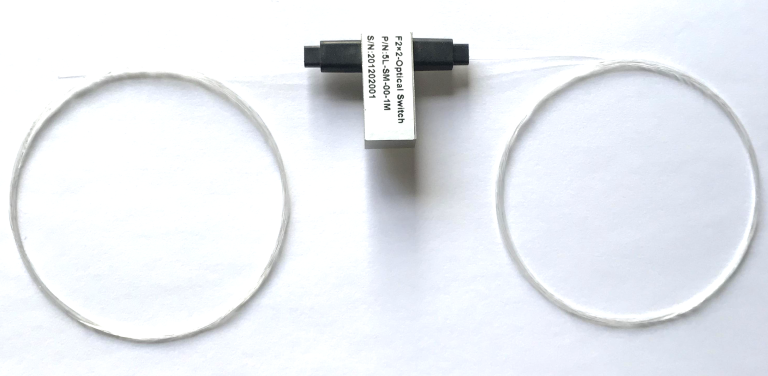
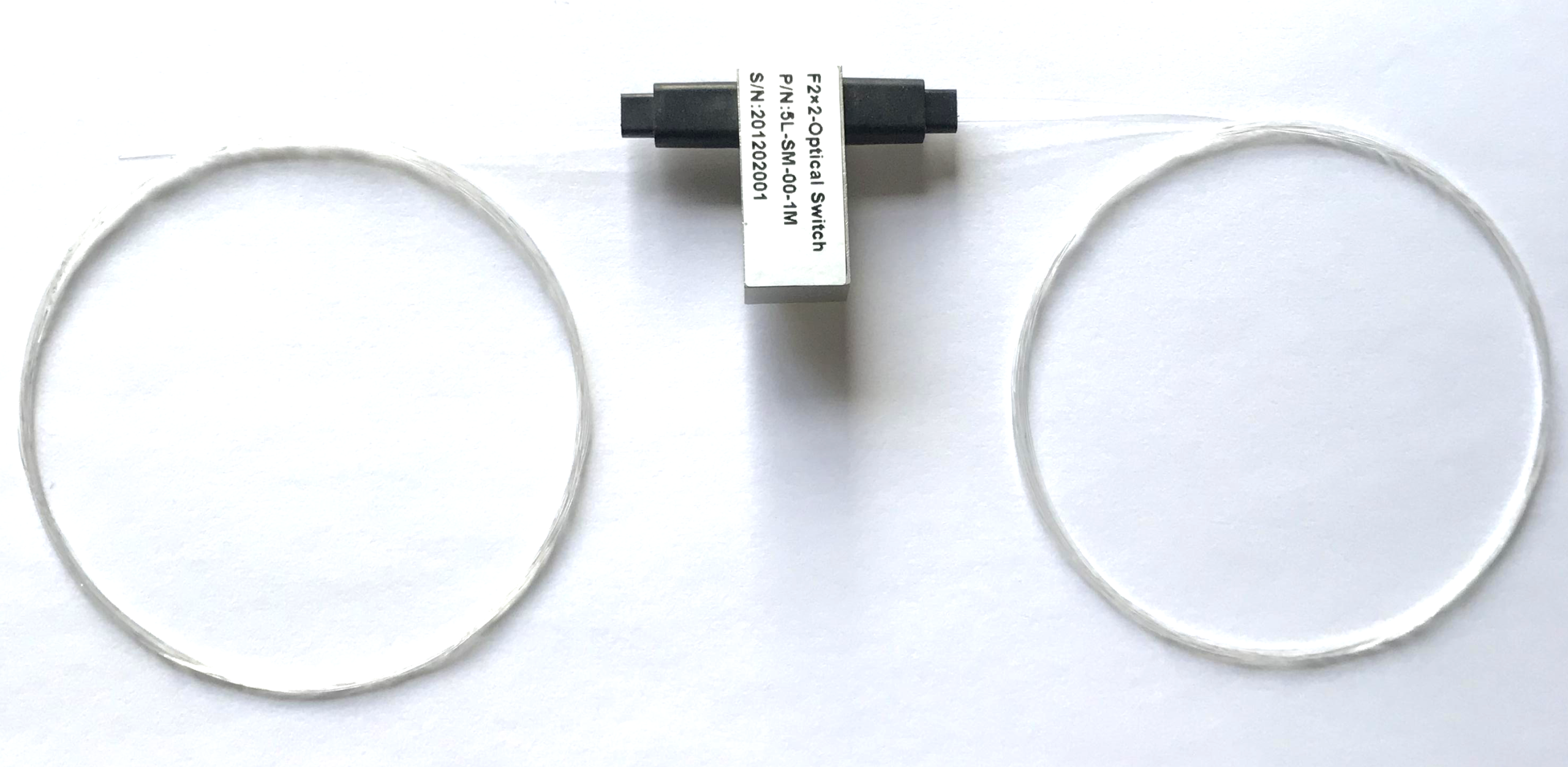
The Feiyi F2x2 mechanical optical switch covers 850 +/-40 nm or 1260-1650 nm depending version. The published single-mode values include typical insertion loss of 0.6 dB, maximum 0.8 dB, return loss of at least 50 dB, crosstalk of at least 70 dB, switching time no greater than 8 ms and lifetime of at least 10 million cycles. It can be ordered for 3 V or 5 V operation and latching or non-latching behavior.
An overseas project handoff should therefore include the optical route table and the electrical control state. A switch can meet the optical loss target and still be wrong for the controller if drive voltage or latching behavior was not specified. This is the type of issue that a company-level factory audit cannot catch.
Athermal AWG sourcing shows why model-level review matters
Dense wavelength products are a good example of why a buyer should go below the company level. Feiyi publishes 40-channel 100G, 48-channel 100G and 96-channel 50G athermal AWG products. The 48-channel 100G page specifies 100 GHz spacing, a 191.7-196.4 THz ITU-grid range, center-wavelength accuracy within +/-0.05 nm, insertion loss around 5.5 dB at center wavelength and a physical size of approximately 80 x 40 x 9 mm. The 40-channel 100G page uses a different specification set and package.
An overseas buyer should therefore approve the exact AWG model or drawing rather than use “athermal AWG” as the purchase description. Channel spacing, channel count, passband, fiber arrangement and package need to match the system. A sample of one 100 GHz device does not automatically approve a 50 GHz or higher-channel-count variant, even when both come from the same factory.
This model-level discipline also prevents technical assumptions from becoming commercial disputes. If the engineering file contains the accepted channel plan and package dimensions, purchasing can ask the manufacturer to quote the same configuration again. If the file contains only a family name, both sides have to reconstruct the design history each time a repeat order is placed.
Use sample-to-repeat controls for fiber optic components sourced from China
The first accepted lot should become the reference for future orders. Record the manufacturer product family, selected ordering code, drawing revision, wavelength, fiber type, connector, fiber length, package and the optical values that were approved. If the product is customized, preserve the agreed drawing or specification file with the purchase record instead of depending on an old email thread.
This is especially important for product families with many legitimate options. Feiyi’s CWDM family can be supplied in several package and connector formats. Its PM patch cords offer several wavelengths and connector styles. Mechanical switches offer different topologies, voltages and control modes. Repeatability in purchasing comes from freezing the selected configuration, not from assuming the supplier will remember an earlier discussion.
Packaging and shipment instructions should be written for the actual optical item
Feiyi’s public product pages do not state one universal packing method for all components. That is a reason to define packaging requirements at order level rather than invent a standard. Connectorized assemblies need end-face protection; bare-fiber products need bend and contamination protection; multi-fiber pigtails need durable channel identification; rack modules need mechanical protection appropriate to their enclosure.
An overseas distributor or OEM should also define the labels it needs on inner packages and cartons. Product code, quantity and traceable configuration information are more useful than a generic product-family name. If receiving inspection depends on a channel map or port definition, that document should travel with the order or be referenced by revision.
Questions an overseas buyer should resolve before issuing the first production order
First, confirm that the company scope matches the technology being sourced. Second, identify the exact published or custom product configuration. Third, agree the optical acceptance items that matter to that product. Fourth, preserve the sample and documentation that define the approved state. Finally, confirm commercial terms such as order quantity and delivery schedule for the actual project instead of assuming they are identical across product families.
Buyers can start from Feiyi’s product overview, then narrow into polarization-maintaining components or the passive-device range. For a mixed passive BOM, the passive-component manufacturer guide provides a function-by-function comparison rather than a country-based one.
A China sourcing decision is strongest when it is based on the same engineering discipline used for any other supplier: verify the company, define the part, test the sample, preserve the configuration and make every repeat order traceable to what was actually approved.